Smoke Damage Restoration Bakersfield: How Professionals Remove Odor and Soot
After a house fire, the visible damage is only part of what you are facing. Smoke can settle into walls, fabrics, insulation, and air-handling systems, while soot may continue staining surfaces or corroding materials after the flames are out. The right response is careful, methodical cleaning rather than simply masking the smell.
Smoke damage restoration bakersfield professionals assess the type and spread of soot, protect unaffected areas. Clean residues with specialized equipment, and use targeted deodorization to remove odor from both surfaces and the air. Because smoke contains fine particles that can affect health, prompt professional restoration can help limit further property damage and reduce exposure risks. Read the fire damage restoration guide for broader recovery steps.
Understanding why smoke and soot require professional treatment makes it easier to choose safe next steps and recognize what a thorough cleanup should include.
Why Smoke and Soot Damage Requires Professional Cleaning
After a fire, the visible soot is only part of the problem. Smoke residue can settle across walls, ceilings, flooring, furniture, and belongings, while odor and fine particles remain in places you may not notice. Acting quickly matters because immediate fire damage restoration helps prevent additional property damage, according to Paul Davis. A fast response also gives you a safer, more organized path forward when your home or business is already under stress.
Smoke residue is a health and indoor-air concern
The U.S. Environmental Protection Agency identifies fine particulate matter, or PM2.5, as the pollutant of greatest health concern in fire smoke. These particles are small enough to remain suspended in the air and settle into indoor surfaces. Short-term exposure can cause stinging eyes, a runny nose, irritated sinuses, a scratchy throat, coughing, headaches, and tiredness, the EPA explains in its guidance on fire smoke.
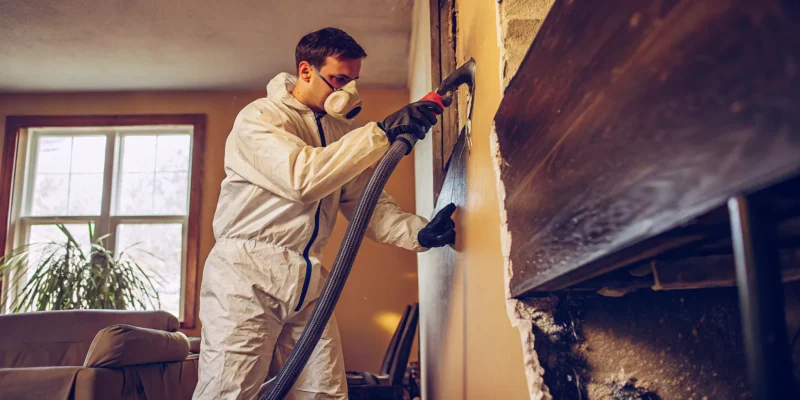
That is why wiping a few dark marks from a wall does not equal complete cleanup. Smoke can affect rooms that were not visibly burned, and aggressive household cleaning may spread residue or drive it deeper into porous materials. Professional technicians assess the affected areas, select cleaning methods for the type of residue, and use commercial equipment designed for soot, odor, and particulate control.
DIY cleanup can create new problems
Basic protective clothing and a household vacuum are not a complete restoration plan. Dry soot, wet residue, and smoke-affected materials respond differently to cleaning. Rubbing the wrong surface can smear soot, damage finishes, or make permanent staining more likely. You may also overlook HVAC components, insulation, cabinets, or contents that continue to release odor after the visible surfaces look clean.
Professional cleaning is also about knowing what should not be cleaned in place. Technicians can identify materials that need specialized contents cleaning, controlled deodorization, or removal for off-site restoration. They can document damage and coordinate the work with your insurance claim instead of leaving you to interpret every step alone.
| Cleanup Approach | DIY Methods | Professional Smoke Damage Restoration |
|---|---|---|
| Soot removal | Household cleaner and rag may smear residue or damage surfaces | HEPA vacuuming and residue-specific cleaning for each soot type |
| Odor treatment | Air fresheners or candles mask odor without removing particles | Ozone generators, hydroxyl machines, thermal fogging eliminate odor at the source |
| HVAC contamination | Usually overlooked or cleaned superficially | Duct inspection, filter replacement, and coordinated air scrubbing |
| Insurance coordination | Homeowner manages claim documentation alone | Project manager handles documentation and direct billing |
| Health precautions | Limited PPE; risk of inhaling PM2.5 fine particles | N95 respirators, protective clothing, and containment protocols |
| Restoration timeline | Uncertain; partial cleanup may miss hidden damage | Structured 6-step process with clear milestones |
Why Bakersfield homeowners call 911 Restoration
911 Restoration of Bakersfield provides a 45-minute emergency response for fire and smoke emergencies. The team includes IICRC Master Fire and Smoke Restorer-certified professionals who understand how residue affects structures and contents. You also receive help navigating the claim process, including direct insurance billing, so restoration can begin without adding unnecessary administrative pressure.
For a clearer overview of the process, see our guide to fire damage restoration in Bakersfield. If smoke or soot has affected your property, prompt professional assessment can help protect the building. Reduce lingering contamination, and give your family a safer path toward a fresh start.
How Smoke Particles Penetrate Walls, Furniture, and HVAC Systems
Smoke damage does not stop where you can see a gray film. Fine particles can settle into drywall paper, unfinished wood, upholstery, carpeting, curtains, and other porous materials. Once absorbed, they may continue releasing odor when the room warms up or humidity changes. Smoke can also travel far beyond the original fire. The EPA notes that smoke from a fire may travel hundreds to thousands of miles, which illustrates how easily airborne particles move through open spaces and ventilation pathways. Read the EPA’s guidance on smoke movement.
Why different soot types need different treatment
Not all residue behaves the same way. Restoration professionals commonly distinguish between wet soot, dry soot, and oil-based soot, and each type can call for a different cleaning approach. Wet soot may smear easily and drive residue deeper into a surface when handled incorrectly. Dry soot can be fine and powdery, while oil-based soot may cling to walls, cabinets, and furnishings. These differences are why aggressive wiping or a one-size-fits-all cleaner can spread contamination or damage a finish instead of removing the residue.
A professional assessment identifies the affected materials and the type of soot before cleaning begins. HEPA vacuuming can capture loose particles without simply redistributing them, followed by material-appropriate cleaning and deodorization. Thermal imaging can also help locate abnormal heat patterns or concealed areas that deserve closer inspection, including residue or damage that is not obvious during a visual walk-through.
How smoke moves through HVAC systems
When a fire or smoke event occurs near a heating or cooling system, airborne residue can enter return vents, filters, ductwork, and air-handling components. Each cycle can then move particles and odor into rooms that appear unaffected. Cleaning only the visible walls leaves this circulation route untouched. Depending on the system and the extent of contamination, restoration may require inspection of accessible HVAC components, filter replacement, HEPA air cleaning, and coordinated cleaning of affected surfaces.
For the same reason, surface cleaning alone is rarely enough when odor persists. Smoke can remain in cavities, insulation, fabrics, and duct pathways after the visible soot is gone. A thorough evaluation helps determine where residue is hiding and which materials can be cleaned, sealed, or replaced. If persistent odor is affecting your home, speak with our smoke odor removal experts about a complete smoke damage assessment.
The Professional Smoke Odor Removal Process: Ozone, Hydroxyl, and HEPA
Smoke odor removal is not a matter of masking a burnt smell with fragrance. Odor-causing particles can remain in porous materials, insulation, ductwork, and hidden structural spaces. A professional team first removes the residue and moisture that carry the odor, then selects deodorization equipment based on the condition of the property. The process typically follows six connected steps.
- Emergency assessment. Technicians inspect the visible and concealed effects of the fire, including soot deposits, odor sources, HVAC pathways, and water released during firefighting. They document affected materials and establish a safe work plan. If ash is present, the CDC recommends a NIOSH-approved N95 respirator to limit inhalation of ash particles: CDC cleanup guidance.
- Property security and board-up. Broken windows, doors, and other openings are secured to reduce exposure to weather, animals, and unauthorized entry. Board-up work also helps separate the damaged area from occupied parts of the home while restoration begins.
- Water removal from firefighting. Fire suppression often creates a second problem: standing water and elevated moisture. Technicians extract water and dry affected areas before odor treatment. Leaving moisture in place can complicate cleaning and allow additional damage to develop.
- Soot and smoke cleaning. Technicians match cleaning methods to the residue and surface. HEPA vacuums and air scrubbers capture fine particles rather than redistributing them, while residue-specific cleaning protects materials that can be damaged by overly aggressive products. This stage may include cleaning walls, ceilings, contents, ductwork, and other areas where smoke traveled.
- Structural restoration. Materials that can be cleaned are restored, while unsalvageable components are removed and replaced. Repairs may include drywall, insulation, flooring, cabinetry, or other structural elements. Completing this work before final deodorization prevents new construction dust and exposed odor sources from undermining the result.
- Final deodorization. The team chooses equipment according to occupancy, materials, and the odor source. Ozone generators can treat persistent odors in an unoccupied, controlled area. Hydroxyl machines are useful for ongoing treatment in some occupied or partially occupied settings, when operated according to safety requirements. HEPA air scrubbers continuously filter airborne particles, and thermal fogging can carry a deodorizing treatment into difficult-to-reach spaces. These methods address different parts of the problem, so equipment should not be used as a substitute for cleaning.
For a thorough evaluation and coordinated cleanup, review our professional smoke damage cleanup service. A trained Bakersfield restoration team can explain which materials need cleaning, which equipment is appropriate, and what must be completed before the odor treatment begins.
Smoke Damage to Personal Belongings: What Can Be Saved?
After a fire, it is easy to assume smoke-stained belongings must be thrown away. That is often not the case. Many furniture pieces, clothing items, documents, electronics, and household possessions can be recovered when they are assessed and cleaned with the right methods. The sooner restoration professionals separate, document, and treat those contents, the better the chance of preserving items with sentimental or financial value.
Why contents should be handled carefully
Ash and soot are not ordinary household dust. The CDC says wildfire ash can irritate the skin, eyes, nose, and throat and may cause coughing. Cleanup should include protective equipment such as gloves, long sleeves, long pants, shoes and socks, and goggles. The CDC also recommends a NIOSH-approved N95 respirator to limit inhalation of ash particles. Read the CDC’s ash cleanup guidance before disturbing contaminated belongings.
Rubbing soot into fabric, using the wrong cleaner on wood, or powering on an ash-contaminated electronic device can create additional damage. A professional contents assessment identifies what can be cleaned, what needs specialized treatment, and what is not safely restorable.
How a professional pack-out protects your belongings
When the home is not suitable for cleaning, the restoration team can complete a pack-out. Contents are inventoried, photographed, carefully packed, and transported to an off-site facility where they can be cleaned in a controlled environment. This also keeps salvageable property away from ongoing soot, odor, moisture, and construction activity.
Cleaning methods depend on the material and the type of residue. Furniture may need carefully selected chemical cleaning or refinishing. Clothing and other textiles can require specialized laundering and deodorization. Documents and photographs may need drying, surface cleaning, or other conservation techniques. Electronics should be evaluated before testing or use, since fine residue can affect internal components.
Specialized odor and residue treatments
For small items with hard-to-reach surfaces, ultrasonic cleaning uses sound waves in a cleaning solution to reach areas that ordinary wiping cannot. Items with persistent odor may be treated in an ozone chamber under controlled professional conditions. Ozone treatment is not a do-it-yourself process, and people and pets must not occupy the treatment area while it is operating.
Contents cleaning is one part of complete fire and smoke damage restoration. A Bakersfield restoration team can coordinate pack-out, specialized cleaning, deodorization, inventory documentation. And insurance communication so you can focus on your family’s next steps instead of guessing what can be saved.
Timeline for Smoke Damage Restoration in a Bakersfield Home
Every fire restoration project follows a different pace. A small kitchen incident with limited residue may take a few days, while a major structural fire can require weeks or months of cleaning, repairs, and reconstruction. The condition of the home, the extent of water used during firefighting, the type of soot, and the materials affected all influence the schedule.
Day 1: Emergency response and board-up
The first priority is making the property safe and stopping additional damage. Our Bakersfield team is available 24/7 and can often respond within 45 minutes. Technicians assess smoke, soot, fire, and water damage, identify immediate hazards, and secure exposed doors, windows, or roof areas with emergency board-up services. This first visit also establishes the restoration plan and helps you understand what happens next.
Days 2-5: Soot removal, drying, and contents care
Once the structure is secure, the team begins removing soot from surfaces, cleaning salvageable belongings, and drying areas affected by firefighting water. Smoke residue can spread beyond the room where the fire started, so walls, ceilings, contents, and air-handling areas may all require inspection. Cleanup should be approached carefully. The CDC recommends gloves, long sleeves, long pants, shoes, socks, and goggles when cleaning ash, along with a NIOSH-approved N95 respirator to limit inhalation of particles. CDC cleanup guidance explains these protective measures.
Week 2 and beyond: Restoration and final deodorization
Structural repairs and reconstruction typically begin after damaged materials are removed and the affected areas are cleaned and dried. Depending on the fire, this phase may include replacing drywall, insulation, flooring, cabinets, or other building components. Deodorization follows as needed, using the appropriate methods for the materials and odor severity. Our smoke odor removal experts can identify odor that remains hidden in porous materials and building cavities.
When you are ready to discuss the next step, contact our Bakersfield team for a 24/7 response and a clear restoration timeline.
Frequently Asked Questions
How soon should smoke damage cleanup begin?
Start as soon as the property is safe to enter. Soot and smoke residue can continue affecting surfaces, contents, and indoor air after the fire is out, while prompt restoration helps limit additional property damage. A professional can assess the structure, identify affected materials, secure the home if needed, and build a cleaning plan before residue spreads or odor settles deeper.
Can smoke odor be removed completely from a Bakersfield home?
In many cases, yes, but the result depends on the fire’s intensity, the materials affected, and how far smoke traveled. Professionals first remove soot and contaminated materials where appropriate, then clean surfaces and contents before using equipment such as HEPA air scrubbers, hydroxyl machines, or ozone treatment. Treating only the rooms that smell smoky may not work if residue reached insulation, HVAC components, or hidden cavities.
Is it safe to clean soot myself?
Be cautious. Smoke and ash can irritate the eyes, nose, throat, and skin and may cause coughing, according to the CDC: https://www.cdc.gov/wildfires/safety/how-to-safely-stay-safe-after-a-wildfire.html. If you must handle limited ash, use gloves, protective clothing, goggles, and a NIOSH-approved N95 respirator. Avoid dry sweeping or disturbing heavily contaminated areas, and have a restoration professional evaluate materials that may be damaged or unsafe to clean.
What happens to furniture and personal belongings after smoke damage?
Not everything must be discarded. A restoration team can inspect furniture, clothing, electronics, and other contents to determine what can be cleaned, deodorized, or restored. Items needing specialized treatment may be packed out and cleaned off-site, while severely damaged materials may require replacement. Keep affected belongings in place until they are documented for your claim, unless they create an immediate safety concern.
Ready to schedule your smoke damage consultation?
A professional assessment can help identify lingering soot and odor so you can understand the next steps for your Bakersfield home. Schedule a free smoke damage consultation with our team to discuss the damage and restoration process.
