
How Should a Healthcare Facility Respond to Mold?
When a healthcare facility discovers a musty odor, visible growth, or water-damaged materials, staff need a careful response that protects occupants and limits disturbance. Understanding what is mold remediation helps administrators distinguish controlled removal of affected materials from simple surface cleaning. The right response starts with safety, moisture control, and a plan coordinated with facility leadership.
Request help with a facility mold concern
What should staff do when mold is suspected?
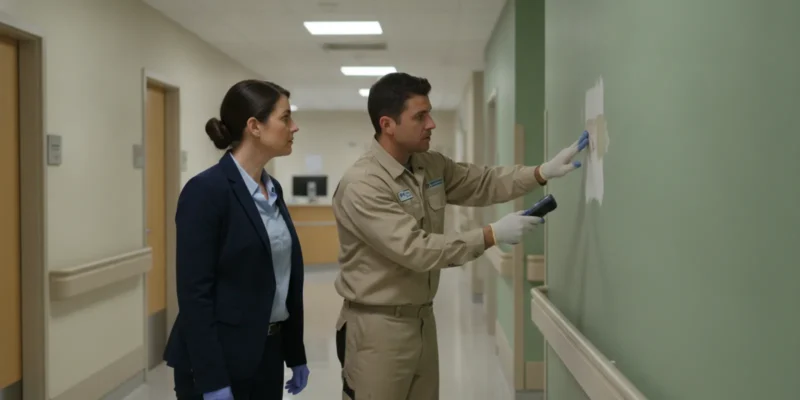
Begin by reporting the concern through the facility’s established process. Notify facilities or environmental services leadership, infection prevention, and other responsible decision-makers according to facility policy. Record the location, time, visible conditions, odor, and any known leak or water event. Do not disturb suspected growth. Avoid scraping, sanding, brushing, or using fans that could spread dust from the affected area.
If there is active water intrusion, arrange for qualified personnel to stop the source when safe. Restrict access to the immediate area if facility leadership determines it is appropriate, and follow established procedures for patient movement and continuity of care. Staff should not move patients or alter clinical operations independently of the facility’s responsible teams.
Healthcare settings have specific infection-control considerations. The CDC advises facilities responding to water or wind damage to address contaminated and damaged materials through physical removal where needed, rather than relying on disinfectant alone. Review the CDC guidance for reopening healthcare facilities after water damage with infection prevention and safety teams.
How should the facility assess the situation?
First establish what is known and what still needs investigation. A small stain may be the visible edge of a larger moisture problem, while a musty odor can point to damp materials that are not visible. Staff should avoid assumptions about the source or extent before the area is evaluated.
- Locate the moisture source: Check for recent plumbing leaks, roof intrusion, condensation, or equipment-related water release. Correcting the source is essential to prevent recurrence.
- Map affected areas: Note the room, nearby spaces, building materials, and whether the issue is near ventilation or patient-care operations.
- Protect records: Photograph visible conditions when allowed by facility policy. Record dates, response actions, and the roles of those notified.
- Use internal protocols: Infection prevention, facilities, occupational safety, and clinical leadership should determine operational controls based on the location and facility risk assessment.
Testing is not a substitute for investigating moisture or evaluating visible damage. The University of Maryland notes there is no test for mold exposure and advises people who are concerned or unwell to consult a healthcare provider. Individual medical questions belong with qualified clinicians, not a remediation contractor. See the University of Maryland mold awareness guidance for that distinction.
Consider the context as well as the visible spot. Determine when the area was last known to be dry, whether the affected surface borders a plumbing chase or exterior wall, and whether nearby rooms have similar signs. Check maintenance tickets and recent water-event reports where available. This history can help facilities staff distinguish a one-time spill from a continuing building condition, while avoiding premature conclusions.
Make the initial review practical and repeatable. Start with the room itself, then note the wall or ceiling surface, flooring, furnishings, and any visible water path. Check the other side of the wall or the space above only if authorized and safe. A ceiling stain under a roof or pipe may have a different likely source from damp flooring near a sink, but neither observation proves the full extent. Record what was observed separately from what staff suspect, so later decisions are based on a clear account rather than assumptions.
Facilities leadership can also create a simple map or room list to track the boundary of the concern. Include adjoining spaces and shared corridors, then mark which areas have been examined and which remain unchecked. This does not replace a professional assessment; it helps the facility communicate scope, avoid overlooking adjacent locations, and give responders a useful starting point.
What is mold remediation in a healthcare building?
What is mold remediation? It is a planned process to correct the moisture condition, contain work as appropriate, remove contaminated or damaged materials that cannot be effectively cleaned, and clean the affected area. In a healthcare facility, the work must also be coordinated with infection prevention and building operations so that the work zone, access, and timing suit the setting.
Remediation is not simply spraying a product over visible growth. Covering or disinfecting a surface without resolving moisture and dealing with affected porous materials may leave the underlying problem in place. The CDC guidance describes physical removal of mold-contaminated and damaged materials as part of remediation in its healthcare water-damage context.
| Situation | Facility response | Key consideration |
|---|---|---|
| Small visible area with no active leak identified | Report, document, avoid disturbance, and arrange assessment | Check nearby materials and determine whether moisture remains |
| Active leak or damp building materials | Address the water source and coordinate controlled drying or removal | Protect occupied areas and preserve continuity of care |
| Suspected spread or concern near sensitive operations | Escalate promptly to infection prevention and facility leadership | Set work boundaries and operational controls before work begins |
| Work is complete | Review records, confirm moisture issue was addressed, and plan return to use | Follow facility-specific clearance and reopening procedures |
How can a facility plan remediation without disrupting care?
Before work starts, facility leadership and the restoration team should agree on the work area, access route, schedule, protection measures, and communication plan. The scope should identify affected materials, the moisture source, containment approach where needed, cleaning steps, waste handling, and how the work area will be evaluated before it returns to normal use.
Planning should account for adjacent rooms and building systems. Work near a patient-care area may need a different schedule or access plan than work in an unoccupied administrative space. Facility infection prevention and operations teams should determine appropriate controls. A contractor can explain proposed methods, but facility personnel retain responsibility for clinical and operational decisions.
- Agree on who can enter the work area and how it will be marked.
- Coordinate temporary room closures, relocations, or schedule changes through facility leadership.
- Clarify how dust and debris will be controlled and how materials will leave the building.
- Set expectations for daily updates, unexpected findings, and approval of scope changes.
- Document the condition of nearby spaces and steps taken to protect them.
Work boundaries should be clear before removal begins. Identify what happens if the team finds additional damp material behind a wall or under flooring, who can authorize a scope change, and how work pauses while that decision is made. Establish a route for tools and debris that avoids unnecessary contact with occupied areas. The facility can also decide how staff receive updates and who communicates any change in access or room availability.
For a broader overview of professional mold remediation services, facility representatives can review the service description. The page notes that standalone mold testing is not offered; the question here is remediation of an identified building concern, not a request for a test alone.
Use a planning meeting to resolve practical details before the first work shift. Confirm where workers will park or check in, which entrance they will use, where equipment can be staged, and how facility staff will distinguish the work zone from normal traffic. Decide who can stop work if an unexpected condition appears. If a clinical area must remain open nearby, the facility should define how access and routine operations will be managed during the work, rather than leaving those decisions to individual staff at the doorway.
It may help to prepare a brief written work notice for affected departments. It can state the planned dates, location, temporary route changes, facility contact, and process for reporting concerns. Keep the notice limited to confirmed operational information. If the schedule changes or the scope expands, update the notice through the same channel so staff are not relying on an outdated plan.
What should administrators ask a restoration provider?
A useful proposal should be understandable and specific to building conditions. Ask the provider to explain its assessment, proposed work boundaries, moisture-control approach, removal and cleaning steps, and coordination with facility staff. Request a written scope and ask how changes will be documented if concealed damage is found.
- Who will coordinate with facilities and infection prevention?
- How will the work area and nearby spaces be protected?
- What materials are expected to be removed, and what could change that scope?
- How will moisture and work progress be documented?
- What records will the facility receive at completion?
Credentials and experience matter, but the facility should also assess communication, documentation, and ability to work within operational constraints. Learn more about technician certifications and the company’s restoration background. Ask direct questions and compare the proposed scope, not just the headline description.
Ask how the provider will handle communication if conditions differ from the initial assessment. For example, a proposal may cover a limited section of wall, but removal could expose damp insulation or damage extending into an adjacent room. The written process should state how the facility is notified, who reviews the finding, and whether additional work requires approval. Also confirm what closeout information is delivered, such as a summary of work performed, materials removed, moisture-related actions, and any remaining recommendations.
When comparing proposals, review them against the same questions rather than comparing only a short scope label. One plan may spell out boundaries, protection, and closeout records, while another may use broad language that leaves those details unclear. Ask for clarification in writing before authorizing work. The goal is not to choose the longest proposal, but to understand what each team will do, what the facility must coordinate, and how changes will be handled if conditions differ from what is visible.
Ask who will be the day-to-day contact and how quickly the facility will be told about a change in conditions. Confirm the expected format for updates and whether the facility will receive records as work progresses or at closeout. These details matter when leadership, facilities, and infection prevention share oversight and staff work across shifts. A clear reporting path reduces the chance that an important decision is delayed because the right people did not receive the same information.
How should the facility document and communicate the response?
Maintain one response file that captures the initial report, photographs where permitted, water-source findings, access decisions, work scopes, updates, and completion records. Assign a facility contact to keep the file current and share relevant status updates with affected departments. Use approved channels and avoid including patient information in contractor communications unless facility policy and applicable privacy requirements permit it.
Communication should be factual and measured. Tell relevant staff what area is affected, which routes or rooms are unavailable, and whom to contact with concerns. Do not speculate about health effects or promise a reopening time before responsible facility teams have reviewed conditions.
A short incident log can make handoffs more reliable. Record when the concern was reported, who inspected it, when water was stopped, what areas were restricted, and when contractors entered or left. Note decisions and the role of the person who made them. If the situation continues across shifts, the next team should be able to see current boundaries and pending actions without relying on verbal recollection alone.
Separate operational updates from clinical guidance. Facilities teams can describe the work area and access changes, while questions about symptoms or individual health should go to the facility’s clinical professionals. If the concern could indicate a cluster of mold-related infections, the CDC advises notifying the local or state health department immediately and not waiting for laboratory confirmation. See the CDC guidance for healthcare-associated mold outbreaks and follow the facility’s established escalation process.
Keep the incident record organized around decisions and evidence. A useful sequence is the initial observation, notification list, moisture investigation, operational controls, approved work scope, daily updates, and completion review. Attach photos or diagrams where policy allows, and label them with dates and locations. If a condition changes, add a dated note rather than replacing earlier observations; preserving the sequence helps explain why the facility changed a boundary, schedule, or work plan.
Use a shift handoff note when the response remains active. It should identify the current work area, access restrictions, unresolved questions, next scheduled action, and the facility contact on duty. Staff should know how to report a new odor, visible moisture, or other relevant observation without entering a restricted zone. A consistent handoff makes it easier for each team to act on the same current information.
When can the area return to use?
There is no single timeline that applies to every facility. Return-to-use decisions depend on the affected area, work performed, whether the moisture source was corrected, facility procedures, and review by appropriate leadership. Follow the facility’s established reopening process and applicable guidance. Keep completion records with the incident file.
Before restoring normal access, confirm that the planned work is complete, debris and equipment have been removed as agreed, and the moisture issue has been addressed. The facility should review the condition of the work zone and any documentation required by its policies. If the scope changed or concealed damage was discovered, close those decisions out explicitly rather than assuming the initial plan still applies.
A closeout review can follow a short checklist: compare completed work with the authorized scope, confirm any approved changes are documented, review records supplied by the provider, and note any follow-up maintenance tasks. Confirm that affected departments know the current access status. If a door sign, temporary barrier, or route notice was used, remove or update it only when the responsible facility team authorizes the change. This final coordination avoids mixed messages between the work crew and clinical staff.
If there is uncertainty about ongoing moisture, damage beyond the original work area, or operational readiness, pause the return decision and bring the relevant facility teams together. A clear record of what was found and corrected supports an informed decision.
What is the next step for a healthcare facility?
A sound response is a coordinated building and operational process, not a quick surface treatment. Report concerns through facility channels, prevent unnecessary disturbance, investigate and correct moisture, define the work plan with infection prevention and facilities leadership, and document decisions through closeout. Keep clinical decisions with qualified facility professionals.
For a facility that needs help discussing a mold concern, a restoration provider can explain the proposed assessment and remediation scope. Compare the written plan, communication approach, and fit with the building’s operating requirements.
Discuss a healthcare facility mold concern
Prompt coordination helps healthcare facilities address moisture and damaged materials while keeping patient care and building operations central to each decision.
