
How Should a Condominium Association Respond to Water Damage? A Basement Water Damage Repair Guide
When water enters a condominium, the association may need to coordinate action across common areas, individual units, shared building systems, and several insurance policies. A clear plan for basement water damage repair starts with safety, prompt communication, and finding the source before finishes are replaced. The board or manager should act quickly, document known facts, and arrange qualified restoration help when damage extends beyond a small, contained spill.
Request a restoration assessment
What should the association do first?
First, determine whether anyone is in immediate danger. Keep residents away from standing water near electrical equipment, a sagging ceiling, or visibly unstable materials. Do not enter a flooded area if electrical hazards are possible. Contact emergency services if there is an immediate threat to life or safety.
If it is safe, identify whether water is still entering the building. An authorized building engineer or qualified plumber may be able to isolate a supply line or shut off a fixture. Do not assume that the visible wet area shows the full extent of the problem. Water can travel through ceilings, wall cavities, floor assemblies, insulation, and shared chases before it becomes visible elsewhere.
A practical first-hour sequence is:
- Protect residents and restrict access to unsafe areas.
- Stop the water source if an authorized person can do so safely.
- Notify the property manager, board contact, and affected residents.
- Record the time, location, visible conditions, and actions taken.
- Arrange an assessment and mitigation plan suited to the affected materials.
- Preserve useful evidence without delaying reasonable steps to limit further damage.
For an overview of professional water damage restoration, review the service details as you plan the response. The goal is to make the area safe, limit continuing damage, and establish what happenedânot to settle every repair or coverage question immediately.
What changes when the damage is in a basement or lower level?
Basements and lower levels can make a small-looking incident more complicated. Water may collect beneath flooring, reach storage rooms, move toward mechanical equipment, or enter through a foundation wall or floor drain. A lower-level room may also connect to several units or common areas, so the board should look beyond the first visible puddle.
During the initial assessment, check whether the affected area includes finished flooring, carpet, baseboards, drywall, wall cavities, insulation, framing, resident storage, electrical panels, appliances, boilers, pumps, shared corridors, stairwells, elevators, utility chases, or rooms on the level above. Ask whether there is staining, odor, dampness, or a change in the condition of materials.
For example, water visible around a basement laundry room may have come from a supply line, drain, appliance, foundation opening, or another level. Removing wet flooring without identifying the path can leave an incomplete record and allow damage to recur. A qualified professional can help distinguish immediate mitigation from later investigation and reconstruction.
Who is responsible for the damaged area?
Responsibility depends on the condominium’s governing documents, insurance arrangements, and the source and location of the water. The association should review its declaration, bylaws, maintenance responsibilities, and insurance provisions rather than assume that a particular pipe, finish, or unit is always its responsibility.
The Colorado Division of Real Estate recommends that owners dealing with water damage contact the board or management company in writing, preferably with a record of delivery. This is general process guidance, not a California legal rule. A California condominium should follow its own governing documents and applicable state requirements. Keep written records of notices and responses, and consider advice from the association’s attorney or insurance professional when responsibilities are unclear. See the Division’s water-damage guidance for its written-contact recommendation.
Use a responsibility map to organize questions while facts are gathered:
| Area or issue | Questions to check | Practical next step |
|---|---|---|
| Common area | Is the affected space maintained by the association? | Notify management and document conditions. |
| Inside a unit | Do governing documents assign maintenance or repair duties to the owner? | Coordinate access and provide written updates. |
| Shared plumbing or building system | Where did the water originate, and who maintains that system? | Arrange source investigation by qualified personnel. |
| Personal belongings and finishes | What does each applicable policy cover? | Have owners and the association contact their insurers. |
| Emergency mitigation | What work is needed now to limit additional damage? | Authorize reasonable steps and keep a written scope. |
This table is a planning aid, not a legal determination. Avoid promising who will pay until governing documents, cause, and relevant policies have been reviewed. The source of the water and the duty to maintain a system may matter as much as the room where damage is discovered.
How should the association document the incident?
Start a single incident file. Record when the water was discovered, who reported it, where it appeared, and what steps were taken. Take dated photos or video before cleanup when safe, then continue documenting as materials are removed, dried, or repaired. Keep vendor assessments, work authorizations, invoices, correspondence, and insurer communications together.
Separate confirmed observations from conclusions. âWater was visible below the second-floor bathroom at 8:10 a.m.â records what someone saw. âThe upstairs owner caused the damageâ assigns responsibility that may not be established. Neutral records help the association make decisions without prematurely assigning fault.
A useful incident log includes date and time of discovery, calls, inspections, shutoffs, and work; people notified; affected locations and whether each is a unit, common area, or shared system; photos and descriptions; access attempts; notices; approvals; scope changes; and unresolved questions.
Notify the association’s insurer promptly and ask what documentation, inspection, or approval steps it requires. Owners may also need to notify their own insurers. The association can share incident facts, but should not interpret coverage or guarantee reimbursement. The insurance claim help information describes restoration-related support; coverage decisions remain with insurers.
How can the association coordinate access and mitigation?
Mitigation should address both the source and wet materials. Arrange safe access to affected units and common areas, and explain why access is needed, who will enter, and how residents can ask questions. If a resident cannot be reached, follow the association’s governing documents and emergency procedures rather than improvising an entry.
Build an access plan before crews arrive. Identify a board or management contact, list the units and common areas involved, note restrictions, and tell residents how to report new signs of moisture. If belongings must be moved, document their location and condition. Keep walkways clear and separate residents from equipment or work zones.
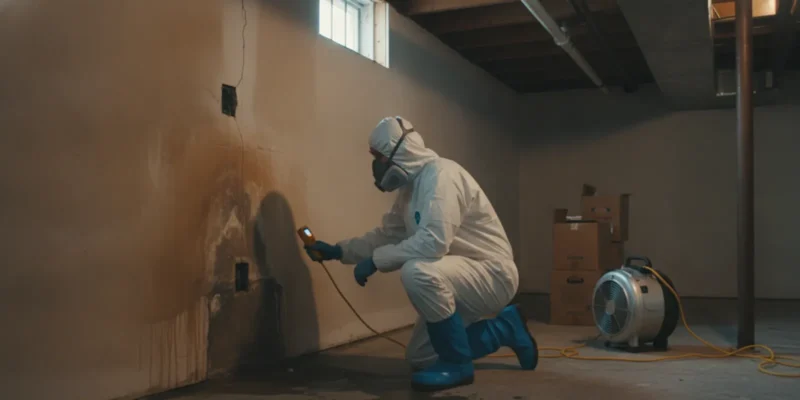
A restoration assessment may include locating affected areas, checking moisture in building materials, and determining what can be dried and what may need removal. Work may involve extraction, controlled drying, dehumidification, and removal of damaged materials. The sequence depends on the water source, materials, and site conditions. Do not cover damp materials with new flooring or paint before the affected assembly has been evaluated.
For a lower-level area, ask whether the assessment considers water behind baseboards, below flooring, in storage spaces, and around mechanical equipment. If a shared system is involved, coordinate findings with the relevant building professional. A restoration provider review should clarify who is responsible for the work, how findings will be reported, and what decisions require association approval.
How should residents and owners be kept informed?
Give residents a concise update as soon as practical. Include the affected area, any access restriction, immediate safety directions, the known status of the water source, and when the next update will arrive. Avoid speculation about cause, cost, or responsibility. Name a point of contact and keep a log of notices sent.
When several units are affected, consistent messages prevent confusion. Explain whether residents should move belongings away from a work zone, how to report new water, odors, or visible changes, and whether work hours or access arrangements may change. Protect personal information and share only details needed to coordinate the response.
- State what is confirmed and what remains under review.
- Explain how residents can report new water, odors, stains, or changes in flooring and walls.
- Give reasonable notice for inspections and work access.
- Provide updates when the plan, scope, or schedule changes.
- Explain which questions belong with management, the restoration provider, or an insurer.
A short update might say that water was observed in a lower-level common area, the source is being investigated, access is restricted until assessment is complete, and the next update will be sent after inspection. That gives residents useful direction without presenting an unconfirmed cause as fact.
How can the board choose a restoration provider?
Compare providers on the clarity of their assessment and work plan, not on a vague promise to take care of everything. Ask whether the provider can respond to the building’s needs, explain proposed drying or removal, identify areas requiring access, and provide written documentation. Confirm who will communicate findings to management and who can approve additional work.
Useful questions include:
- What areas and materials will you inspect, and how will findings be recorded?
- What immediate work is proposed, and what conditions could change that plan?
- How will residents know when crews need access?
- What work is mitigation, and what work is later repair or reconstruction?
- What approvals or insurer coordination should the association plan for?
- How will you identify areas checked that did not require removal?
Ask for a written scope that distinguishes emergency measures from permanent repairs. The association can review a provider’s certification information and confirm that the proposed scope fits the incident. Keep the selection and approval in the incident file.
How should the board compare proposed scopes?
Two estimates may describe different work even when they address the same visible room. Compare assumptions, not just the bottom-line figure. Check whether each scope identifies affected rooms, materials, moisture checks, equipment placement, removal, access needs, and what will count as completion. Ask the provider to explain differences in plain language.
For example, one proposal may include drying the finished basement floor but not inspecting the wall cavity where water first appeared. Another may include opening a limited section for assessment, with additional work requiring approval after findings are known. Neither description alone proves which plan is right. Ask what evidence supports each step and how changes will be authorized.
Separate emergency mitigation from reconstruction. Extraction and drying address current conditions; replacing flooring, drywall, or trim is a later repair decision. A scope should make this distinction visible so the board can track completed work and pending approvals. If several owners or policies are involved, keep records organized by affected area without mixing individual property details unnecessarily.
Ask every provider the same questions: What is known about the water source, and what remains uncertain? Which areas were inspected, and what needs more access? What is necessary immediately to protect people and limit continuing damage? Which materials may be dried in place, and which may need removal? What report or completion record will the association receive? Using the same questions makes proposals easier to compare and creates a record of why a scope was selected.
What should happen before repairs are closed out?
Before authorizing replacement finishes, confirm that the source has been addressed and planned drying and removal are complete. Ask for final assessment records and a list of work performed. Compare completed work with the approved scope and note remaining concerns, such as a persistent odor, a new stain, or materials that still feel damp.
Then coordinate permanent repairs, insurer documentation, and resident access. Make clear which items remain under review and who will follow up. If work affects a shared area, communicate when it can be used again and where residents should direct later concerns. A reopening decision should reflect the area’s condition, not simply that equipment has been removed.
Close the incident file only when the board has essential reports, photographs, decisions, approvals, notices, invoices, and follow-up records. Record unresolved questions rather than treating silence as confirmation that all work is complete. A short after-action review can identify whether contact lists, shutoff information, vendor details, or access procedures need updating before another incident.
For a building-specific assessment or help planning the next step, contact the restoration team.
Frequently Asked Questions
Should the association wait for an insurer before mitigation?
Do not let preventable damage continue while waiting for a coverage decision. Take reasonable safety steps, document conditions, notify the insurer promptly, and ask what approvals or inspections are required. Coverage and payment decisions belong to the relevant insurer.
Can residents clean up water in their own unit?
A small, clean spill may be manageable if safe and fully contained. Water from an unknown source, shared system, ceiling or wall cavity, or a larger area needs careful assessment. Residents should not enter areas with possible electrical hazards or disturb potentially unsafe materials.
Does the association always pay for damage in a unit?
No. The answer depends on governing documents, the source and location of damage, and applicable insurance policies. Review those materials and seek professional advice when responsibility is disputed.
What if water appears again after cleanup?
Report it promptly to management, document the location and time, and keep people away from any unsafe area. Returning moisture may mean the source remains active or additional materials need assessment.
How long should the incident file be kept?
Follow the association’s document-retention policy and any direction from its attorney or insurer. Keep records long enough to support claim, repair, maintenance, and board-decision questions, in a place authorized by the association.
A coordinated response helps protect residents, preserve useful records, and move the building from emergency mitigation toward informed repair decisions.
