The Commercial Fire Damage Restoration Bakersfield Guide
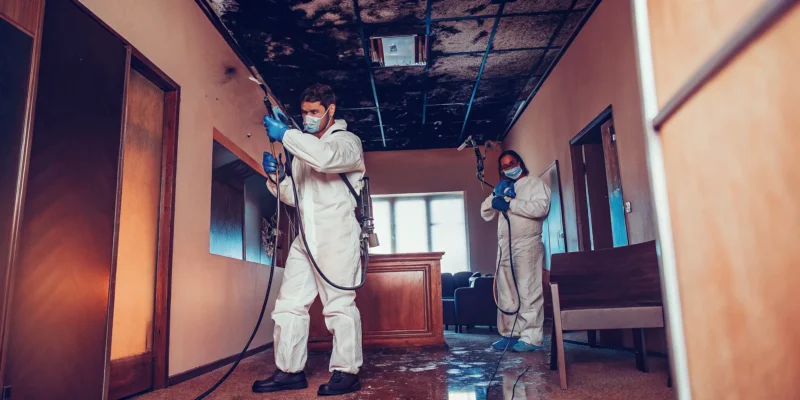
A commercial fire can disrupt far more than the room where flames started. Smoke, soot, heat, fire-suppression water, HVAC contamination, and damaged technology can interrupt customer service and operations across your Bakersfield property. The longer those issues remain unaddressed, the harder it can be to protect your schedule, records, inventory, and customer relationships.
Commercial fire damage restoration bakersfield helps you reduce downtime through prompt assessment, containment, specialized cleaning, structural drying, and coordinated repairs. A professional team can also document damage for your insurance claim while helping you make informed continuity decisions.
911 Restoration of Bakersfield provides a 45-minute guaranteed response, bilingual English and Spanish support, and one team from mitigation through reconstruction. For a closer look at how fire and smoke damage restoration in Bakersfield works, keep reading. Understanding why fire creates such a serious business continuity risk is the first step toward a safer, more organized reopening.
Why Fire Damage Is an Existential Threat to Bakersfield Businesses
A commercial fire can interrupt far more than the hours your doors are closed. Smoke can affect areas untouched by flames, while heat, water from suppression efforts, and damaged equipment can limit what your team can safely use. For you as a business owner or property manager, the financial pressure may continue even when sales stop. The disruption can affect payroll, vendor commitments, customer relationships, and the confidence people place in your business.
The national scale of the risk is substantial. In 2023, approximately 110,000 nonresidential building fires caused $3.16 billion in dollar loss, according to the U.S. Fire Administration. Those figures include many different types of commercial properties, but they reflect a clear reality: a fire can create a serious operational and financial event for any organization.
Lost revenue can outlast the visible damage
Business interruption is often the largest financial concern after a fire, and it can outweigh the cost of repairing the physical property. The timing of the disruption matters. A closure during a busy season, a delayed reopening, or the loss of a critical workspace can remove sales opportunities that cannot be recovered later. A business impact analysis from Ready.gov identifies lost sales, increased expenses, contractual penalties, and customer dissatisfaction or defection as potential consequences of a disruption.
That means the impact may extend beyond the building. You may face penalties for missed obligations, additional costs for alternate operations, or customers who turn to another provider because they need immediate service. A thoughtful response should address both the property and the business continuity issues developing around it.
Reopening quickly protects your next chapter
Recovery is not guaranteed simply because the fire is extinguished. According to FEMA’s Ready Business toolkit, 40% of small businesses never reopen after a disaster, while 25% more will close within three years. These statistics are not a prediction for your business, but they show why early coordination, clear documentation, and a practical reopening plan matter.
You do not have to navigate the disruption alone. Every hour matters, which is why the restoration process matters.
What Commercial Fire Damage Restoration in Bakersfield Involves
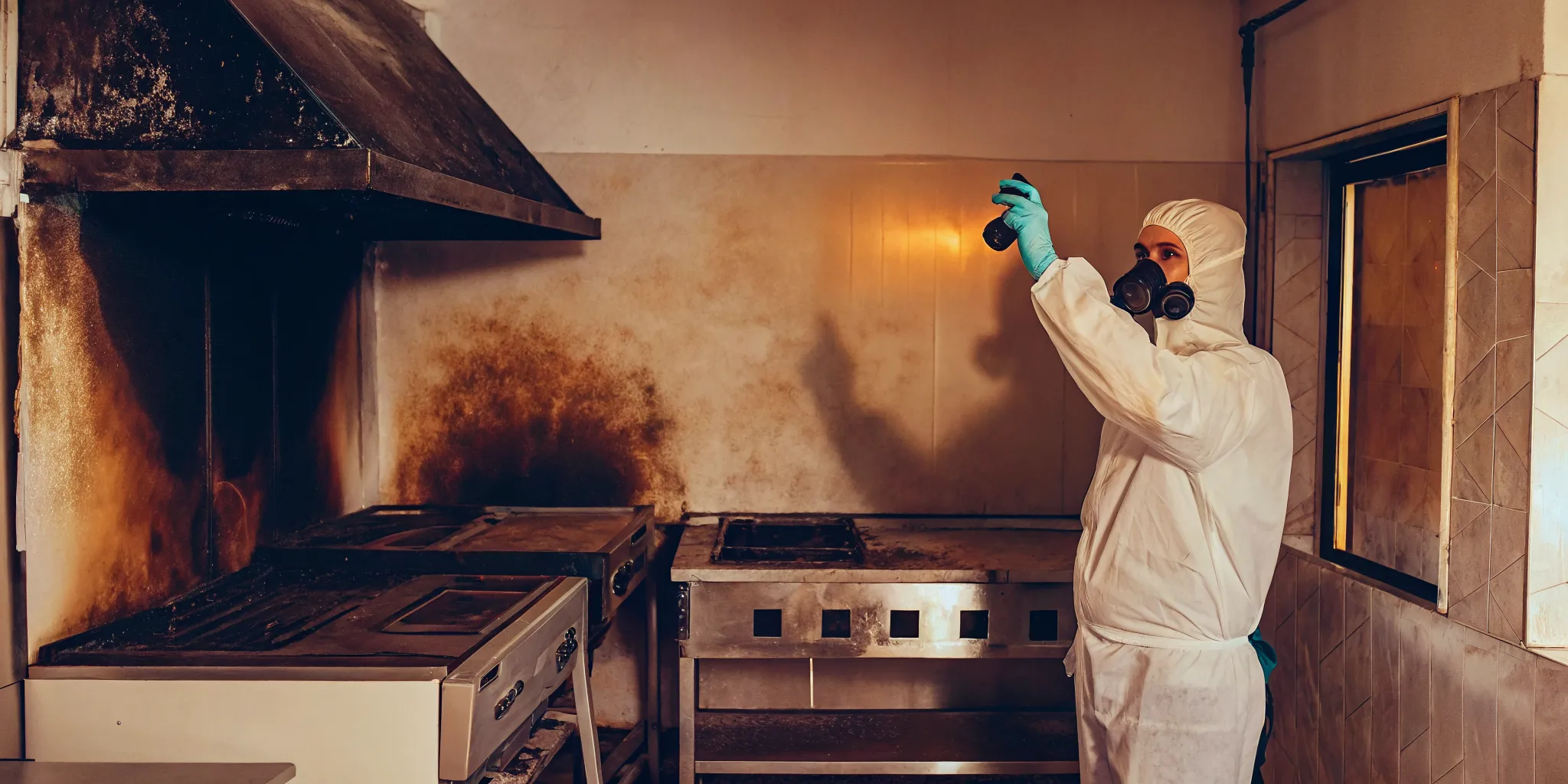
Commercial fire damage rarely stops at the room where flames started. Heat, smoke, soot, and water from suppression efforts can affect occupied areas, inventory, equipment, ventilation, and the systems your team relies on every day. A careful restoration plan protects people first, then works methodically toward a safe return to operations.
Assessment and Documentation
The first step is a detailed inspection, including the building’s structural integrity, the fire’s heat source, and the path smoke traveled. Cleanup should not begin until the property is safe to enter. The assessment also looks beyond visible damage. Smoke can move through HVAC systems and reach rooms far from the origin. While heat and smoke may damage servers, computers, voice and data communications, operating systems, applications, and stored information. Ready.gov identifies damage to IT infrastructure and data as a potential business disruption that belongs in a recovery assessment: business impact analysis guidance.
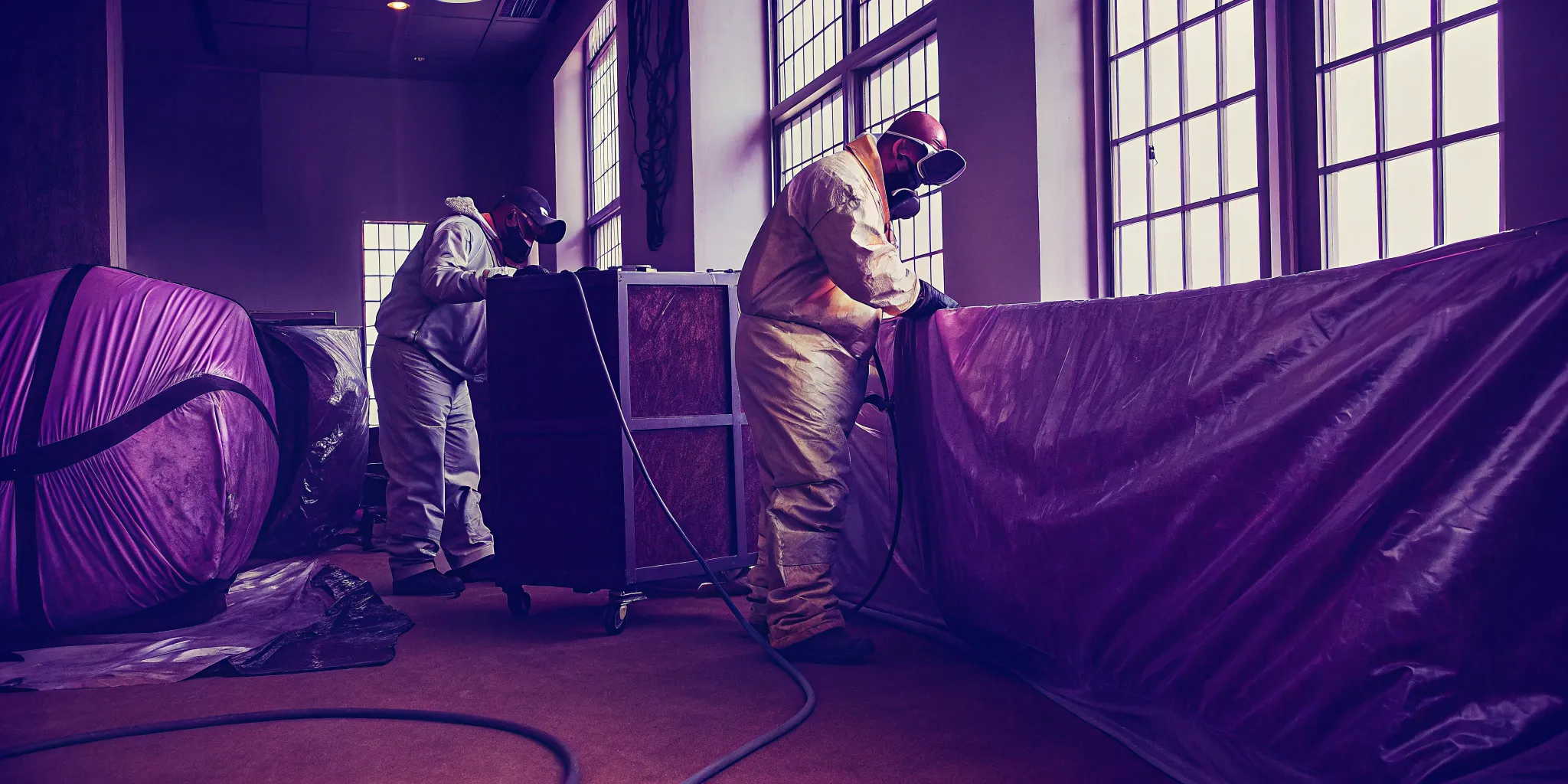
Your restoration team should document affected rooms, contents, equipment, and conditions as work progresses. That record can support decisions about what to clean, what requires specialized handling, and what should be referred to an appropriate technology or specialist provider. It also gives you a clearer foundation for conversations with your insurer and other decision-makers.
Containment, Cleaning, and Structural Drying
Once the property is assessed, restoration typically moves through containment, content cleaning, structural drying, and deodorization. Containment helps keep soot and airborne contaminants from spreading while damaged materials and contents are addressed. Cleaning methods depend on the residue. Wet soot, dry soot, and oil-based soot do not respond the same way, so using the wrong technique can spread residue or damage surfaces and equipment. Professional fire and smoke damage cleanup should match the method to the material and the type of contamination.
Water used to extinguish a fire can create a second problem inside walls, ceilings, flooring, and furnishings. Structural drying and dehumidification help remove that moisture before it leads to additional damage. After cleaning and drying, deodorization addresses smoke odor at affected materials rather than masking it with fragrance. The scope and sequence depend on the building, its contents, and the extent of damage. For planning conversations with your insurer, review the fire damage restoration cost factors that can affect the work. Keep in mind that every situation differs, so avoid assuming a one-size-fits-all price.
- Inspect structure, HVAC, contents, and IT systems.
- Contain affected areas and document conditions.
- Clean residue with material-specific techniques.
- Dry water-affected structures, then deodorize.
Business Interruption Insurance: What It Covers After a Fire
After a commercial fire, the building is only part of the financial picture. A temporary closure can interrupt revenue, payroll, customer relationships, and critical contracts. Business interruption coverage may help address eligible losses tied to the shutdown, but the exact protection depends on your policy, limits, exclusions, and claim requirements. Review the language with your insurance professional rather than assuming every cost will be reimbursed.
Lost Income and Increased Operating Expenses
A temporary interruption or closure claim may include lost net income based on decreased revenue during the period your business cannot operate. The potential impact is not limited to sales. FEMA identifies increased operating expenses as another category that may be considered after a covered event. Examples can include temporary labor, advertising needed to resume operations, and the cost of temporarily relocating your office or operations.
Some policies may also address documented payroll for employees who continued to be paid while operations were shut down. The same review can include business-owned contents, damaged inventory, and business-owned vehicles affected by the fire or a related covered event. These categories are not automatic guarantees. Your adjuster will determine what qualifies under the policy and how the loss is calculated.
For a broader view of business disruption, Ready.gov recommends identifying financial effects such as lost sales and income, increased expenses, contractual penalties, and customer defection. The timing of the interruption can also influence the size of the loss, especially when a closure affects a high-demand operating period. See the Ready.gov business impact analysis guidance when building your recovery plan.
What to Document for Your Claim
Strong records give your insurer a clearer basis for evaluating the claim. Gather income tax returns, profit-and-loss statements, payroll records, sales reports, inventory records, vehicle and contents documentation. And operating records that show how the business performed before and after the fire. FEMA specifically encourages claimants with business-related losses to submit income tax returns, and warns that failing to provide required documentation may result in a denial of compensation.
Keep a dated record of the closure, partial operations, relocation costs, temporary labor, advertising, payroll, and other added expenses. Restoration professionals can help document property conditions and organize fire-related losses, but you should verify every item with your insurer and preserve copies of all submissions. If your business is not formally registered or incorporated, do not assume you are automatically excluded. FEMA notes that some unregistered businesses may still be eligible, although they may be treated as individuals for compensation purposes.
Prompt commercial fire damage restoration can help preserve evidence while your team works through the insurance process. Ask your carrier what documentation is required, and confirm coverage details before committing to expenses.
How 911 Restoration Prioritizes Commercial Clients for Faster Reopening
When a fire interrupts your business, every decision should support a safe, organized return to operations. 911 Restoration of Bakersfield coordinates the response around that goal, giving commercial property owners and managers a clear path from emergency mitigation to reconstruction. The local Bakersfield and Kern County team is available 24/7/365, with a guaranteed 45-minute emergency response. That commitment helps you begin assessment and stabilization promptly, without promising a response faster than the guarantee.
A Single Point of Contact from Mitigation to Reconstruction
Commercial fire damage can involve soot, smoke odor, contents, structural materials, and areas beyond the original point of ignition. Managing separate vendors for each stage can make communication and scheduling harder when you are already handling employees, tenants, customers, and insurance documentation. 911 Restoration provides one coordinated restoration path from emergency response and mitigation through complete reconstruction, without subcontractors. You have one restoration partner tracking the scope of work, explaining next steps, and keeping the project moving as conditions change.
This continuity matters when a property needs more than surface cleanup. The team can coordinate the work required to stabilize the building, clean affected contents and materials, address smoke-related damage, and rebuild damaged areas. Keeping those responsibilities together reduces handoff friction and gives you a more consistent point of accountability while you work toward reopening.
Experienced, Local, and Ready to Communicate
Commercial restoration requires technical judgment as well as dependable communication. 911 Restoration has an IICRC Master Fire and Smoke Restorer on staff, including Eli Cabral, and a bilingual English and Spanish team. You can receive explanations and updates in the language that best supports your ownership group, staff, tenants, or family decision-makers. The local presence also means your project is handled by a team serving Bakersfield and Kern County, rather than managed only through a distant national call center.
For a closer look at the response available to offices, retail properties, restaurants, and other facilities, review commercial restoration services. Throughout the process, the team brings a Fresh Start Attitude: taking the disruption seriously while focusing on practical steps that help you regain control and reopen safely.
Case Study: Typical Timeline for Commercial Fire Restoration in Kern County
When your Kern County property experiences a fire, restoration does not follow a one-size-fits-all calendar. The sequence below shows a typical path from emergency stabilization to reopening. Your building size, the extent of structural damage, smoke travel, and the condition of HVAC or mechanical systems can lengthen or shorten each phase. The goal is to make the next decision clear while protecting your employees, contents, and operations.
| Phase | What Happens | Typical Duration |
|---|---|---|
| Emergency response and assessment | The team secures the property with board-up or other containment, documents visible conditions, and completes a structural-integrity inspection before cleanup begins. This first review also helps identify smoke movement and immediate safety concerns. | First 24 hours, with follow-up assessment as conditions become clear |
| Water extraction and structural drying | Fire-suppression water is removed from affected areas. Air movement, dehumidification, and other specialized drying equipment help limit secondary damage in floors, walls, ceilings, and contents. Drying needs depend on saturation and building materials. | Days, depending on saturation, affected materials, and building size |
| Soot and smoke cleaning | Contents and surfaces are cleaned, while HVAC and mechanical systems are evaluated for smoke migration. Wet, dry, and oil-based soot require different cleaning methods, so the approach depends on the residue and what it has affected. | Varies with soot type, contents, ventilation, and the extent of smoke travel |
| Reconstruction and final deodorization | Damaged building components are repaired or rebuilt after mitigation. Final deodorization addresses remaining smoke odor once affected materials and systems have been cleaned or replaced. | Weeks to months, depending on structural damage, approvals, materials, and building size |
This sequence reflects the assessment, containment, content cleaning, structural drying, and deodorization stages used in commercial restoration. The process must also account for systems beyond the room where the fire began, because smoke and suppression water can affect distant areas. A 45-minute response helps compress the front of this timeline by starting board-up, safety review, and damage control sooner. It does not guarantee a fixed reopening date, but it gives you an earlier, organized path toward returning your business to service.
Contact 911 Restoration of Bakersfield for a free commercial fire damage restoration assessment.
Frequently Asked Questions
How long does commercial fire damage restoration take?
The timeline depends on the building’s structural condition, the type of soot, smoke spread, water used during firefighting, and the scope of reconstruction. A professional team begins with an inspection, then coordinates cleanup, drying, deodorization, repairs, and documentation. You should receive a clear sequence of next steps after the initial assessment, rather than an unsupported promise about a finish date.
What are the first steps after a commercial fire?
Confirm that everyone is safe, follow directions from the fire department, and do not re-enter until the building is cleared. Then contact your insurer and a restoration company. Avoid disturbing soot, contents, or damaged areas, because premature cleaning can spread contamination and complicate documentation. Take photos only from a safe location and preserve operational records for your claim.
How can you minimize business downtime after a fire?
Start with a coordinated response that addresses safety, containment, smoke and soot removal, drying, deodorization, and structural repairs. Ask the restoration team to identify areas that can reopen first and to document damage for your insurer. Using one qualified vendor from mitigation through reconstruction can reduce handoff delays and keep decisions organized while you plan temporary operations.
Does insurance cover commercial fire damage restoration?
Coverage depends on your policy and the cause of loss. Business interruption coverage may help with lost net income and certain increased expenses, such as temporary relocation or extra operating costs. Keep invoices, payroll records, tax returns, inventory details, and other business records, then review the claim with your insurer and restoration professionals before authorizing work.
Ready to Get Your Bakersfield Business Moving Forward?
A fire can leave you balancing safety, operations, and decisions about what comes next. A coordinated restoration response can help you understand the damage and plan the steps toward reopening with greater clarity. For 24/7 emergency commercial fire damage restoration, call 911 Restoration of Bakersfield at (661) 220-7584 to speak with the team and get started.
