

How Should a School Respond to a Water Damage Emergency?
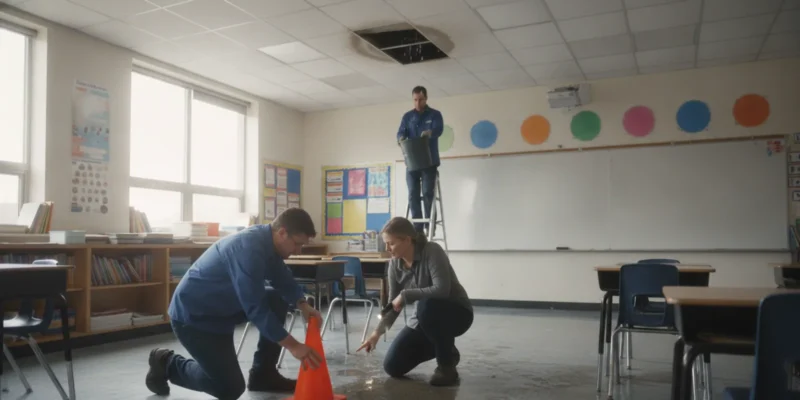
A water emergency at school can affect classrooms, hallways, offices, and the daily schedule at once. School water damage restoration begins with protecting people, stopping the source when safe, and organizing a clear response. A measured first-hour plan also helps staff preserve useful information for cleanup and reopening decisions.
Request help with school water damage
What should school staff do first?
Start with safety, not cleanup. Keep students and staff away from standing water, wet electrical equipment, sagging ceilings, or areas where the source is unknown. If there is a risk of electrical contact, do not enter the affected area. Follow the school’s emergency procedures and contact emergency services when there is immediate danger.
- Restrict access. Use staff, signs, or barriers to keep people out of affected rooms and nearby paths. Consider whether water has reached corridors, stairs, restrooms, or shared spaces.
- Notify the right people. Alert the principal or incident lead, facilities staff, and the district’s designated safety and maintenance contacts. Record when the event was found and who was notified.
- Stop the source only if safe. A trained staff member may shut off a local valve if it is accessible without entering a hazardous area. Do not attempt repairs on electrical, gas, or complex plumbing systems.
- Protect unaffected areas. If it can be done safely, move dry supplies, computers, books, and furniture away from water. Avoid carrying wet or contaminated materials through occupied areas.
- Arrange qualified assessment. Contact a restoration provider to assess the affected materials, water source, and drying needs.
School leaders can use the National Weather Service’s school preparedness guidance as a planning reference for coordinating emergency roles. A water incident may also require a schedule change, room closure, or relocation of activities while the building is assessed.
How should the school document the incident?
Good records help the school understand the event, coordinate facilities work, and communicate with its insurer or district office. Assign one person to maintain a simple incident log. Record observations and actions without guessing at the cause or making claims about safety before qualified personnel assess the area.
- Date and time the water was first noticed, plus the time the source was stopped if known.
- Rooms and building areas affected, including visible water travel beyond the original leak.
- Photos or video from safe locations, taken before items are moved when practical.
- Visible conditions such as wet ceiling tiles, damp flooring, staining, or water near equipment.
- Names of staff contacted, instructions received, and any temporary room closures.
- Items moved or protected and any areas that could not be safely accessed.
- Weather or building conditions that may help explain when the incident occurred.
- Dates and times of inspections, equipment placement, drying checks, and status updates.
Keep copies of maintenance requests, vendor notes, work authorizations, and moisture or drying records that are provided. If the incident involves a roof leak, pipe break, or appliance failure, note the observed facts; let qualified personnel identify the cause. For guidance on property claims and restoration coordination, see the school or district’s policy and the relevant insurance claim help information.
Make the record useful to the next person
Use a consistent room name or number on every photograph, note, and work update. For example, label a photo “Room 12, north wall, 9:20 a.m.” rather than relying on a description such as “wet classroom.” If the school uses a floor plan, mark the room on that plan and note the direction water traveled. This simple practice helps facilities staff compare the initial condition with later observations, especially when several rooms are involved.
Separate what staff saw from what someone believes happened. A useful entry might say, “Water visible beneath the sink at 8:10 a.m.; custodial staff closed the nearby room at 8:18 a.m.” Avoid recording an unconfirmed statement as a finding. If later assessment changes the understanding of the affected area, add a dated update rather than replacing the original note.
How should leaders decide which areas to close?
Affected space should be evaluated beyond the point where water was first seen. Water may move under flooring, through wall cavities, across ceilings, or into rooms below. A classroom that appears mostly dry may still need assessment if water traveled from an adjacent restroom, mechanical room, roof area, or upper floor.
Make a simple building map showing the source area, visibly affected rooms, access restrictions, and alternate spaces. Separate areas that can remain in use from areas that require inspection or work. The map can help the principal, facilities staff, district office, and restoration provider discuss the same scope without relying on memory.
Also consider how the response affects special programs, food service, offices, technology rooms, libraries, and accessible routes. If a closure changes the normal route through the building, communicate a temporary path and keep exits clear. The school’s responsible officials should make operational and occupancy decisions through applicable district procedures.
Use a room-by-room decision log
A short room-by-room list can make temporary decisions easier to review. Record the room, observed condition, restriction in place, person responsible for the next check, and the information needed before the restriction changes. For example, a hallway may stay open if the affected work area can be safely separated and the required route remains clear. A nearby classroom may remain closed until the ceiling and wall area above it have been assessed. These are planning examples, not automatic rules; the school’s designated officials should decide based on the actual conditions.
Review the map when new information arrives. If water appears in a second room or a ceiling tile changes condition, update the boundary and tell staff who rely on the space. A dated change log prevents a posted closure sign, an older message, and a newer facilities instruction from contradicting one another.
How is a school water damage response organized?
A school response usually moves through assessment, containment, water removal, drying, and a review of affected materials. The exact plan depends on the source, the water’s extent, the materials involved, and whether the area remains occupied. There is no universal time estimate for drying or reopening, so decisions should be based on documented site conditions rather than a fixed calendar.
| Response stage | What happens | School’s role |
|---|---|---|
| Initial safety and triage | Identify immediate hazards and limit access. | Keep occupants away; follow emergency and district procedures. |
| Assessment | Determine affected areas, materials, and likely work scope. | Provide building history and access to authorized staff. |
| Water removal | Remove standing water using suitable equipment and controls. | Coordinate room access and protect unaffected contents where safe. |
| Drying and monitoring | Use drying equipment and monitor conditions over time. | Maintain access restrictions and keep records of updates. |
| Cleaning, repairs, and review | Address affected materials and confirm the work plan is complete. | Coordinate facilities review and make the occupancy decision through responsible school officials. |
The restoration team should explain what is included, which rooms require access restrictions, what equipment will be used, and how progress will be reported. Ask how staff should handle ventilation, stored materials, and daily access around the work zone. Information about water damage restoration services can help school administrators understand the type of work that may be discussed during an assessment.
Agree on checkpoints before work begins
Ask for the sequence of work and the event that will trigger each update. For instance, staff may want to know when the initial assessment is complete, when standing water has been removed, and when a monitoring visit or scope change is expected. A checkpoint is not a promise that a room will be ready at that time; it is a practical moment to exchange information and confirm the next action.
Clarify how technicians will enter the building, where equipment will be placed, and whom they should contact if a locked space or schedule change affects the work. If the school has separate custodial, IT, or facilities leads, identify who can answer questions about each area. A named point of contact helps prevent duplicate instructions and reduces the chance that a work zone is opened accidentally.
What materials and contents need special attention?
Schools contain many materials that respond differently to water. Carpet, resilient flooring, drywall, ceiling tiles, wood trim, insulation, cabinets, paper files, books, electronics, and classroom supplies may each require a separate decision. The response should identify what can be dried in place, what needs to be moved, and what should remain isolated until it is evaluated.
Do not plug in wet electronics or move damaged equipment through occupied areas. Keep books, student records, artwork, and other paper materials in their existing location when moving them could spread damage, unless qualified staff direct otherwise. If contents must be relocated, label the room of origin and keep an inventory so items can be returned or reviewed later.
Where water may have come from a drain, sewage line, or another potentially contaminated source, restrict handling and request an appropriate assessment. A different work plan may be needed than for a clean supply-line leak. School staff should not try to identify contamination by appearance alone.
Keep contents organized if a room must be cleared
Before moving items, agree on a staging location that does not block exits, accessible routes, or the restoration work area. Group items by room and type, and use labels that show where each group came from. A basic inventory can note the item category, approximate quantity, condition observed, and where it was placed. This is particularly useful for library materials, classroom technology, and files that should not be mixed with contents from another room.
Do not discard school property or student work solely because it looks damaged. Follow district procedures and ask the appropriate facilities or records lead how to handle items that may need review. For electronics, note the device location and identifying information if it is safe to do so, but do not power it on to test it. Clear handling instructions reduce confusion when the room is later put back together.
What should school leaders ask a restoration provider?
Choose a provider based on a clear scope and communication plan, not a promise that every room will be ready by a particular date. Ask questions before authorizing work, and confirm who can approve changes on behalf of the school or district.
- What areas and building materials do you believe are affected, and what needs further inspection?
- How will you control access and separate work areas from occupied parts of the building?
- What water removal and drying steps are proposed, and how will progress be documented?
- Which contents can be protected or moved, and who is responsible for handling them?
- What information, site access, and after-hours coordination will you need from school staff?
- How will you communicate changes in scope or newly observed damage?
- Who will provide updates, and how often should the school expect them?
- What records will the school receive when each stage is completed?
Review the provider’s experience and credentials relevant to restoration work. You can learn more about IICRC-certified technicians and the company’s approach to school or other large-building work through its commercial restoration information. Ask for written findings and a description of the work before the project proceeds where circumstances allow.
Compare proposals by scope, not just equipment lists
When reviewing more than one proposed plan, compare the areas included, assessment findings, access controls, documentation, and responsibilities for contents. Two proposals may name similar equipment but describe different affected rooms or different monitoring responsibilities. Ask each provider to identify assumptions and exclusions in plain terms. If an area has not been assessed, note that uncertainty instead of treating it as a confirmed part of the scope.
Also ask how updates will be delivered and who should receive them. A brief written daily summary can help the school coordinate room use, communicate schedule changes, and keep a consistent record. Confirm the school’s authorization process before approving added work, particularly if newly observed conditions change the original plan.
How can a school limit disruption during cleanup?
Separate the restoration work from school operations as much as practical. The incident lead can map affected rooms, identify alternate spaces, and share approved updates with staff and families. Keep communications factual: explain which areas are closed, where activities are moving, and when the next update will be provided. Avoid stating that a space is safe or ready until the responsible officials have reviewed the relevant information.
Coordinate access around arrival, dismissal, lunch, and scheduled activities. Mark equipment and work zones clearly. Keep hallways and exits clear, and do not allow students to handle drying equipment, wet materials, or debris. If work affects several areas, ask the restoration provider to sequence tasks so the school can plan room use and building access.
For broader emergency planning, the Georgia Association of School Social Workers offers tips for supporting students after a disaster. The resource is not a building-restoration standard, but it can help school communities think about students’ return after a disruptive event. For larger incidents that affect several systems or buildings, leaders can also review the provider’s disaster restoration information when planning communication and coordination.
Plan a workable temporary schedule
For each closed room, list the activity that normally takes place there and the temporary location or arrangement. Check whether the alternate space has the needed furniture, teaching materials, power access, and a clear route for students and staff. If a move affects several groups, stagger transitions where practical and make sure substitute staff receive the same directions as regular staff.
Coordinate deliveries, custodial work, and restoration access so they do not compete for the same corridor or entrance. A short daily coordination check can cover room status, planned work, access changes, and the time of the next update. Keep the message limited to confirmed information; if the timeline is uncertain, say that the school will share another update after the next review rather than promising a reopening date.
How should the school communicate with families and staff?
One designated school representative should coordinate outward communication whenever possible. A short update can state what happened, which rooms or activities are affected, what temporary change is in place, and when the next update will come. Avoid sharing unverified causes, private student information, or conclusions about health or safety that have not been made by the responsible officials.
Staff also need practical instructions. Tell them which entrances to use, where to send students, how to report new signs of water, and whom to contact with questions. If the response lasts more than one day, keep a dated update log so substitute staff and families can find the current information instead of relying on older messages.
Before sending an update, check that it matches the current room map and the instructions shared with staff. Include the effective date and time, a contact point for operational questions, and the next expected communication. If an earlier message becomes inaccurate, issue a correction through the same channels and clearly identify what changed. Consistency helps families act on current information without having to reconcile conflicting versions.
When can affected rooms reopen?
Reopening depends on the extent of water intrusion, the materials affected, the drying and cleaning work required, and the school’s own facilities and safety procedures. Do not rely only on appearance: a surface that looks dry may not tell the whole story about concealed materials. Ask for the restoration findings and completion records, then coordinate the occupancy decision with the district’s facilities, safety, and administrative leads.
Before returning a room to regular use, confirm that necessary work is complete, equipment and debris have been removed as planned, and access restrictions have been lifted by the responsible parties. Check that furniture and supplies have been returned appropriately, pathways remain clear, and any follow-up inspection or repair has been assigned. If concerns remain, ask for clarification and keep the area closed until they are resolved through the school’s process.
A practical handoff can include the work completed, any monitoring or repair still scheduled, the location of records, and the person responsible for follow-up. Confirm that staff know which room can be used and whether any contents remain unavailable. If a room is returned in stages, such as furniture first and normal activities later, make the sequence explicit so no one assumes that one completed task means every part of the room is ready.
What should a school do next?
Prepare an incident contact list and a simple reporting process before an emergency occurs. Identify who can close rooms, who contacts district facilities staff, who speaks with families, and who can authorize outside work. Include after-hours contacts and a backup decision-maker. After the incident, review what slowed the response and update the plan.
Schools that need help coordinating an assessment can use the company background and restoration information to prepare questions for an initial conversation. If the property is outside the immediate campus area, the service area information can help identify whether the location is within the provider’s coverage.
Talk with a restoration team about the affected building
A calm, documented response helps school leaders protect occupants, coordinate qualified restoration, and make reopening decisions with the information they need.
