What to Do After a House Fire Bakersfield: A Step-by-Step Guide
A house fire can leave you unsure what is safe, what to save, and where to begin. Start with safety: do not re-enter until officials or qualified professionals confirm the structure and utilities are safe. And contact your insurance company as soon as possible to report the loss. FEMA also advises checking for damaged power lines, gas lines, and foundation cracks before entering.
Knowing what to do after a house fire bakersfield homeowners can take immediate action: stay out of unsafe areas. Document visible damage, notify your insurer, and arrange professional fire restoration to assess the structure and limit further damage.
From smoke and soot that reach beyond visibly burned rooms to water left by firefighting, hidden problems can grow while you wait. A careful first-day response protects your family, your claim, and your property. Here is how to handle the first 24 hours and connect with professional fire damage restoration services in Bakersfield.
What to Do After a House Fire in Bakersfield: The First 24 Hours
If you are deciding what to do after a house fire in Bakersfield, put safety ahead of belongings, cleanup, or repairs. Work through these steps in order, and do not re-enter until the property has been cleared by the fire department or a qualified professional.
-
Call 911 and check for injuries
Move everyone to a safe location and call 911. Tell the dispatcher whether anyone is injured, whether people or pets may still be inside, and whether you notice smoke, flames, or other immediate hazards. Do not go back inside to retrieve belongings. Wait for the Bakersfield Fire Department or other responding officials to say the scene is safe to approach.
-
Stay outside and look for dangerous conditions
Before any re-entry, look from outside for damaged power lines, gas lines, foundation cracks, leaning walls, or other visible structural damage. FEMA advises checking these hazards before entering a home after a disaster. If you smell natural gas or propane, or hear hissing, leave the area immediately and contact the fire department. Do not use matches, light switches, or electrical equipment near a suspected leak. Review FEMA’s fire and disaster re-entry safety guidance for additional precautions.
-
Turn off utilities only when it is safe
Have the main electrical power and water systems turned off until you or a professional can confirm they are safe. If the controls are inside the damaged structure, do not enter to reach them. Ask the fire department or utility provider for instructions, particularly if gas lines or electrical wiring may be damaged. Avoid touching standing water near outlets, appliances, or exposed wiring.
-
Notify your insurance company promptly
Contact your insurance agent or company as soon as possible to report the loss and start the claims process. Ask what emergency expenses, temporary housing, documentation, and protection measures your policy may cover. Keep every claim number and instruction in one place. Before moving items or beginning cleanup, ask whether the adjuster needs photographs or an inspection first. For help understanding the restoration process, see our professional fire damage restoration services in Bakersfield.
-
Arrange a professional safety assessment
Once officials allow the next step, have a qualified restoration team assess structural integrity and begin mitigation. Early action can help prevent additional damage while the property remains exposed to smoke, soot, water, or weather. Leave hazardous materials and unstable areas alone until they have been evaluated.
Securing Your Property After Fire Damage in Bakersfield
Once the Bakersfield Fire Department clears the immediate emergency, securing the property helps protect your family, belongings, and insurance claim. Do not re-enter or move items until firefighters or a qualified professional confirms that the structure is safe.
Arrange a board-up and limit access
Fire crews may leave doors, windows, roofs, or other openings damaged during suppression and ventilation. Ask the fire department what areas remain restricted, then arrange professional board-up services for exposed openings. A secure board-up helps prevent unauthorized entry, theft, weather exposure, and additional damage while your household is displaced. The U.S. Fire Administration recommends securing a vacant fire-damaged home against unauthorized entry to reduce the risk of theft or looting (USFA guidance after a fire).
Understand salvage operations before moving belongings
Firefighters may move, cover, or remove contents during salvage operations to protect property from heat, flames, smoke, and water. That activity is part of the response protocol, not a sign that belongings have been abandoned. Ask the fire department which items were moved, which areas are restricted, and what can be safely handled. Photograph the scene before moving salvageable contents, and keep damaged items available for your insurer unless they create a safety or sanitation hazard.
Follow Bakersfield rules and avoid disaster scams
Do not place burned materials at the curb or haul debris away without confirming Bakersfield and Kern County requirements for debris removal and hazardous waste. Fire-damaged materials may include unsafe chemicals, contaminated insulation, or structural components that require controlled handling. Your restoration contractor should explain the applicable local requirements and coordinate safe removal.
Be cautious when contractors arrive unsolicited after a disaster. Verify that a company is licensed, bonded, and insured, and avoid anyone demanding a large cash deposit or promising unusually cheap, immediate repairs. Request a written scope, confirm who will perform the work, and let your insurer review estimates before signing. A calm, documented process is one of the safest answers to what to do after a house fire in Bakersfield.
Documenting Fire Damage for Your Insurance Claim
Good documentation gives your insurance company a clear record of what happened, what was lost, and what you had to spend while your home was unsafe. Work through these steps without putting yourself at risk or disturbing dangerous areas.
-
Photograph and record the damage before cleanup
Take wide photographs and videos of every affected room before moving belongings, removing debris, or beginning repairs. Then capture closer images of damaged walls, ceilings, floors, appliances, furniture, and personal items. Include multiple angles so the extent and location of the damage are clear. Do not enter an unsafe structure or handle unstable materials just to get a better image. The guidance for documenting fire damage is to photograph and record everything before cleaning or repairing, because this evidence can support your claim.
-
Create a detailed inventory of destroyed and damaged property
Make a room-by-room list of items that were destroyed, damaged by smoke or soot, or affected by water used to extinguish the fire. Include the item name, brand or model when known, approximate purchase date, quantity, and estimated replacement cost. Attach photographs, receipts, warranties, or account records if you have them. Start with high-value items, but include ordinary clothing, kitchenware, linens, electronics, and children’s belongings too. The U.S. Fire Administration recommends creating a list of everything damaged or destroyed for an accurate insurance claim: after-fire claim guidance.
-
Save receipts for emergency living expenses
Keep itemized receipts for hotels, meals, transportation, clothing, laundry, and other necessary costs caused by displacement. Store paper receipts in a safe place and photograph or scan them as a backup. Ask your insurer how to submit these expenses and confirm whether your policy includes Additional Living Expenses, or ALE. Policies often cover temporary housing and certain related costs while repairs are underway, but coverage limits and eligible expenses vary. Keep a simple running expense log so no purchase is forgotten.
-
Log every conversation with the insurance company
Record the date, time, representative or adjuster name, phone number, claim number, and a concise summary after every call, inspection, email, or visit. Note documents requested, deadlines, decisions, and your next follow-up date. Save emails, estimates, photographs, and claim forms together in one digital folder. The U.S. Fire Administration recommends maintaining a log of adjuster interactions, including names, dates, and discussion details. For a closer look at the process, review this guide to filing a fire damage insurance claim.
Share your documentation with the adjuster and restoration professionals before authorizing major work. A complete record helps everyone evaluate the loss and plan the next safe step.
Smoke and Soot Hazards: Why You Cannot Move Back In Yet
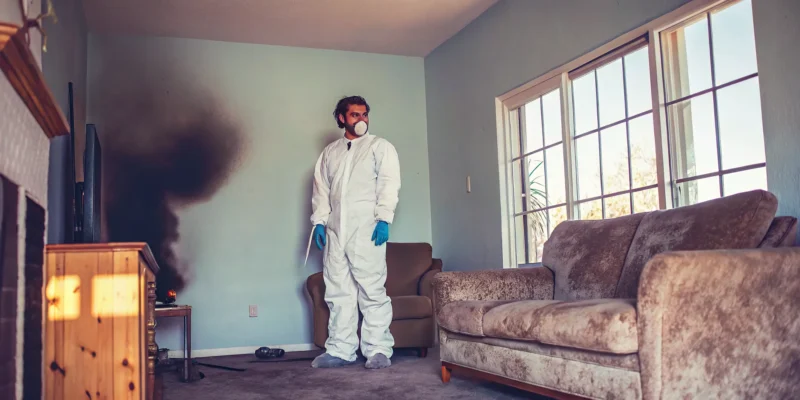
A home can look stable after the flames are out while still containing serious smoke, soot, and moisture damage. Smoke and soot can permeate building materials and home systems, so wiping visible residue from a wall does not necessarily make the room safe or clean. Before returning, let the fire department and a qualified restoration professional determine whether the structure and indoor environment are ready.
Smoke damage continues after the fire
Soot is more than a layer of black dust. It can settle into porous drywall, insulation, flooring, cabinets, fabrics, and ventilation systems. If it is not removed professionally and quickly, soot may cause permanent staining and corrosion on metal fixtures and electronic components. Heat, smoke, and firefighting water can also combine to damage materials that appear unaffected from across the room.
A specialized fire and smoke damage cleanup process helps identify residue in concealed areas and determine which contents can be cleaned, restored, or safely discarded. Avoid dry-scrubbing soot or running the HVAC system until it has been evaluated, because either action can spread particles through the home.
Moisture can create a second emergency
Fire suppression often leaves behind high humidity or standing water. According to FEMA, when a home has been flooded or has high humidity after a disaster, residents should assume mold growth may be present. Mold can create additional health risks for people with asthma, allergies, or other breathing conditions. That makes prompt drying, inspection, and appropriate remediation important even when the fire damage seems limited.
Do not keep contaminated essentials
Some items should not be tested or reused after exposure. Discard food, beverages, and medicine exposed to fire, heat, smoke, or firefighting contaminants. Mattresses, stuffed animals, and other porous items that absorbed water or soot should also be discarded when they cannot be properly cleaned or disinfected. FEMA provides similar post-disaster guidance for these contaminated contents: review its safe-return recommendations before handling damaged belongings.
Until the home has been assessed, stay out of affected areas and keep children, pets, and anyone with respiratory conditions away from smoke and soot residue.
What a Professional Fire Restoration Team Does When They Arrive
After a fire, the first visit should bring structure to an overwhelming situation. A professional team starts by assessing structural integrity and identifying immediate risks, then begins mitigation to limit further damage. In Bakersfield, 911 Restoration aims to respond within 45 minutes, with IICRC-certified technicians available 24/7/365. The team also includes bilingual English and Spanish support, so you can understand what is happening and what comes next.
| Task | Homeowner Can Do | Professional Restoration Handles |
|---|---|---|
| Property security | Keep distance from damaged structure | Emergency board-up of windows, doors, and roof openings |
| Smoke and soot cleaning | Avoid touching or wiping soot | Specialized cleaning of walls, ceilings, HVAC, and ductwork |
| Odor removal | Open windows when safe | Ozone treatment and hydroxyl generators for full odor elimination |
| Content restoration | Photograph belongings for insurance | Pack-out, off-site cleaning, and climate-controlled storage |
| Structural repairs | Wait for professional clearance | Timber replacement, drywall, flooring, and full reconstruction |
| Insurance coordination | Report claim and save receipts | Direct insurance billing and adjuster communication |
Securing the property and stopping secondary damage
The first practical step may be an emergency board-up. Crews secure broken windows, doors, and other openings to help prevent unauthorized entry and protect the home from weather exposure. They also examine areas affected by firefighting water and identify conditions that could worsen if left untreated. This initial assessment helps determine which materials can be cleaned, which contents can be salvaged, and whether parts of the structure require removal.
Cleaning smoke, soot, and odors
Smoke and soot can penetrate building materials and home systems, so surface wiping alone may not resolve the damage. Technicians clean affected walls, ceilings, floors, fixtures, and other structural elements using methods suited to the material and residue. Prompt soot removal matters because residues can cause lasting staining and corrosion on metal fixtures and electronic components.
Odor treatment is handled as a separate part of the process. Depending on the condition of the property, the team may use ozone treatment and address smoke that has moved through the HVAC system. Treating the source and the air pathway is more effective than masking the smell with fragrance.
Restoring belongings and rebuilding the home
If contents need specialized cleaning, crews can complete a pack-out, carefully documenting and transporting eligible belongings for off-site restoration before returning them when the work is complete. Once cleanup and drying are finished, the team can move into structural repairs and reconstruction, restoring damaged rooms and building components.
Choose licensed, bonded, and insured professionals so restoration work follows local building requirements. 911 Restoration provides professional fire damage restoration services in Bakersfield. The team coordinates directly with your insurance company and offers direct insurance billing to simplify the claims process.
Temporary Housing Options While Your Home Is Restored
Leaving your Bakersfield home after a fire is disruptive, but a short-term plan can make the next few weeks more manageable. Start by asking your insurance adjuster whether your policy includes Additional Living Expenses (ALE). ALE often helps cover temporary housing while fire-related repairs are underway, subject to your policy limits and coverage terms. Keep every receipt for lodging, meals, clothing, and other emergency costs so you can submit a complete reimbursement request. The U.S. Fire Administration recommends retaining these records during recovery.
Check insurance and FEMA assistance
Call your insurer promptly and ask what documentation is required before booking a hotel, extended-stay room, or rental. Confirm whether the policy has daily or total limits, which household members are covered, and whether meals or transportation qualify. If you do not have insurance, or if your policy does not cover the full loss, check whether FEMA assistance is available. FEMA may provide money or other services for uninsured losses after a presidentially declared disaster, including damage to a home, vehicle, or personal belongings: FEMA housing assistance information.
Handle utilities and essential records
Once the property is confirmed uninhabitable, contact electric, gas, water, and telephone providers to suspend service. This can prevent unnecessary charges and reduce hazards while the home is vacant. Do not turn utilities back on until the appropriate professionals confirm the systems are safe.
Make a list of vital documents lost in the fire and begin replacing them. Birth certificates, identification cards, Social Security cards, passports, and financial records may each require a different issuing agency. The U.S. Fire Administration identifies replacing these documents as an important recovery step. Ask your insurer, local fire department, and government offices what temporary identification or records may be available while replacements are processed.
Frequently Asked Questions
What is the first thing to do after a house fire?
Make sure everyone is safe, follow the fire department’s instructions, and do not re-enter until authorities or a qualified professional say it is safe. Then notify your insurance company promptly, document visible damage from a safe location, and arrange temporary shelter if needed. The U.S. Fire Administration recommends contacting your insurer as soon as possible after a fire.
Can I stay in my home after a fire?
Do not stay in a fire-damaged home until its structural condition, utilities, smoke contamination, and indoor air quality have been evaluated. Fire suppression water can also create conditions for secondary mold growth. If your policy includes Additional Living Expenses, it may help cover temporary housing while repairs are underway. Check your policy and keep receipts for eligible emergency expenses.
How do I secure my home after a house fire?
Keep unauthorized people out and ask a qualified restoration contractor to board up broken windows, doors, and other openings. Do not turn utilities back on or handle damaged electrical systems without an inspection. Avoid contractors demanding large upfront cash deposits or offering suspiciously low bids.
Does my insurance cover damage from a house fire?
Coverage depends on your policy, the cause of the fire, exclusions, and the documented loss. Report the fire immediately, photograph and inventory damaged property before cleanup, save receipts, and record conversations with your adjuster. Ask specifically about Additional Living Expenses for temporary housing. The USFA advises keeping a detailed list of damaged or destroyed belongings and emergency-expense receipts.
How long does fire restoration take?
There is no single timeline. A small, contained loss may move through cleanup faster than a fire involving structural damage, extensive smoke penetration, water damage, or reconstruction. The restoration team should inspect the property, explain the mitigation and repair phases, and update you as conditions are uncovered.
Ready to Begin Fire Restoration in Bakersfield?
After a house fire, a professional assessment can help you understand the next steps for securing your home and addressing smoke, soot, and water damage. When you are ready, call 911 Restoration of Bakersfield at (661) 416-8390 for 24/7 emergency fire restoration service. A trained team can listen to what happened, answer your immediate questions, and help you move forward with a clear restoration plan.
