

When should a property manager arrange emergency board-up
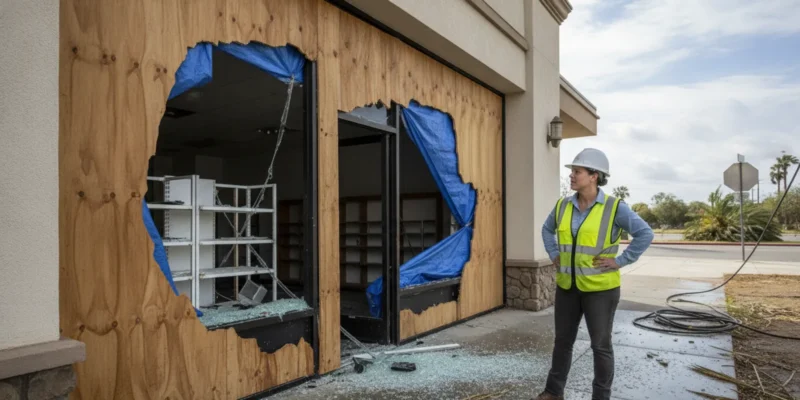
Damage to a door, window, or exterior wall can leave a property exposed and tenants unsure what to do next. If you are weighing emergency board up for property managers, arrange it when an opening or structural breach creates an immediate safety, security, weather, or further-damage concern that cannot wait for routine repairs. First keep people away from the hazard, then contact the responsible decision-maker and a qualified restoration or building professional to assess the right temporary protection.
Contact a restoration professional or call (661) 220-7584.
When should you arrange emergency board-up?
Arrange emergency board-up promptly when a building has an opening or unstable area that leaves people, contents, or the structure exposed. Common triggers include a fire-damaged window or entry, impact damage to an exterior wall, a broken storefront, or a door that no longer closes after an emergency. The goal is temporary protection while the cause and full repair plan are assessed. Board-up is not a substitute for repairing structural damage or addressing the event that caused it.
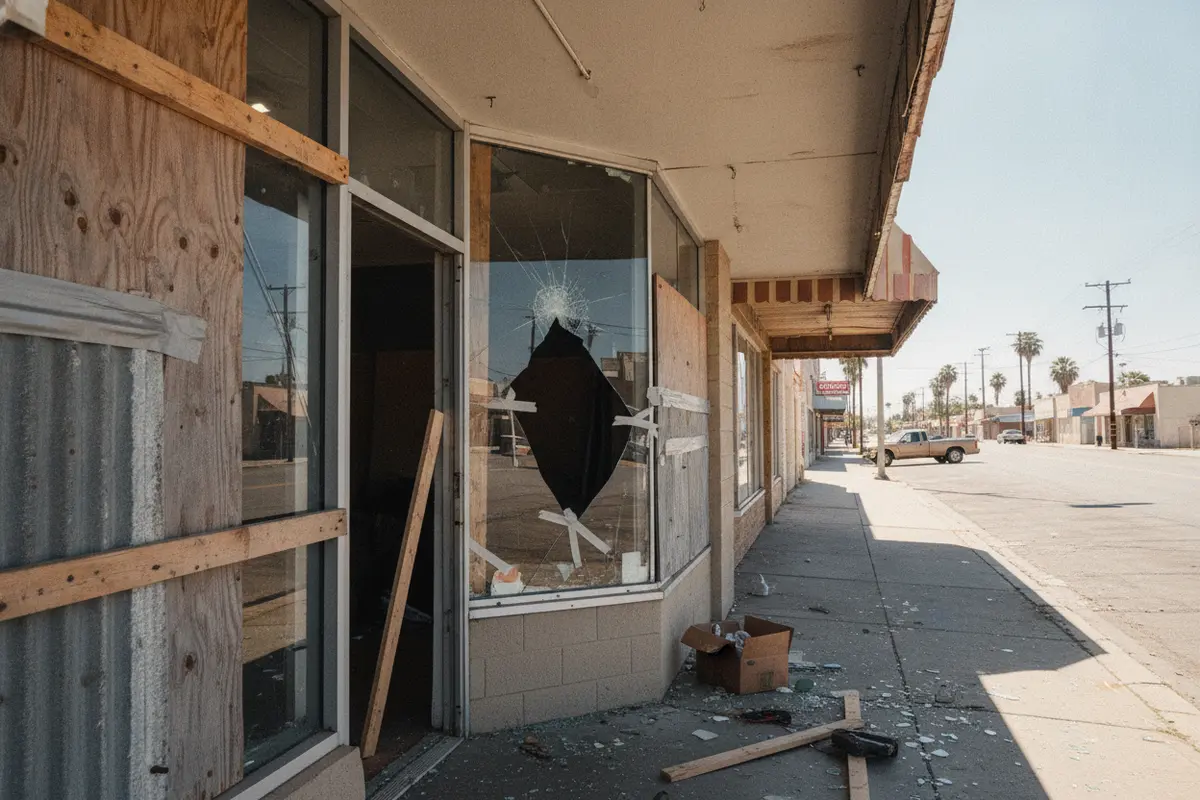
Consider both the condition and the circumstances. A broken window on an unoccupied upper floor may still need quick attention if glass is at risk of falling, rain can enter, or the opening is accessible from outside. A damaged entry to an occupied building may need immediate action because tenants cannot secure the space. Conversely, a cosmetic crack with no exposed opening or immediate hazard may be handled through the normal maintenance process after an appropriate inspection.
Property managers routinely distinguish urgent conditions from ordinary maintenance. A property-management training resource describes that general responsibility and the need to recognize when an issue is an emergency: Introduction to Property Management. Use the property’s emergency procedures and professional assessment for the specific situation; the decision should not rest on a general checklist alone.
What should you do before arranging the work?
Start with safety. Do not ask tenants or staff to touch broken glass, move unstable materials, or enter an area with possible structural damage. If there is an active fire, a person is injured, or another immediate threat, contact emergency services. Keep people away from the affected area and follow directions from responders. If utilities, smoke, water, or structural movement may present a hazard, communicate that clearly to the professionals you contact.
- Control access. Close off the immediate area if it can be done without approaching the hazard. Notify occupants about which entrances or rooms are off limits and provide a safe route away from the damage.
- Notify the owner or authorized representative. Share the location, type of opening, known risks, occupancy status, and any steps already taken. Confirm who can authorize emergency work and spending under the property’s procedures.
- Contact the appropriate professionals. Explain whether the damage followed a fire, vehicle impact, break-in, water event, or another incident. A restoration contractor can coordinate temporary protection with the broader damage response; a structural or other specialist may also be needed depending on conditions.
- Preserve information safely. Take photographs or video from a safe location, record the time and the people notified, and retain incident reports or relevant communications. Do not delay urgent safety measures to collect documentation.
- Coordinate occupant communication. Tell tenants what is known, what areas they should avoid, who will provide updates, and how access will be managed. Do not promise a return time until the responsible professional has assessed the site.
For damage that involves water intrusion, fire, or a wider building event, connect temporary protection with the restoration plan. The company describes its broader disaster restoration services and its work on commercial property restoration. The services required will depend on the actual damage and assessment.
How do you decide whether the situation is urgent?
Use the questions below to organize the decision, not to replace an on-site professional’s judgment. If any answer suggests immediate danger or exposure, isolate the area and arrange prompt professional assessment. If the conditions are uncertain, treat uncertainty as a reason to keep people clear and seek qualified guidance rather than sending staff to investigate.
How should you manage an occupied property?
When tenants, employees, customers, or residents are on site, a temporary opening affects more than the damaged section. Coordinate with the owner and the person responsible for site operations before changing an entry route or restricting access. If the area is unsafe or emergency responders have given instructions, follow those directions first. Do not direct occupants through a route that has not been confirmed as safe.
Use one designated point of contact to share updates, especially when different occupants have different access needs. Explain what is confirmed, which area is restricted, where people should go instead if an alternate route has been approved, and when the next update will come. Avoid speculation about reopening or repair timing. If the property cannot operate normally, the owner or responsible operator should decide what temporary operating arrangements are appropriate.
- Mark the affected area as restricted using procedures that do not require staff to approach the hazard.
- Coordinate keys, access codes, escorts, and vendor arrival with the authorized site contact.
- Tell the provider about occupied areas and any time or access constraints before work starts.
- Record notices sent to occupants and any changes to access arrangements.
Once the opening is temporarily protected, keep the property’s access plan under review. Work can reveal additional damage or require a different boundary, and a temporary measure does not establish that nearby areas are safe. Ask the professionals assessing the site to identify any restrictions that occupants should continue to follow.
What should you confirm with the board-up or restoration provider?
When you call, give a concise, factual description. State the property address, where the opening is, what happened if known, whether people are inside, and whether emergency responders have attended. Mention any hazards, access restrictions, weather exposure, or continuing water intrusion. Say who is authorized to approve the work and who should receive updates. If you do not know an answer, say so rather than guessing.
Ask the provider to explain the proposed temporary measures and how they relate to the larger restoration or repair process. Clarify which opening or area the scope addresses, whether the work is intended as temporary protection, how access will be handled, and what conditions would require additional work or a specialist assessment. Ask what documentation will be provided, such as an estimate, work description, photographs, or completion notes. Confirm how the provider will communicate if conditions differ from what was initially reported.
Before work begins, follow your property’s authorization and emergency-vendor procedures when circumstances allow. If action must proceed to address an immediate hazard, record why it could not wait and who authorized it. Avoid assuming that a temporary covering means the building is safe to occupy or that repairs are complete. A qualified professional should advise on the affected area’s status and any next steps.
For property damage that may involve a claim, keep the initial incident record and later work records together. The company’s page on insurance claim assistance explains its restoration-related support. Your insurer or authorized representative can tell you what notice and documentation they require; coverage and claim decisions depend on the policy and circumstances.
How should you document and coordinate the response?
Maintain a simple timeline. Note when the damage was reported, who inspected from a safe position, which people were notified, what temporary precautions were taken, and when a provider was contacted. Save messages, estimates, approvals, invoices, and photographs in the property’s incident file. If the event involves tenant space, record the units or common areas affected without sharing private tenant information more broadly than necessary.
- Record the known facts: date, approximate time, location, observed damage, occupancy, and whether the condition is changing.
- Track decisions: who approved temporary work, the reason for acting, and any instructions given by responders or specialists.
- Keep scope and completion details: preserve the provider’s description of work and any limitations, follow-up needs, or areas that were not assessed.
- Communicate consistently: provide tenants and owners with confirmed updates, next contact times, and access instructions. Separate known facts from estimates.
- Plan the next assessment: identify who will evaluate permanent repairs, contents, water or smoke damage, and safe re-entry as applicable.
Where the incident involves fire, coordinate temporary protection with a careful review of affected areas and contents. The fire and smoke damage restoration page describes related restoration work. For a water event, see the information on water damage restoration. Those service descriptions are not a substitute for a site-specific assessment, but can help you identify which type of response to discuss.
How can you compare temporary protection plans?
Do not compare proposals only by how quickly a panel or barrier can be installed. Compare whether each plan addresses the reported opening, communicates the limits of temporary protection, and fits with the property’s access and restoration needs. Ask providers to describe the work in writing so the owner or authorized representative can understand the scope before approving it.
Property managers in Bakersfield and nearby communities can review the company’s service-area information and technician certification details when deciding whom to contact. Ask directly whether the provider can respond to the property and the specific conditions involved. Do not assume that every incident, location, or repair task is covered by a general service description.
Discuss a property damage response or call (661) 220-7584.
Frequently asked questions
Should a property manager wait for the owner before arranging board-up?
Follow the owner’s authorization rules and the property’s emergency procedures whenever possible. If there is an immediate hazard or active exposure, keep people away and contact emergency responders or qualified professionals promptly. Document the condition, attempts to reach the authorized decision-maker, and the reason any urgent action could not wait.
Does emergency board-up mean tenants can return?
No. Temporary protection addresses an opening; it does not by itself confirm that the building or affected area is safe to occupy. Follow instructions from emergency responders and the professionals assessing the damage, and communicate re-entry guidance only when it has been confirmed.
What if the opening was caused by fire or water damage?
Tell the provider what happened and describe any smoke, water, debris, or continuing hazards. Temporary closure may need to be coordinated with fire, water, structural, or other restoration work. Keep affected people clear until a qualified professional provides direction.
What records should I keep?
Keep a timeline, safe photographs, notices and approvals, provider scope and completion records, and relevant communications with owners, occupants, responders, and the insurer. Follow the property’s privacy and record-retention procedures.
What is the clearest next step?
Arrange emergency board-up when a damaged opening or unstable area creates an immediate safety, security, weather, or further-damage concern. Protect people first, contact the authorized decision-maker and appropriate professionals, and document the temporary response without mistaking it for permanent repair. A clear description of the damage and the property’s immediate needs helps the next assessment begin on the right footing.
