Smoke Damage Cleanup After a House Fire
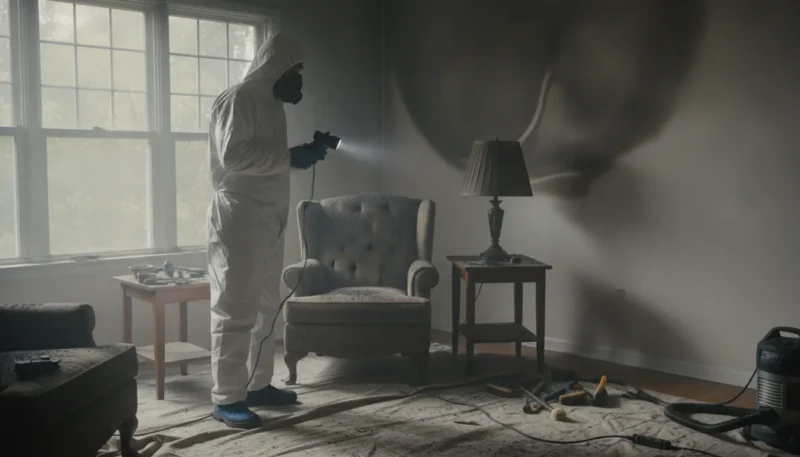
A house fire can leave damage where flames never reached. Smoke residue, heat, and firefighting water may affect walls, belongings, and indoor air, while soot and dirty water can contain substances that make people sick. The first priority is protecting people, not trying to make the home look clean.
Need urgent smoke damage cleanup help? Contact 911 Restoration of Bakersfield.
Safe smoke damage cleanup starts only after the fire department clears the structure. From there, document what you can safely see, keep children and vulnerable household members away from contaminated areas. And avoid disturbing soot until the residue, surfaces, contents, and ventilation system can be assessed.
Some low-risk cleanup steps may be appropriate in limited conditions, but dry sweeping, improvised odor treatments, or running an unsafe HVAC system can spread contaminants or worsen damage. A professional assessment helps separate smoke and soot cleaning from structural fire restoration and identifies belongings that may be salvageable. This guide explains the decisions that matter most for Bakersfield and Kern County homeowners, including ventilation, documentation, contents, and when to request fire and smoke damage restoration. Before cleanup begins, start with the safety checks that protect your household and your claim.
What should you do before smoke damage cleanup begins?
The first decisions after a fire should protect people, preserve useful information, and prevent avoidable damage. Smoke residue and dirty water may contain substances that can make people sick, while ash can become airborne when disturbed. Move through these steps in order rather than rushing into cleanup.
Complete these safety and documentation steps first
- Wait for official clearance before entering. Do not enter the property until the fire department says it is safe. Follow local authorities’ recommendations about whether property cleanup can begin and whether any restrictions apply. Clearance to enter does not mean every room, surface, or item is ready for use. Smoke may have traveled beyond the room where the fire started, and firefighting water may have affected areas that were not touched by flames. The USFA advises that a fire can damage a home and its contents through flames, heat, smoke, and water. Read the USFA’s fire recovery guidance for additional first-step information.
- Keep children, pets, and vulnerable adults away. Keep children away from ash-contaminated areas until cleanup is complete, and keep pets outside the home during cleanup. People with heart or lung disease, older adults, and pregnant women should not participate in ash cleanup. Smoke and ash exposure can irritate the eyes, nose, skin, and respiratory tract, and may cause coughing or breathing difficulty. If anyone develops concerning symptoms, leave the area and seek appropriate medical guidance.
- Do not disturb residue just to make the space look cleaner. Avoid dry sweeping, dusting, or using a leaf blower, which can stir particles into the air. A surgical mask or one-strap dust mask is not designed to seal tightly enough to protect lungs from ash. If a cleared, lightly affected area must be approached, use the protection and procedures recommended by qualified authorities. Do not treat a respirator as permission to enter an unsafe structure or handle unknown materials.
- Document the condition before moving belongings. When it is safe, take wide and close photos or video of rooms, visible soot, odors, water damage, and affected contents. Make a simple list of damaged or potentially salvageable items, but avoid discarding property before asking your insurer or restoration professional what documentation is needed. Items untouched by flames may still be damaged by smoke or firefighting water and may need careful cleaning before reuse.
- Notify your insurer promptly. Contact your insurance company and ask what it wants you to do first. Keep notes about calls, claim information, instructions, and scheduled visits. A restoration team may also document damage with photos and video, prepare an assessment, and coordinate with an adjuster, but insurance decisions remain with your insurer.
Once entry is cleared and the initial record is complete, the next step is a careful assessment of smoke penetration, residue, contents, and moisture. For a broader checklist of immediate decisions, review this guide on what to do after a house fire, then arrange the right cleanup plan for the property.
How does smoke residue spread through a home?
Smoke damage is not limited to the room where flames were visible. Smoke can move through openings, settle on surfaces, and penetrate walls, furniture, and personal belongings throughout a property. That is why an apparently untouched room may still contain residue or odors that require careful evaluation. Smoke can extend beyond the fire’s origin. The U.S. Fire Administration explains that items spared by flames may still be damaged by smoke or firefighting water and need careful cleaning before reuse.
Smoke residue behaves differently on each surface
Soot is not one uniform substance, and the same cleaning method is not appropriate for every material. Residue may cling to painted walls, ceilings, flooring, upholstery, wood, electronics, documents, or clothing in different ways. Porous materials can absorb smoke odor, while finished or delicate surfaces may be stained or damaged by aggressive scrubbing. Specialized soot removal therefore depends on both the residue and the material being treated, rather than on a single household cleaner.
Air movement can also redistribute fine particles. The EPA warns that ash on indoor and outdoor surfaces can become airborne and be inhaled. Dry sweeping or dusting can stir up that material, so avoid creating clouds of residue while deciding what can be salvaged. Light deposits may sometimes be addressed with a damp cloth or wet mop, and a HEPA vacuum may be appropriate for dusty surfaces when available. Those limited measures do not replace an assessment after substantial smoke exposure.
Firefighting water creates a second damage pathway
Fire suppression can leave moisture in areas that flames never reached. Water may affect ceilings, wall cavities, flooring, insulation, furniture, and stored belongings, while smoke residue remains on the same surfaces. Delaying attention can make it harder to separate what is restorable from what requires replacement. It can also allow moisture-related deterioration to develop behind finishes or beneath materials.
Do not enter a fire-damaged property until the fire department has said it is safe. Once entry is authorized, keep children and pets away from contaminated areas and avoid moving heavily affected contents without guidance. For a deeper explanation of the hidden dangers of smoke damage, review the related resource. A professional inspection can trace how residue and water traveled, identify affected materials, and establish a safer plan for smoke damage cleanup.
Can you clean smoke damage yourself?
You may be able to handle a small amount of loose, light ash after the fire department has cleared the property and local authorities have confirmed that cleanup is appropriate. That limited task is not the same as complete smoke damage cleanup. Smoke can move beyond the room where the fire started, penetrating walls, furniture, and personal belongings throughout the property. The right response depends on the residue and the material it has affected.
What light surface cleaning can and cannot do
For a lightly dusted, accessible surface, the EPA recommends a damp cloth or wet mop. A HEPA vacuum may also be used for dusty surfaces if one is available. Work carefully and avoid spreading residue to clean areas. Do not dry sweep, dry dust, or use a leaf blower. Those methods can stir ash and fine particles into the air.
Protective equipment has limits, too. The EPA recommends a snug-fitting, NIOSH-approved N95 or P100 respirator for filtering ash particles. Surgical masks and one-strap dust masks are not designed to seal tightly and should not be treated as equivalent protection. Do not let children near ash-contaminated areas during cleanup, and keep pets out of the home until cleanup is complete. People with heart or lung disease, older adults, and pregnant women should not participate in ash cleanup.
When to stop and call for professional help
Stop DIY cleaning when residue is widespread, oily, strongly odorous, embedded in porous materials, or present on walls, ceilings, insulation, ductwork, electronics, documents, or clothing. These surfaces can react differently to cleaning products, and an incorrect method may spread soot or permanently stain a material. A light wipe cannot assess smoke penetration, hidden moisture, or the condition of belongings affected by firefighting water.
Do not paint over smoke residue. Paint can cover the appearance temporarily while leaving odor and contamination beneath the new coating. Proper cleaning and preparation must come first. Fire and smoke restoration professionals match soot-removal methods to the residue and material. They may use HEPA vacuuming, chemical sponging, and contents pack-out when appropriate. Learn more about fire and smoke damage restoration before deciding what can safely be handled at home.
If anyone develops eye, skin, or breathing irritation, leave the area and seek appropriate medical guidance. Do not use ozone, hydroxyl generators, or other oxidizers as a DIY odor solution. The EPA advises avoiding products that add chemicals to the air to neutralize smoke odors. A professional assessment is the safer next step when the damage extends beyond a few lightly dusted surfaces.
What about HVAC, ventilation, odors, and belongings?
Smoke can move beyond the room where the fire started, affecting walls, furniture, and personal belongings throughout a property. HVAC equipment and air pathways can make the situation more complicated, so treat indoor air decisions as a safety question, not simply a comfort issue.
Use ventilation and HVAC only when conditions are safe
Do not turn on a furnace, air conditioner, or other HVAC equipment until it has been evaluated and confirmed safe to operate. If the system is safe, the EPA says it may be run with a high-efficiency filter. Follow the same caution with fans. Opening windows and doors, or using fans to exhaust contaminants outdoors, may help when conditions permit, but those steps are not appropriate in every fire-damaged home. An air cleaner may help capture lingering fine particles, while source control, ventilation, and filtration work together to improve indoor air quality.
If soot, ash, or debris could be disturbed, avoid dry sweeping and dusting. Airborne particles can irritate the eyes, skin, and respiratory tract. Keep children and pets away from affected areas until cleanup is complete. And do not ask people with heart or lung disease, older adults, or pregnant people to participate in ash cleanup.
Persistent odors and contents need an assessment
A smoke smell that remains after surfaces appear clean can indicate residue in porous materials, furnishings, ductwork, or other concealed areas. Do not use ozone generators, hydroxyl generators, or other oxidizers as a do-it-yourself odor remedy. The EPA advises avoiding products that add chemicals to the air to neutralize smoke odors. Professional teams may use specialized equipment and cleaning agents, but the appropriate method depends on the property, materials, occupants, and conditions.
Belongings should be sorted carefully rather than automatically discarded or promised as salvageable. Items untouched by flames may still be damaged by smoke or firefighting water and may need careful cleaning before reuse. Furniture, electronics, documents, clothing, and other contents can be assessed and cleaned when restoration is feasible. A contents pack-out may protect items while structural cleaning proceeds, but each item needs an honest condition assessment. For a broader overview of the fire restoration process and costs, keep the scope of contents cleaning, odor work, and possible repairs in view.
What does professional smoke damage cleanup include?
Professional cleanup starts with a careful assessment, not a quick wipe-down. After the fire department has cleared the structure for entry, technicians inspect the property for smoke penetration, soot patterns, affected materials, and damage caused by firefighting water. That distinction matters because smoke can move beyond the room where the fire began, while water can affect areas untouched by flames. The goal is to identify what can be cleaned, what needs specialized treatment, and what may require repair or replacement.
Assessment, documentation, and a safe cleaning plan
The inspection should account for walls, ceilings, flooring, furnishings, and personal belongings.
- Photograph and record conditions: Take wide and close photos or video before work begins, when it is safe.
- Organize claim information: Keep notes about adjuster visits, instructions, receipts, and damaged contents.
- Ask before discarding items: Your insurer or restoration professional can explain what documentation is needed first.
A restoration team can prepare a damage assessment and coordinate adjuster visits or claim documentation. Notify your insurance company promptly and ask what it wants you to do first. For more guidance, review documenting a fire damage claim. Documentation supports the process, but it does not guarantee coverage or a particular claim outcome.
Cleaning methods must match both the residue and the surface. Professional fire and smoke damage restoration may include HEPA vacuuming for appropriate dry particles and chemical sponging for certain structural surfaces. Smoke residue is not uniform, and using the wrong product or technique can spread soot, drive contamination deeper, or damage finishes. Technicians select methods based on the material and the condition they find.
Contents receive their own evaluation. Furniture, electronics, documents, clothing, and other belongings may be inventoried, packed out, cleaned, and restored when practical. Items affected by smoke or firefighting water should not be assumed safe to reuse simply because flames did not reach them. A written estimate is also appropriate when hiring a contents-cleaning company, so the scope is clear before work proceeds.
Odor work is more than masking a smell. Smoke can remain in porous materials after visible soot is removed, so odor assessment follows source removal and cleaning. Air scrubbers, specialized cleaning agents, and other deodorization equipment may be selected according to the property and occupancy conditions. Do not use ozone, hydroxyl generators, or other oxidizers around occupants as a do-it-yourself shortcut. These treatments require professional judgment and controlled conditions.
Finally, the team should coordinate smoke cleanup with water extraction, drying, and any needed repairs. Addressing only the visible soot can leave moisture or hidden damage unresolved. In Bakersfield and Kern County, a coordinated plan gives you one clearer path from inspection and documentation through cleaning and restoration.
| Area | Why it matters | Safer next step |
|---|---|---|
| Surfaces | Residue reacts differently to each material. | Use a material-specific assessment. |
| HVAC | Smoke or ash may be in ducts or equipment. | Run only after safety confirmation. |
| Belongings | Items may have smoke or water damage without flame contact. | Inventory and assess before discarding. |
Request professional help at (661) 220-7584
Frequently Asked Questions
What is the best way to clean up smoke damage?
Start only after the fire department confirms the property is safe to enter. Document affected rooms and belongings, contact your insurer, and avoid disturbing soot with dry sweeping or dusting. Light ash may be wiped with a damp cloth, but smoke residue varies by surface and can extend beyond the fire’s origin. A professional assessment helps separate salvageable contents, structural cleaning, and water damage. EPA cleanup guidance supports avoiding actions that make ash airborne.
Can you just paint over smoke damage?
No. Paint can conceal discoloration temporarily without removing soot, odor, or contamination, and residue may interfere with the finish. The surface should be assessed and cleaned using a method suited to the material. Specialized restoration may include HEPA vacuuming and chemical sponging, followed by appropriate repairs or sealing when needed.
Can smoke damage be reversed?
Many affected materials and belongings can be cleaned or restored, but results depend on the residue, material, exposure, moisture, and how quickly cleanup begins. Items untouched by flames may still be damaged by smoke or firefighting water and need careful cleaning before reuse, according to the U.S. Fire Administration. Some porous or severely damaged items may not be recoverable.
Should I run the HVAC system after a fire?
Do not run it automatically. Use the system only if it has been confirmed safe, and use a high-efficiency filter if appropriate. Smoke and ash may have entered ducts or circulated through the home. A restoration professional can evaluate the system, indoor air, and ventilation plan before you resume normal operation.
Get started with safer smoke damage cleanup
Smoke residue can continue affecting surfaces and belongings after the visible damage is gone. A professional assessment can help you identify what needs cleaning, what needs specialized handling, and what should be documented before restoration begins. To request smoke and fire damage cleanup help in Bakersfield, contact 911 Restoration of Bakersfield or call (661) 220-7584.
