School Mold Remediation Services: How to Manage Mold
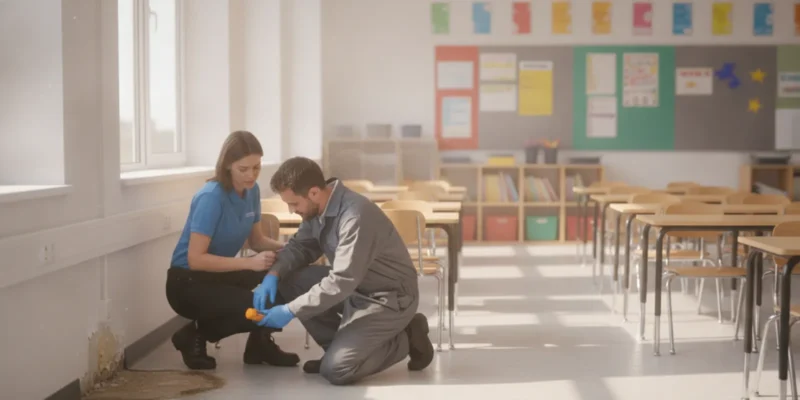
When a school finds a musty odor, visible mold, or signs of water damage, leaders need a clear plan that protects occupants and limits disruption. Effective school mold remediation services should address the moisture source as well as affected materials, with a written scope and coordination plan before work begins. The first priorities are to report the concern, prevent further wetting, and bring facilities and qualified restoration professionals into the response.
Discuss a school mold concern with 911 Restoration of Bakersfield at (661) 220-7584.
How do school mold remediation services begin?
Start by treating the report as a building condition that needs prompt attention, not as a reason to guess at a cause or attempt a broad cleanup. Mold growth is commonly associated with moisture. A roof leak, plumbing leak, condensation, flooding, or persistently damp material may be involved, but the source must be identified at the property rather than assumed.
Use a simple first-response sequence:
- Record the concern. Note the date, room or area, reported odor or visible condition, and any known water event. Ask staff to report new observations to the designated facilities contact rather than moving or disturbing material.
- Check for an active water source. Facilities staff can look for obvious leaks or wet materials when it is safe to do so. Arrange repair of the source, and take reasonable steps to stop additional water from entering.
- Limit access when appropriate. If an area is wet, visibly affected, or subject to active work, follow the school’s safety and facilities procedures for restricting access and using another room. Do not send students or staff into a work area.
- Escalate to the right people. Notify the school’s facilities lead and the administrators responsible for operations, communications, and occupant concerns. Bring in a qualified restoration provider when the extent, source, or safe handling of affected materials is uncertain.
- Keep a response record. Save relevant maintenance requests, photos taken without disturbing the area, water-loss details, contractor communications, and decisions about room use.
Do not paint over suspected growth or cover up a damp material and consider the issue resolved. Those steps do not correct the underlying moisture. The U.S. Environmental Protection Agency’s guide to mold remediation in schools and commercial buildings emphasizes assessing the size of the moisture or mold problem and correcting the water or moisture source as part of the remediation plan. That source-focused approach helps schools avoid a temporary cosmetic fix.
How should school leaders define the scope of work?
Before work starts, ask the provider to explain what is known, what remains uncertain, and what tasks are proposed. A useful scope is specific enough for administrators to make decisions and facilities staff to coordinate the work. It should not rely on a vague promise to “treat the mold” without addressing the conditions that allowed it to develop.
For planning purposes, request written answers to these questions:
- Where is the concern? Identify the affected room or rooms, building components, and any connected areas that need attention based on the site conditions.
- What is the apparent moisture source? State whether a leak, water intrusion, condensation, or another condition is suspected, what evidence supports that view, and who will arrange source correction.
- Which materials may be affected? Distinguish materials proposed for removal from those that may be cleaned or dried. The work plan should explain how the provider will handle affected materials, dust, and debris.
- What will happen during the work? Ask about work-area controls, access restrictions, protection of nearby contents, equipment, ventilation or HVAC considerations, and how the school will be kept informed.
- How will completion be documented? Agree on the records the school will receive, such as a description of completed work, moisture-source correction status, and any remaining recommendations.
The EPA also advises that remediation plans address the moisture problem or growth may return. For a school, the practical implication is to link remediation with the maintenance work needed to prevent repeat wetting. The U.S. Green Building Council’s discussion of school mold prevention likewise highlights maintaining, inspecting, and correcting buildings for moisture problems. A contractor’s scope and the school’s ongoing maintenance plan should work together.
If the affected area involves a building system, structural component, or multiple rooms, clarify who has authority to investigate and repair each part. Restoration work does not automatically include every building repair or reconstruction task. The school should know which party is responsible for each action and how unresolved items will be tracked.
How can school mold remediation services fit daily operations?
Schools have fixed schedules, occupied corridors, classroom transitions, and sensitive materials. The work plan should account for those realities before crews arrive. Ask the provider and school operations lead to review timing, access, deliveries, noise, equipment placement, and any areas that need to remain available.
Set up one communication path for staff to report questions and new observations while work is underway. The designated contact can share verified schedule updates, relay access changes, and send new reports to facilities without multiple people giving conflicting instructions. For work that spans more than one day, ask the provider how the school will receive progress updates and how unexpected findings will be escalated. Decide in advance who can approve a scope change, who will notify affected staff, and what must be recorded before work continues. Clear roles reduce confusion without promising that a particular room will reopen by a fixed time.
Useful coordination steps include:
- Choose a workable schedule. Discuss whether work can take place during a break, after school, or in phases. The right schedule depends on the scope and site conditions; do not assume every job can wait for a school holiday.
- Define boundaries. Identify the work area, routes for workers and materials, restricted doors, and nearby spaces that need protection. Make sure staff know how to direct students away from the work zone.
- Coordinate with facilities. Share information about building access, utility or system controls, known leaks, prior repairs, and any site rules. Decide who will be the on-site school contact and how schedule changes will be communicated.
- Plan for room changes. If a classroom or shared area cannot be used during the work, administrators should decide where activities will move and how staff and families will be notified.
- Keep communications factual. Explain what is known, what work is planned, which areas are affected, and where questions should go. Avoid declaring a space safe or unsafe without the responsible parties’ documented basis.
For larger or operationally complex properties, schools can review how a provider approaches commercial damage restoration. The relevant question is not just whether a crew can perform cleanup. It is whether the work can be coordinated clearly with the people who manage the building and its daily use.
What should schools compare when choosing a provider?
Compare providers on the clarity of their proposed response, relevant qualifications, communication, and ability to address the full restoration process. Ask for written details rather than relying only on a general service description. A school can also ask to see applicable technician certification information and confirm who will supervise and communicate about the work.
| Decision area | Questions to ask | What a clear answer should cover |
|---|---|---|
| Moisture source | How will the plan address the water or moisture condition? | Known or suspected source, steps to stop recurrence, and who is responsible for repairs. |
| Work scope | Which areas and materials are included? | Locations, proposed removal or cleaning, drying, debris handling, and any exclusions. |
| Occupant coordination | How will the school manage access and nearby operations? | Work boundaries, schedule, communication contact, and coordination needs for occupied spaces. |
| Qualifications | What relevant training or certifications can the provider document? | Verifiable credentials relevant to the work and clarity about the people performing or supervising it. |
| Completion | What records and next steps will the school receive? | Work performed, moisture-source status, remaining repairs, and any maintenance recommendations. |
Also ask how the provider will keep the school updated if conditions differ from the initial understanding. A sound process allows the scope to be revisited when hidden wet materials, additional affected areas, or an unresolved leak are discovered. Changes should be explained and documented before the school treats the job as complete.
Schools should keep insurance and property records organized throughout the response. If a claim may be involved, administrators can review their policy and coordinate with the carrier; a restoration provider cannot decide coverage. The company’s insurance claim assistance information describes a possible coordination resource, but the school’s insurer determines applicable coverage.
How can schools reduce the chance of a repeat problem?
Remediation addresses an existing condition. Prevention depends on noticing and correcting moisture issues before they persist. After work, assign ownership for follow-up items instead of leaving them as informal recommendations. A practical building routine can include checking areas with a history of leaks, responding promptly to reports of dampness or odors, and tracking repairs until they are finished.
Facilities teams can make that routine more dependable by recording the location and date of each leak, the affected material, the repair performed, and any follow-up observation. Check roof and plumbing repairs after completion, and pay attention to spaces where condensation or recurring dampness has been reported. Staff should know how to report a new concern, but they should not be asked to investigate or clean suspected mold themselves.
When planning future maintenance, review whether previous incidents point to a repeated source or a deferred repair. A repaired stain is not proof that moisture is controlled. Confirm that the source has been addressed and that affected materials are no longer experiencing the condition that prompted the response.
When should school leaders contact a restoration professional?
Contact a qualified professional when the affected area is not straightforward, water damage has reached building materials, the source is uncertain or ongoing, or the school needs help planning cleanup and drying. A professional can discuss the observed conditions and explain a proposed remediation scope. This is different from assuming that a restoration company provides standalone mold testing: 911 Restoration of Bakersfield states that it offers professional mold remediation, not standalone mold testing.
For a school seeking help in Kern County, review the provider’s mold remediation service information and confirm that the proposed work fits the property’s needs. Its service area information can help determine whether the location is served. Ask for a visual inspection and a clear explanation of the next steps; do not treat a general webpage as a site-specific assessment.
Request help planning the next step from 911 Restoration of Bakersfield at (661) 220-7584.
Frequently Asked Questions
Should a school close an entire building when mold is reported?
Not automatically. The appropriate response depends on the observed conditions, location, scope, and school procedures. Administrators should coordinate with facilities and qualified professionals to decide whether to restrict a particular area, relocate activities, or take other steps. Do not make a building-wide decision based only on an unverified report.
Can school staff clean a suspected mold area themselves?
Staff should report the concern and avoid disturbing suspect materials while the school determines the appropriate response. The scope, affected materials, moisture source, and work conditions should be understood before cleanup begins. Follow school safety procedures and use qualified professionals when the situation is uncertain or beyond routine maintenance.
Does remediation include fixing the leak?
Not necessarily. The school should ask which moisture-source repairs are included and which are assigned to facilities, a plumber, a roofer, or another contractor. Put responsibility for each repair in writing and follow up to confirm the source has been corrected.
What should a school keep after remediation?
Keep the initial report, relevant photos, the written scope, communications, records of work completed, details about source correction, and follow-up recommendations. These records help facilities staff monitor the area and respond if the same moisture condition returns.
A clear school mold response connects prompt reporting, moisture correction, a documented work plan, and practical coordination with school operations. By assigning owners to each step and keeping records, school leaders can make informed decisions and reduce the risk of a short-term cleanup that leaves the underlying problem unresolved.
Talk with 911 Restoration of Bakersfield about school mold remediation at (661) 220-7584.
