Healthcare Facility Water Damage Restoration: How Should You Respond?
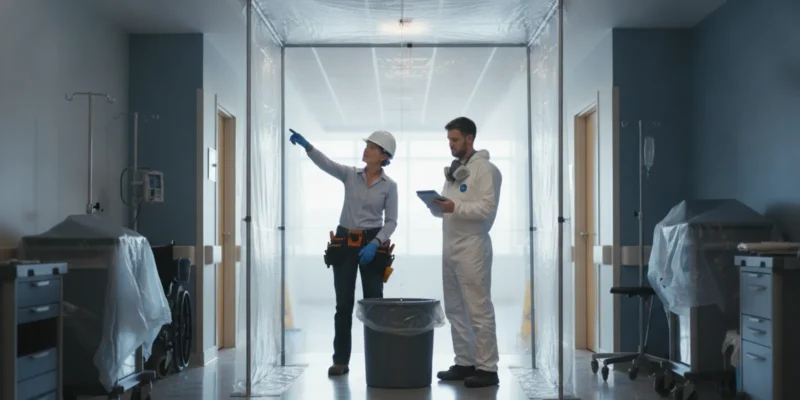
Water damage in a healthcare setting requires a coordinated response. Healthcare facility water damage restoration is not just a matter of removing wet materials; the facility must also protect patients, staff, equipment, and safe operations while the source is controlled. If you are managing a leak or flood, use the steps below to organize the first response and determine what needs specialist attention.
Contact the restoration team at (661) 220-7584
What should happen first?
Start with life safety and operational control, not cleanup. Activate the facility’s emergency response process and notify the people responsible for facilities, infection prevention, clinical operations, and safety. The right people should decide whether an affected room, department, or route must be restricted or moved to another location.
- Call emergency services if there is immediate danger. If anyone is injured, trapped, or in danger from fire, electrical hazards, or structural instability, follow emergency procedures and call 911.
- Keep people out of the affected area. Use barriers or clear signage. Do not send patients, visitors, or untrained staff through standing water or a ceiling area that may be unstable.
- Report the location and conditions. Identify where water is visible, when it was first noticed, whether it is still flowing, and which rooms or services may be affected.
- Assign a response lead. A designated facilities or incident lead can coordinate updates, access, documentation, and decisions about service continuity.
Do not touch wet electrical equipment, outlets, or lights. Do not enter a room where water may be in contact with electrical systems. If it is safe and staff are authorized, facilities personnel can isolate the source or affected utility. Otherwise, wait for qualified personnel. Avoid disturbing wet ceiling tiles, insulation, or other materials overhead.
The first goal is to stop additional water from entering without creating another hazard. The precise action depends on the source: a supply-line failure, roof leak, sprinkler discharge, appliance leak, or water entering from outdoors may require different facilities and safety steps.
How should you protect patients and clinical operations?
Healthcare facilities cannot treat every wet area as an ordinary building repair. A corridor leak may affect access to care; water in a treatment or support area may raise additional questions about nearby clean supplies, equipment, or building systems. The facility’s clinical and infection prevention leaders should assess the affected functions and set interim controls.
- Identify the impacted footprint. Mark the rooms, floors, corridors, storage spaces, and service areas with visible water or suspected moisture. Note adjacent spaces that share a ceiling, wall, or floor assembly.
- Review care and access needs. Decide whether appointments, procedures, patient movement, or deliveries must be redirected. Use the facility’s continuity plans and clinical leadership to make those decisions.
- Protect supplies and equipment. Move unaffected portable supplies and equipment out of the work area when this can be done safely. Separate items that may have been exposed so the appropriate department can evaluate them.
- Manage access. Limit entry to staff who need to assess or address the event. Give contractors a point of contact and explain facility-specific access, privacy, infection prevention, and work-permit requirements.
Do not assume a room is ready to use because visible water has been removed. Building materials can remain damp, and concealed moisture may require further evaluation. Decisions to reopen clinical space belong to facility leadership, with input from infection prevention, facilities, and any other required safety or clinical professionals.
How can staff identify the water source and level of concern?
Record what is known without guessing. The water source and the materials or systems it contacted shape the appropriate response. A small amount from a known supply line is not automatically equivalent to water from a drain, sewer, or outdoor flood. If the source is uncertain, treat the area cautiously and ask qualified facility personnel to assess it.
Useful questions for the initial assessment include:
- Is water still entering, and can the source be safely isolated?
- Is the source known, or could water have contacted a drain, sewage, chemicals, or outdoor contaminants?
- Has water reached electrical equipment, elevators, mechanical rooms, ceiling cavities, or building water systems?
- Which porous materials, supplies, equipment, and patient-care spaces are involved?
- When did the event begin, and has the affected area been wet before?
Take photographs or video from a safe location, and keep a written timeline. Record the first report, actions taken, affected areas, people notified, and any changes in the water condition. This makes handoffs clearer and gives the facility useful documentation for its internal review and insurer.
What should the response lead coordinate during the first day?
A short, repeatable update process can prevent different departments from acting on conflicting assumptions. The response lead can maintain one incident log and share status at agreed intervals with facilities, clinical operations, infection prevention, safety, and the person managing restoration work. Each update should separate confirmed facts from open questions. For example: “The leak has stopped; water is visible in two rooms; the wall cavity has not been assessed; the adjacent corridor remains closed.” This is more useful than reporting that the area is “under control” before its full extent is known.
Before work begins, agree on practical boundaries. Mark the work zone and any approved access route, identify where equipment may be placed, and confirm how staff will keep exits, patient routes, and essential services clear. If the work needs a ceiling or wall opening, determine who authorizes it and who will assess the newly exposed area. Set a process for reporting unexpected findings, such as water beyond the original boundary or a source that differs from the initial report.
Also identify who can make which decisions. The restoration provider can describe observations and proposed work, but clinical service changes, infection prevention controls, and reopening approvals remain facility decisions. A written contact list and escalation path help staff avoid delays when the primary decision-maker is unavailable.
What does a coordinated restoration plan include?
After immediate hazards are controlled, the facility can plan assessment, water removal, drying, cleaning, and repair. The work should be coordinated with the facility’s infection prevention and safety requirements. Explain the affected rooms and operational limits to the restoration provider before work begins, and agree on who approves access, containment, equipment placement, and daily updates.
| Response phase | Facility priorities | Questions to resolve |
|---|---|---|
| Stabilize | Protect people, restrict access, stop the source when safe | Is there an electrical, structural, or active water hazard? |
| Assess | Map affected areas and materials; identify likely water source | What spaces, equipment, or operations could be affected? |
| Mitigate | Remove water and set up drying or containment as planned | How will work protect occupied areas and keep routes clear? |
| Clean and repair | Address affected materials and complete authorized repairs | Who approves methods, material removal, and repair scope? |
| Verify and reopen | Review completion records and obtain facility approvals | What criteria must be met before normal use resumes? |
Water extraction and structural drying may involve specialized equipment. The provider should explain the proposed work area, equipment locations, expected noise or access impacts, and how progress will be communicated. If affected building materials must be removed, the facility should understand the planned boundaries and how the work will be separated from active operations.
For an overview of the types of work involved, see the company’s commercial damage restoration services and water damage restoration information. A facility may also review the broader disaster restoration services page when damage affects more than one part of the building.
How do infection prevention and building water safety fit in?
Infection prevention should be part of planning from the beginning, especially if work is near patient-care areas or involves opening walls, ceilings, or floors. The facility should set its own controls for contractor access, separation of work from occupied space, cleaning, and any required review before an area returns to service. Restoration personnel should receive the facility’s requirements before entering the work zone.
The CDC’s guidance for reopening healthcare facilities after water or wind damage addresses drying, repairing, cleaning, and restoring salvageable materials and equipment to safe function. Apply that guidance through the facility’s infection prevention and operational processes; it does not replace facility-specific decisions or applicable rules.
Water events can also affect building plumbing and water quality, particularly when a building has had an extended interruption or unusual conditions. The North Carolina Department of Health and Human Services guidance for outpatient healthcare facilities advises facilities on municipal water to follow their water provider’s guidance, and facilities on private wells to follow water-safety guidance. A research review on water quality in large buildings after extended stagnation discusses water-system considerations, including Legionella risk. If water service or plumbing may be affected, facility leadership should consult its water provider and qualified water-system professionals as appropriate.
Restoration cleanup by itself does not establish that clinical space, equipment, or the building water system is ready for use. The appropriate facility leaders should review work records, test or inspection results when needed, and any required approvals before deciding to reopen.
What information should you document and share?
Good documentation supports safe handoffs and helps the facility track what has been completed. Keep one incident record and update it as the response progresses. Include:
- Date and time the issue was discovered and reported.
- Known or suspected source, including steps taken to stop it.
- Locations affected and rooms or operations restricted.
- Photographs of conditions before and during work, when safe and permitted.
- Names or roles of notified leaders, response decisions, and changes to access.
- Assessment notes, work scope, equipment or material actions, and daily progress updates.
- Completion records and the facility’s own approvals before affected areas return to use.
Share relevant information with the facility’s insurer according to its policy and reporting process. Keep copies of photographs, invoices, work descriptions, and communication. For information about the company’s insurance claim assistance, see the insurance page. The facility should rely on its insurer and policy documents for coverage determinations; coverage depends on the policy and circumstances.
What should facility leaders verify before reopening?
Reopening is a separate decision from completing extraction or repair. A useful review checks that the original problem has been addressed, the affected area and any newly discovered spaces are included in the work record, and required cleaning or repair steps are documented. Ask the provider to identify any conditions that remain unresolved rather than assuming a finished invoice means every question has been settled.
- Confirm the work boundary. Compare the final affected-area notes with the rooms and building assemblies identified at the start. Ask whether hidden or adjacent spaces required additional assessment.
- Review drying and cleaning records. Request the measurements, observations, or completion records used to describe the work. Clarify what the records cover and what they do not establish.
- Check equipment and supplies. Have the responsible department evaluate items that were exposed or moved, and confirm any required servicing or replacement before reuse.
- Obtain facility approvals. Infection prevention, facilities, clinical operations, and safety leaders should apply the facility’s own criteria to the evidence and make the reopening decision for their areas of responsibility.
If any important question remains, such as suspected moisture beyond the work boundary, plumbing concerns, or incomplete repair, keep the affected space restricted as appropriate and assign an owner and next action. Document the decision and the information needed to revisit it. This creates a clear record of why an area remained closed or returned to use.
How should you choose a restoration provider?
When comparing providers, ask for clear answers about response, scope, credentials, communication, and how work can be coordinated with an operating healthcare facility. Do not rely on a general promise that a building will be “safe” or “ready” without knowing what work is planned and what information will be provided at completion.
- Who will be the project contact, and how often will the facility receive updates?
- What is included in the initial assessment, water removal, drying, cleaning, and repair scope?
- How will the provider coordinate access and work boundaries with infection prevention and facilities staff?
- What credentials do the technicians hold, and can they be verified? See the provider’s technician certifications.
- What documentation will be supplied, and who will explain unresolved moisture or repair needs?
- Can the company coordinate around occupied areas and facility-specific requirements?
911 Restoration of Bakersfield lists 24/7 emergency availability, IICRC-certified technicians, and a 45-minute response time among its service information. Response time can depend on circumstances and location, so confirm availability and expected arrival when you call. The team serves Bakersfield and surrounding areas; you can review its service areas and company information before arranging a response.
Discuss your facility’s water damage response
Frequently Asked Questions
Should a healthcare facility close after water damage?
Not automatically. Facility leadership should assess the location, affected services, hazards, and ability to maintain safe operations. Decisions about restricting an area, relocating care, or resuming use should involve the appropriate clinical, facilities, infection prevention, and safety leaders.
Can staff begin cleanup before a restoration provider arrives?
Staff can report the event, restrict access, protect people, and take other actions allowed by facility procedures. They should not enter unsafe areas, handle potentially contaminated water without authorization and protection, or disturb building materials. Follow the facility’s emergency plan and wait for qualified personnel to handle work beyond staff training.
Does visible drying mean the affected area is ready to reopen?
No. Visible water may be gone while moisture remains in concealed materials or systems. The facility should review the completed work and any required assessments or approvals before making a reopening decision.
What if the water source is not clear?
Restrict access and report the uncertainty to facilities and infection prevention leadership. Avoid treating it as clean water until qualified personnel assess the source and conditions and define appropriate controls.
A clear response plan helps a healthcare facility protect people, coordinate recovery, and make informed decisions about returning affected spaces to use.
