How Can a Retail Store Recover From Water Damage? Retail Store Water Damage Restoration Guide
Water damage can disrupt sales, put inventory at risk, and leave you deciding what to do first. A clear retail store water damage restoration plan starts with safety, stops the source if it is safe to do so, and coordinates cleanup with your insurer and restoration professionals. The goal is to protect people and unaffected property while building a documented path back to normal operations.
Request help with a water damage emergency
What should you do first?
Start by protecting people, not merchandise. Keep customers and employees away from wet areas, especially where water may be near outlets, extension cords, electrical panels, or equipment. If you see sparks, smell burning, or suspect an electrical hazard, do not enter the area. Contact emergency services or the appropriate utility when there is an immediate danger.
If it is safe and you know how, stop the water at its source. A staff member may be able to close an accessible supply valve after a plumbing failure. For a roof leak or storm intrusion, do not climb onto a roof or enter an unstable part of the building. If the source is unclear, focus on limiting access and contacting qualified help rather than attempting a risky repair.
- Restrict access. Mark off wet floors and affected rooms. Move customers to a dry area or close the affected section. Use clear signs and barriers where available.
- Address immediate hazards. Keep people away from standing water, damaged ceilings, electrical equipment, and any area that may be structurally unsafe.
- Stop the source if safe. Shut off an accessible water supply or arrange for the responsible building professional to do so.
- Call for help. Contact your property manager or landlord if applicable, your insurance representative, and a restoration provider. For a commercial building, coordinate access and building-system decisions with the person authorized to make them.
- Record what you see. Take dated photos or video from a safe location before cleanup changes the scene.
Do not use ordinary vacuums or electrical devices in wet areas. Do not assume that water is clean based on appearance. If water may have come from a drain, sewer, floodwater, or an unknown source, keep people away and wait for qualified guidance about safe handling.
How should you assess the impact on store operations?
Water in a retail space can affect more than the visible wet spot. It may reach stock, display fixtures, back-office records, floor coverings, wall cavities, storage rooms, or equipment. Make a basic map of the affected areas and note what appears wet, what is nearby, and what operations depend on those spaces.
Separate the assessment into three practical groups:
- People and access: Identify routes that are safe to use, closed areas, and any work that must pause.
- Building and equipment: Note affected floors, walls, ceilings, shelving, electrical or mechanical equipment, and the suspected source of water.
- Inventory and business records: Record potentially affected goods, packaging, point-of-sale equipment, documents, and supplies. Avoid moving items through clean areas if doing so could spread contamination or cause further damage.
For a small leak in a contained, non-public area, you may be able to keep some parts of the store operating after they are checked and separated from the work zone. A larger loss, water near electrical systems, ceiling damage, or water of uncertain quality may require broader restrictions. Do not make a reopening decision based only on whether the floor looks dry.
If you operate a grocery, restaurant market, or other food retailer, treat exposed food as a separate safety question. An emergency action plan for retail food establishments says products exposed to excessive heat, fire, smoke, and/or water damage must not be salvaged and must be destroyed. Follow applicable health instructions and your food-safety procedures; do not offer potentially affected products for sale while their status is unresolved.
What information should you document?
Good records help you explain what happened and support decisions about repairs, inventory, and insurance. Keep the record factual and update it as new information becomes available. Assign one person to coordinate the log when possible, so details do not become scattered among several employees.
- Date and time the damage was discovered, and when the source was stopped or isolated.
- Where water is visible, the rooms or sales areas affected, and any odor, debris, or apparent contamination.
- Photos and video of the scene, damaged building materials, equipment, and affected products, taken from safe locations.
- Inventory descriptions, quantities, product identifiers, and approximate purchase or replacement records if available.
- Names and contact details for the property owner or manager, insurer, contractors, and staff coordinating the response.
- Receipts and records for emergency purchases, temporary protection, cleanup, and any other response costs.
- Operational decisions, including closed areas, modified hours, relocated stock, and the reason for each change.
Keep damaged items in place when practical until your insurer or restoration professional advises what should happen next. If something presents an immediate hazard or must be moved to prevent additional damage, photograph it first when safe and note why it was moved. Do not discard inventory or building materials simply because they look unsalvageable without first checking the documentation and claim requirements that apply to your situation.
Water damage can involve several parties, such as a tenant, landlord, building manager, neighboring unit, or utility. The ASCE Library paper on financial remedies for personal property damage after a water main break reviews recovery options that include insurance and utility-related avenues. It concerns a particular kind of incident, so use it as background rather than a conclusion about who is responsible for your loss. Ask your insurer and the relevant property or utility contacts how to preserve and submit your records.
How does professional restoration help?
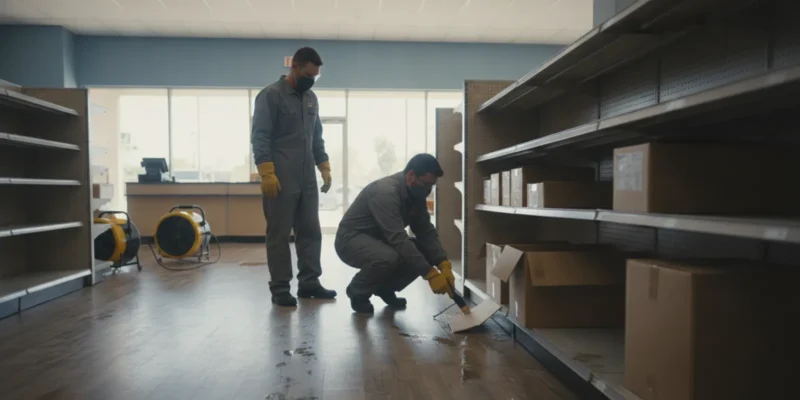
Commercial water damage restoration is a sequence of assessment, water removal, drying, and repair planning. The exact work depends on the water source, affected materials, building layout, and the condition of the site. A restoration professional can inspect affected areas, explain the proposed work, and help you decide how to coordinate it with building management and your insurer.
Common stages include:
- Initial assessment: Identify the likely source, areas involved, access concerns, and materials that may need attention. Share what you know about the event and any immediate actions already taken.
- Water removal: Remove standing water using equipment appropriate to the site and conditions. Do not enter or operate equipment in an unsafe area.
- Drying and monitoring: Use suitable drying equipment and check affected areas over time. A dry-looking surface does not necessarily show whether materials behind it are dry.
- Cleaning and material decisions: Determine what can be cleaned and dried, and what may require removal or replacement. Water source and material condition matter; avoid promising that every item can be saved.
- Repair and reopening coordination: Plan necessary repairs and confirm that affected spaces are appropriate to use before reopening them.
For a store in Bakersfield or nearby communities, you can review the provider’s commercial restoration services and its information about water damage restoration. Ask what areas will be assessed, how progress will be communicated, how work will be separated from customers and staff, and what decisions require your approval.
Ask about technician qualifications and the work plan, not just equipment. 911 Restoration of Bakersfield identifies IICRC certification among its qualifications; you can review its certification information. Before work starts, clarify the scope, access needs, safety boundaries, documentation process, and how the team will coordinate with your insurer or property representative.
How can you limit disruption while cleanup is underway?
Whether you can remain open depends on the affected area and the safety of customers, staff, and the work zone. Do not keep an area open simply to avoid lost sales if the route, building systems, or cleanup conditions are unsafe. A phased approach may be possible when affected and unaffected areas can be reliably separated, but that decision should be based on an assessment rather than guesswork.
Use a simple operating plan:
- Choose one person to coordinate staff updates and one contact for the restoration team.
- Mark closed routes and keep customers away from equipment, cords, wet floors, and repair activity.
- Move unaffected stock only when the path is safe and the move will not spread water or contamination.
- Protect point-of-sale and business records from further exposure without putting staff in a hazardous area.
- Tell employees what areas are restricted, where customers should be directed, and who can answer questions.
- Keep a daily note of work completed, areas still affected, and any operational changes.
If the store is part of a larger property, coordinate building access, alarms, utilities, loading areas, and shared corridors with the property manager. If you lease the space, promptly notify the landlord and review your lease and insurance instructions. Do not authorize structural or system changes unless you have the authority to do so.
What should you ask your insurer and restoration provider?
Insurance coverage depends on the policy, the cause of damage, and the facts of the loss. Avoid relying on general online advice to decide what your policy covers. Notify your insurer promptly, ask what documentation it needs, and keep copies of communications. If you need help organizing claim questions, see the company’s information about insurance claim assistance.
| Topic | Questions to ask | Why it matters |
|---|---|---|
| Cause and scope | What information or inspection is needed to document the source and affected areas? | Helps keep the claim record tied to what happened and what was observed. |
| Emergency work | What immediate mitigation can proceed, and should estimates or approvals be submitted first? | Clarifies how to act promptly while following the policy process. |
| Inventory | What format should I use for damaged goods, photos, receipts, and disposal records? | Creates a consistent record of potentially affected stock. |
| Building access | Who can authorize work in leased or shared areas? | Prevents confusion among tenants, owners, and property managers. |
| Reopening | What repair, inspection, or documentation steps remain before normal use? | Helps coordinate business decisions with restoration and claim requirements. |
These questions do not determine coverage or responsibility; your insurer and authorized property representatives can explain the requirements for your loss. For background on local availability, review the company’s restoration service areas, then confirm that your specific property is within the response area.
How do you decide when the store can reopen?
Reopening should follow a check of the affected areas, not an arbitrary timetable. Confirm that immediate hazards have been addressed, the planned work is complete for the areas returning to use, and any required inspections or approvals have taken place. Consider customer routes, accessible exits, restrooms, electrical systems, ceilings, flooring, and any inventory that may have been exposed.
Before resuming normal operations, review this checklist with the people responsible for the building and the restoration work:
- Is the water source controlled, and are affected building systems safe to use?
- Are restricted work areas clearly separated from customer and employee routes?
- Have drying, cleaning, and repairs reached the agreed stage for the area to reopen?
- Have affected food or other regulated products been handled according to applicable instructions?
- Have you recorded the condition of the space and kept relevant work and inspection records?
- Does the property owner, insurer, or local authority require any additional step before use?
Reopen in phases only if the affected and cleared areas can be kept separate and the responsible parties agree that the space is suitable for use. If conditions change, stop using the affected area and reassess with qualified help.
What is the clearest path to recovery?
For a retail business, recovery means more than removing visible water. Keep people safe, document the loss, coordinate with the insurer and property decision-makers, and base reopening on the condition of the building and the work completed. A clear plan helps you make decisions in order and reduces avoidable confusion during a stressful interruption.
Contact the Bakersfield restoration team about your property
When you are ready to discuss next steps, share where water entered, which parts of the store are affected, and whether customers or employees may be at risk so the response can be coordinated appropriately.
