restoration services buttonwillow lost hills kern county.
People searching for restoration services buttonwillow lost hills kern county need a safe next step. They are not looking for a generic list of companies. The local coverage guide from 911 Restoration of Bakersfield explains the broader response model.
A leaking pipe, kitchen fire, sewage backup, or mold problem can affect a home, farm building, business, or oil-field property quickly. Buttonwillow and Lost Hills sit along the I-5 corridor. Property owners may need to explain rural access, outbuildings, private wells, equipment, or possible fuel and chemical hazards.
This guide explains what to do first and which restoration services may apply. It also explains what information to share when you call. A local restoration team can coordinate emergency mitigation with insurance documentation. The goal is simple: protect people and limit secondary damage. Give the responding crew useful details before it arrives.
Restoration services for Buttonwillow and Lost Hills in Kern County
Restoration services are the emergency and follow-up steps used to stabilize a damaged property. They can remove unsafe materials, dry affected areas, clean contents, and prepare a building for repairs. The work depends on the source of damage and the condition of the building. A small supply-line leak may need extraction and structural drying. A fire may require board-up work, soot removal, odor treatment, and reconstruction planning. A sewage backup or unknown liquid may require isolation, specialized cleanup, and disposal.
For location-specific water emergencies, property owners can review the pages for water damage restoration in Buttonwillow and water damage restoration in Lost Hills. This article covers the broader decision process for both communities, including fire, smoke, mold, sewage, commercial, agricultural, and rural-access concerns.
- Water damage restoration: Extraction, moisture mapping, structural drying, cleaning, and monitoring after leaks, floods, or appliance failures.
- Fire and smoke restoration: Board-up, soot removal, smoke-odor control, contents cleaning, and repair planning after the fire department clears the property.
- Mold removal: Containment, safe removal, HEPA filtration, drying, and clearance planning when moisture has remained in walls, floors, ceilings, or contents.
- Sewage cleanup: Isolation, contaminated-water extraction, sanitization, disposal, and replacement of porous materials that cannot be safely cleaned.
- Commercial and agricultural restoration: A response plan for buildings, inventory, equipment, outbuildings, and operations that cannot remain exposed to damage.
Ask the responding team which services apply to the incident. The first assessment should identify the source, the affected areas, immediate safety concerns, and the steps needed to prevent the loss from spreading.
What water and fire risks affect Buttonwillow and Lost Hills?
Many emergencies in western Kern County begin with familiar residential problems. Burst supply lines, water heaters, washing machines, roof leaks, kitchen overflows, and bathroom fixtures can release enough water to affect flooring, cabinets, drywall, insulation, and contents. Even after visible water is removed, moisture may remain below flooring or behind walls. That hidden moisture can create odor, swelling, microbial growth, and a larger repair scope.
Fire and smoke can affect homes, vehicles, agricultural structures, commercial buildings, and stored contents. Smoke residue may travel beyond the room where a fire started. Soot can stain surfaces and leave a persistent odor. Do not begin aggressive cleaning until the fire department has cleared the structure.
A restoration professional can assess which materials can be cleaned, which need removal, and which areas may have structural damage.
Buttonwillow and Lost Hills also have oil-field, agricultural, transportation, and industrial activity. Tell the restoration team if the incident may involve fuel, chemicals, damaged tanks, machinery, pesticides, fertilizers, or an unknown liquid. Do not touch or move containers that may be damaged. Keep children, pets, employees, and unprotected occupants away until the hazard has been assessed.
Warning signs that call for a professional assessment include soft or swollen drywall and buckled flooring. Other signs include a persistent smoke odor, visible soot, sewage residue, recurring condensation, or mold growth after a leak.
Surface cleaning can make a room look better while moisture or contamination remains beneath finished materials.
How does a local restoration team cover I-5 corridor properties?
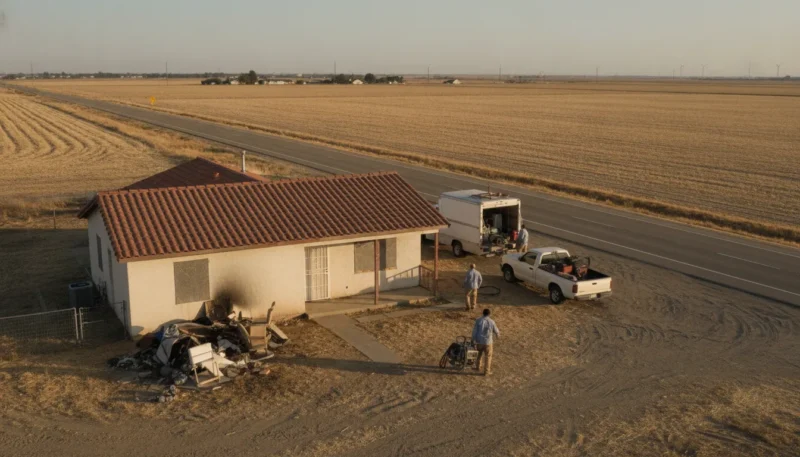
A local response plan must account for more than a street address. The crew needs to know how to reach the property, where it can park, whether gates are locked, and whether an access road has restrictions. Rural properties may include a main house, detached garage, shop, barn, pump room, storage area, or commercial structure. Describing the affected building helps the team bring the right equipment and prepare for the site.
911 Restoration of Bakersfield documents 24/7 emergency response, a stated 45-minute response time, IICRC-certified expertise, bilingual English and Spanish service, and insurance claim support. These capabilities are useful when a property owner needs both immediate mitigation and clear communication during a stressful event. Arrival time can depend on conditions, access, traffic, and the information available during the initial call, so provide the safest route and any gate instructions.
| Damage situation | Immediate priority | Possible restoration focus |
|---|---|---|
| Plumbing leak or flood | Stop the source if safe. Avoid wet electrical areas. | Extraction, moisture mapping, drying, cleaning, and repairs |
| Fire or smoke damage | Wait for the fire department to clear the structure. | Board-up, soot and odor control, contents cleaning, and reconstruction planning |
| Mold after a leak | Limit access. Avoid disturbing affected materials. | Containment, HEPA filtration, removal, drying, and clearance planning |
| Sewage backup | Isolate the area. Avoid contact with contaminated water. | Safe extraction, disposal, sanitization, and porous-material removal |
For the broader company positioning, response model, and language access, read the 911 Restoration of Bakersfield trust and local coverage guide.
That pillar article explains why local coverage matters. This cluster article focuses on practical information for Buttonwillow and Lost Hills property owners during an emergency.
How quickly should you respond after property damage?
Begin as soon as the area is safe. Water can move through flooring, drywall, insulation, and cabinets while a property owner waits to see whether a room will dry on its own. Smoke residue can become more difficult to clean when it remains on surfaces. Sewage and unknown liquids can create an immediate health or safety concern. Fast action does not mean taking risks. It means protecting people, stopping the source only when safe, and sharing accurate information with the response team.
- Protect people first. Leave the building if there is fire, structural instability, active sewage, electrical danger, or an unknown chemical hazard. Call emergency services when there is an immediate threat to life or safety.
- Stop the source only when safe. Shut off a water valve if you can reach it without entering a hazardous area. Do not handle damaged electrical equipment, fuel containers, or chemical supplies.
- Call a restoration professional. Explain the damage type, affected rooms, source status, building type, and any known contamination. Mention whether the property includes a private well, septic system, livestock area, or industrial equipment.
- Document the condition. Take photos or video from a safe location. Record damaged items and save receipts for reasonable emergency measures. Do not delay urgent mitigation just to create a complete inventory.
- Move unaffected items only if safe. Protect valuables and contents from additional damage, but do not walk through contaminated water or unstable areas to retrieve them.
- Follow the drying and cleaning plan. Moisture readings and monitoring help confirm whether the structure is dry. A surface that feels dry does not always mean the wall cavity, subfloor, or insulation is dry.
The U.S. Environmental Protection Agency’s flood cleanup guidance also emphasizes protecting indoor air and health while affected buildings are cleaned and dried. Use professional help when damage involves contaminated water, hidden moisture, smoke residue, mold, or materials you cannot safely identify.
What should you tell a restoration company in a rural Kern County location?
Clear information helps a crew prepare before it reaches a rural or corridor property. During the first call, provide the full address, the nearest cross street or landmark, the safest access point, and any gate code or road restriction. State whether the property is a residence, farm, ranch, business, warehouse, shop, or other structure. If a large vehicle cannot reach the building, explain where equipment can be staged.
Describe the source and timing of the damage. Say whether water is still flowing, whether power is on, whether the fire department has cleared the building, and whether anyone has already entered the affected area. Mention standing water, smoke odor, visible soot, sewage, mold, fuel, chemicals, or an unknown liquid. These details can change the safety plan and the equipment needed for the first visit.
Also identify areas that matter to your operation. A home may have a detached garage or well equipment. A farm may have an outbuilding, feed area, irrigation equipment, or stored tools. A business may need to protect inventory, customer access, records, or production space. The response team can then document the affected areas and help separate urgent mitigation from later repairs.
For multi-hazard losses, disaster restoration services in Bakersfield and Kern County can help coordinate more than one specialty. Business owners and facility managers can also review commercial restoration services when damage threatens operations, inventory, or customer access.
How can insurance documentation support the restoration process?
Emergency mitigation and insurance communication often happen at the same time. Gather your policy information and notify your carrier according to the policy instructions.
Do not wait to address an active leak, unsafe sewage, or other condition that is causing additional damage. Your insurance carrier makes coverage decisions. The restoration company can provide documentation that helps describe the condition and work performed.
Ask what records will be created during the project. Useful documentation may include photographs, moisture readings, scope notes, drying records, contents lists, equipment logs, and invoices. Keep copies of your communications and receipts. If an adjuster has already visited, share the adjuster’s contact information and any claim number with the restoration project manager.
911 Restoration of Bakersfield offers direct insurance claim support and project documentation. That support does not guarantee coverage, and it does not replace the carrier’s decision under the policy. A careful record helps each party understand the source of damage, the mitigation steps, and the work still required.
If Spanish is your preferred language, request bilingual support at the beginning of the call. Clear communication can help property owners understand safety restrictions, describe affected areas, review documentation, and make decisions during the response.
Frequently asked questions about restoration services in Buttonwillow and Lost Hills
Does 911 Restoration of Bakersfield serve Buttonwillow and Lost Hills?
Yes. Buttonwillow and Lost Hills are included in the company’s documented Kern County service territory. The response plan depends on the damage type, property condition, access, safety information, and equipment needed for the first visit.
What emergencies can a restoration company handle?
Emergency restoration may include water damage, fire and smoke damage, mold, sewage backups, biohazard cleanup, commercial losses, and reconstruction coordination. Describe the condition during the initial call so the team can explain which services apply.
Should I clean up water damage before calling?
Only take steps that are safe. Stop the source if possible, keep people away from electrical or contaminated water, and document the condition. Professional extraction and moisture testing may be needed even when visible water is gone.
Can restoration professionals help with an insurance claim?
911 Restoration of Bakersfield provides insurance claim support and project documentation. Your insurance carrier determines coverage, so keep policy information, photos, receipts, and restoration records for the claim process.
Can I request Spanish-language restoration support?
Yes. 911 Restoration of Bakersfield offers bilingual English and Spanish service. Mention your preferred language when you call so the team can communicate clearly throughout the emergency response and restoration process.
What should I do if the damage involves an unknown liquid?
Keep people away, avoid contact, and do not operate electrical equipment in the area. Tell the restoration team what you know about the liquid and whether it may be connected to fuel, chemicals, sewage, or industrial equipment.
