

How Should a School Coordinate Fire Damage Restoration?
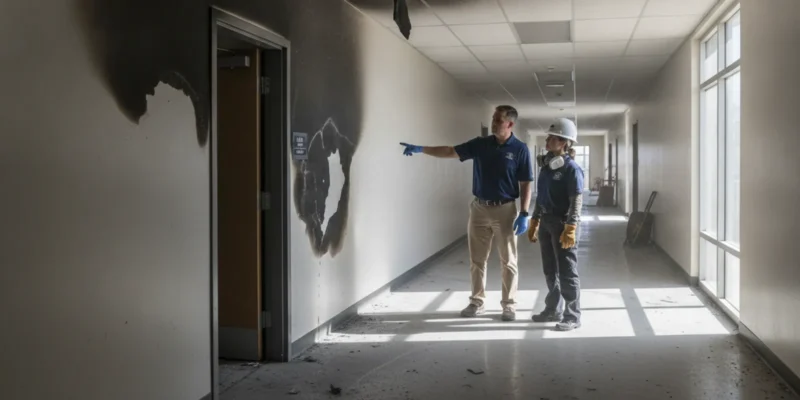
School fire damage restoration is easier to coordinate when leaders establish safety, communication, documentation, and decision-making responsibilities early. A fire may affect more than the room where it started: smoke, soot, water from firefighting, and disruption to building systems can complicate the response. The school should not rush to clean or reopen affected spaces before qualified professionals and the appropriate authorities have assessed them.
Discuss school fire restoration needs
What should school leaders do first?
Follow instructions from fire officials and emergency responders. Do not enter a building or area that has been restricted, and do not let staff, students, or families go inside to retrieve belongings. If the incident is still active or anyone may be in danger, call emergency services.
Once authorities allow access, designate a school incident lead. This may be a facilities director, administrator, or district representative. Give that person authority to coordinate the next steps and keep a written record of decisions. Assign a second contact to manage communications so updates do not compete or conflict.
- Confirm which areas are restricted and who has authority to approve entry.
- Identify immediate concerns such as damaged ceilings, exposed wiring, standing water, or a strong smoke odor.
- Keep students and nonessential staff away from affected rooms and routes.
- Contact the district facilities team, insurer, and relevant building or fire officials according to school procedures.
- Arrange professional assessment and mitigation before cleanup begins.
Do not use ordinary fans, vacuums, or cleaning products on soot or water-damaged materials without direction. Moving debris or wiping surfaces can spread residue, damage finishes, or expose people to hazards. Fire and smoke cleanup is different from routine custodial work.
How should the school define the affected areas?
Fire damage may extend beyond visible charring. Smoke can travel through corridors and into connected rooms; firefighting water can move into lower areas or wall and floor assemblies. A professional assessment should consider the fire area and nearby spaces, not just the room where flames were present.
Work with building representatives and restoration professionals to map affected and potentially affected areas. Record room numbers, floors, access points, and the condition of contents and surfaces. Note any spaces that cannot be inspected yet. Keep the map current as additional findings emerge.
Use practical boundaries: restricted areas, areas awaiting assessment, and areas considered for continued use after review. Do not treat a hallway or adjacent classroom as safe simply because it looks clean. Decisions about occupancy should follow direction from the appropriate authorities and qualified professionals.
What should the school document?
Good records help the school coordinate work, explain decisions, and support discussions with its insurer. Photograph conditions only when authorized and safe. Do not enter a restricted area to take pictures. Preserve original photos and add dates, locations, and the name of the person who recorded them.
- Write down when the fire was reported, when responders arrived, and when the building or area was released for access.
- Record visible damage, smoke residue, water, odor, and affected contents by room.
- Save incident reports, repair and mitigation proposals, work authorizations, and communications.
- List equipment or materials that may need specialized handling, such as computers, classroom materials, or stored records.
- Track temporary closures, alternate room assignments, and decisions about access.
Keep a single incident file and share it with the people who need it. Avoid discarding damaged contents before the school has considered documentation and insurer requirements. When in doubt, ask the insurer or district representative what records and approvals are needed before removal.
How can the school coordinate mitigation and repairs?
Separate immediate mitigation from the longer repair and reopening process. Mitigation addresses conditions that could worsen or impede recovery, such as soot residue, water, or damaged materials. Repairs restore building components and finishes. The school should understand which work is proposed at each stage, what areas it affects, and what approvals are needed.
Ask the provider to explain its assessment, proposed work sequence, access needs, and how it will protect unaffected areas. Clarify how the team will communicate new findings before expanding the work. For background on the relevant service, review fire and smoke damage restoration.
| Stage | School coordination task | Questions to resolve |
|---|---|---|
| Safety and access | Confirm restrictions and approved entry | Who can authorize access, and which rooms remain off limits? |
| Assessment | Document affected and adjacent spaces | What damage is visible, and what needs further inspection? |
| Mitigation | Coordinate work zones, schedules, and protection | What work will occur, and how will changes be reported? |
| Repair planning | Review scope, approvals, and sequencing | What remains to repair, and what approvals are outstanding? |
| Return to use | Confirm completion and occupancy decisions | Who verifies readiness, and what documentation is required? |
A written scope should be understandable to school decision-makers. Ask for the affected locations, tasks, materials or contents involved, and any assumptions or exclusions. If a proposal is unclear, request an explanation before approving it. Compare scopes by what work is included and how it addresses the documented conditions, not just by the summary or total alone.
Coordinate the schedule around school operations, but do not let convenience replace safety. Agree on work hours, delivery routes, worker access, barriers, and how the team will keep students and staff separated from work areas. Tell the provider about school calendars, testing, meal service, and other activities that could affect the plan.
How should leaders address smoke, soot, and water?
Different types of fire-related damage may require different methods. Soot can mark surfaces and contents; smoke odor may remain even when visible residue is limited. Water used to extinguish a fire can create a separate cleanup need. A room can therefore need attention for more than one reason.
Do not assume that painting over discoloration or using fragrance will resolve smoke residue or odor. Ask the restoration professional what findings support each recommended treatment and whether materials can be cleaned or need removal. If contents such as books, electronics, or teaching materials are affected, ask how they will be assessed and protected before decisions are made.
For water from firefighting, identify where it traveled and what materials were affected. The school can also review water damage restoration information if water-related conditions are part of the incident. Keep this as a distinct line of coordination rather than assuming fire cleanup alone resolves it.
What should the school ask a restoration provider?
A useful provider conversation is specific to the building, the observed damage, and the school’s constraints. Ask direct questions, and keep the answers with the incident file.
- What areas have you assessed, and which areas still need evaluation?
- How will you document conditions and communicate newly discovered damage?
- What work do you recommend first, and why?
- How will access, barriers, and protection of unaffected spaces be managed?
- Who is the day-to-day contact, and how will schedule or scope changes be approved?
- What completion records or walkthroughs will you provide?
- How should the school coordinate insurance questions and work authorizations?
Ask about relevant qualifications and experience with fire and smoke restoration. The company’s certification information can help readers understand the credentials presented by 911 Restoration of Bakersfield. The school should still confirm that the proposed team and scope fit its particular project.
How should the school keep people informed?
Provide timely, consistent updates to staff and families through the school or district’s usual channels. Explain what is known, what remains under assessment, which entrances or areas are closed, and where classes or services will take place. Avoid guessing about the cause, extent of damage, or reopening date while those details are still being confirmed.
Choose a regular update cadence, even if there is no major change. Staff need practical instructions about room assignments, access, and reporting concerns. Families need clear information about schedule changes and the next update. Share only information that the school is authorized to disclose, and direct questions to the designated contact.
When work is underway, tell staff not to move barriers or enter work zones. Give facilities and restoration contacts a reliable way to report new observations. This makes it easier to address issues without sending students or other nonessential people into affected areas.
What should happen before affected rooms reopen?
Reopening is a school and authority decision, not simply the end of visible cleanup. Confirm that required inspections and approvals have been completed. Ask the restoration provider to explain what work is complete, what remains, and whether any limits or follow-up items apply. Record the decision and the person responsible for it.
Before returning students or staff, coordinate a walkthrough with the appropriate school, facilities, and project representatives. Check the agreed work areas and routes, verify that barriers and temporary arrangements are addressed, and confirm that the school has received relevant closeout documentation. If concerns remain, keep the room out of use and ask for clarification.
Review the response afterward. Note what communication worked, which decisions were delayed, and what supplies or procedures could improve the school’s emergency plan. This record can help the school prepare for a future incident without assuming that every building or fire will require the same response.
What should a school do next?
Start with safety and access controls, then document the incident and assign clear contacts for decisions and updates. Coordinate assessment, mitigation, and repair as distinct steps, with written scopes and defined approval points. Keep families and staff informed while the school verifies that affected spaces are ready for use.
For additional information about federal emergency management, consult FEMA; school leaders should also follow local authorities and district procedures for their specific incident.
How can the school keep the project organized day to day?
A fire response can involve administrators, facilities staff, district leadership, an insurer, authorities, and restoration workers. A simple operating routine helps prevent missed decisions. Set a brief check-in at a predictable time, identify who must attend, and capture decisions and open questions in one shared log. The log should name an owner and due date for each action, rather than leaving tasks as general reminders.
For example, a daily entry might record that access to one classroom remains restricted pending inspection, that a contents inventory is being prepared, and that the district contact will confirm the next review time. Record changes to the schedule and why they occurred. If an unexpected condition is found, document its location, notify the designated school lead, and ask whether the scope or access plan needs approval before work continues in that area.
Use a clear escalation path. Routine logistics can go to the day-to-day project contact; questions involving building access, student schedules, safety, or spending should go to the person authorized by the district. Keep a copy of written authorizations and any revised scope with the incident file. If insurance is involved, coordinate claim questions with the insurer and the district’s designated representative. The school can review insurance and restoration information while confirming the requirements that apply to its own policy and approval process.
Keep separate lists for decisions already made, decisions still pending, and items requiring follow-up. This avoids treating a proposed action as approved. A short status note can cover completed work, next planned work, access restrictions, unresolved questions, and the person responsible for each answer. Share operational details only with the people who need them, and keep public updates aligned with the school’s authorized communication plan.
How can the school plan temporary operations?
When classrooms or shared spaces are unavailable, the school may need to adjust room assignments, routes, schedules, or service locations. Map the temporary arrangement rather than relying on verbal instructions. Identify which entrances students and staff should use, where deliveries can be received, and which routes avoid the work zone. Make the map available to the staff responsible for implementing the change.
Consider the school day as a sequence of practical needs: arrival, class transitions, meals, accessible routes, dismissal, and after-school activities. Check each against the proposed work hours and contractor access. A schedule that works during an empty building may not fit a busy school day. Discuss constraints early, then confirm any agreed adjustment in writing so both school staff and the restoration team are working from the same plan.
Temporary arrangements should not imply that an affected area is safe to use. Keep physical boundaries clear, explain restrictions to staff, and designate who can report a barrier problem or change in conditions. If the school changes room assignments, tell families what changed, when it takes effect, and where they can find the next update. Revisit the plan when the work sequence or access conditions change.
With a clear lead, careful records, and coordinated professional support, a school can move from emergency response toward a well-managed restoration and return-to-use decision.
