

Sudden Water Damage Insurance: What Counts
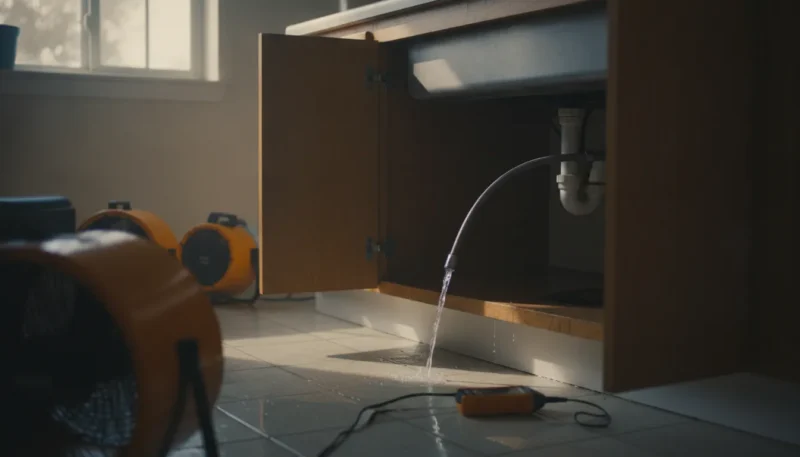
A pipe that splits overnight is a different insurance problem from a pinhole that has been wetting a wall for months. Sudden water damage insurance is the common homeowners shorthand for damage from a one-time, unexpected release of water. A slow leak, seepage, or a maintenance failure is often treated as a separate problem, and many policies exclude it. The California Department of Insurance lists sudden and accidental water damage among perils that homeowners policies typically cover, and it lists seepage, leaks, wear and tear, and neglect among perils they typically do not. Your policy wording controls the outcome. Nothing on this page is a promise that a claim will be paid.
Call (661) 220-7584 for water mitigation in Kern County
911 Restoration of Bakersfield responds around the clock across Kern County, with bilingual English and Spanish crews and IICRC-certified technicians. The practical job after a release is to stop the water, dry the structure, and keep the records that show the release was sudden. The photo checklist lives in a separate guide. This page is about the coverage distinction and the mitigation file that supports it.
What sudden water damage insurance usually means
Most standard homeowners policies are built around named perils, not around every wet floor. The California Department of Insurance consumer guide groups sudden and accidental water damage with events such as fire, wind, and vandalism. It puts flood, seepage or leaks, wear and tear, mold, and neglect on the other side of the line. That split is why two wet kitchens can produce two different claim conversations.
Sudden usually means the water escaped in a short window and the damage followed that event. A supply line that bursts while a family is home, a washing-machine hose that fails during a cycle, or a water heater that ruptures are the examples adjusters see most often. Gradual usually means water has been escaping over days or weeks. A corroded fitting under a sink, a shower pan that has been seeping into the subfloor, or a slab leak that has been raising the water bill are the patterns that trigger maintenance questions.
The label is not a measurement you can take with a moisture meter alone. Insurers look at the cause, how long the water was present, and whether the owner had a reasonable chance to notice it. A hidden leak can still be sudden if a pipe failed and the water was not visible until the ceiling stained. A visible drip that was left alone for a season is much harder to describe as sudden.
| Question the claim raises | Often treated as sudden | Often treated as gradual or maintenance |
|---|---|---|
| How the water escaped | Burst pipe, failed supply line, ruptured heater, or an appliance overflow during one use. | Corroded joint, worn washer, cracked pan, or long-term slab seepage. |
| How long it was wet | Hours. It was discovered the same day or the next morning. | Days to months of dampness, odor, or a rising bill. |
| What the owner could see | No prior drip, stain, or warning before the release. | A known drip, a prior stain, or a repair that was postponed. |
| What the file should show | Stop time, a cause note, dry logs, and photos from the first visit. | Repair history, and why the leak was not a one-time break. |
Flood water from rising surface water is a third category. It is generally a flood-policy question, not a sudden-discharge question. If the water came from outside during a storm rather than from a plumbing system, ask the insurer which policy applies before you assume the homeowners form will respond.
How sudden water damage insurance treats a slow leak
A slow leak fails the sudden test in two ways. The water did not arrive in one event, and the damage often includes rot, swelling, or microbial growth that built up over time. California’s consumer guide calls out water damage from seepage or leaks, and wear and tear or maintenance, as perils that homeowners policies generally do not cover. Mold is listed the same way. A policy can still pay for some resulting damage when a covered sudden discharge caused it, but that is a policy question, not a rule of thumb.
Kern County houses make this split concrete. Slab-on-grade homes can hide a hot-water line leak until the floor feels warm or the bill jumps. Evaporative coolers and aging supply lines in older Bakersfield neighborhoods can drip inside a wall for weeks before paint blisters. Those jobs still need drying. They just should not be described to an insurer as a burst-pipe loss if the evidence says otherwise.
Honest cause language protects the claim more than hopeful language. If the technician finds a clean split in a supply line and saturated drywall with no old staining, say that. If the cabinet floor is soft and the shutoff valve has heavy corrosion, say that too. Adjusters compare the narrative to the photos. A mismatch is a common reason a file stalls.
Repair of the broken part is also separate from repair of the wet building. Many policies pay for access and for the damaged finishes, then leave the failed pipe, hose, or valve as the owner’s maintenance item. Ask the insurer which line items they want separated before anyone writes a combined invoice.
The duty to mitigate, and the file that proves it
Once water is loose, waiting is its own risk. The same state guide lists neglect among perils that are generally not covered. In claim practice, that means the owner is expected to take reasonable steps to stop further damage. Shut off the water if it is safe. Move what you can. Call for extraction and drying instead of running household fans for several days and hoping the drywall recovers.
Mitigation is not the same job as rebuilding. Water mitigation and water restoration answer different questions. Mitigation removes water and starts controlled drying. Restoration repairs or replaces what the water destroyed after the structure is dry. Insurers often want the mitigation record first, because it shows the loss was stopped.
A useful mitigation file is short and dated. It does not need to be a legal brief.
- The date and time the water was discovered, and the date and time drying started.
- The apparent cause in plain words, including whether the release looked sudden or long-running.
- Moisture readings and daily drying logs that show the materials trending down.
- Equipment placed, the rooms served, and the date equipment was removed.
- Photos from the first visit, before demolition, saved with the invoice.
Our crews in Bakersfield, Oildale, and the surrounding Kern County towns keep that sequence because adjusters ask for it. The photo-by-photo inventory belongs in how to document water damage for an insurance claim. Use that checklist for angles, contents lists, and serial numbers. Use this page for the sudden-versus-gradual question those photos are trying to answer.
Keep damaged materials that are safe to keep until the insurer says otherwise. A cut-out piece of wet drywall with a clear water line can matter more than a long email. If the material is contaminated, as with a sewage backup, do not store it in the living space. Note why it was removed and keep the photos.
What to do in the first day without guessing coverage
Start with safety and the carrier, not with a guess about the deductible. If sewage, a ceiling collapse, or an electrical hazard is involved, leave the area and call for help. For a clean-water release that is already stopped, the first day is about notice and drying.
Call the insurer and report the date, the source if you know it, and the rooms that are wet. Ask where to send the mitigation invoice and whether they want to see the property before drywall is opened. Do not wait on that callback to start drying if water is still in the materials. Further damage from delay is the neglect problem the policy may not pay.
Then separate three costs in your own notes, even if the carrier later combines them:
- Emergency extraction and drying.
- Repair of the item that failed, such as the pipe, hose, or valve.
- Rebuild of finishes after the structure is dry, plus any extra living costs if the home cannot be used.
Extra living costs, often called loss of use, are their own coverage. The state guide describes them as help with housing, meals, and storage when a covered peril makes the home unlivable, commonly limited to a share of the dwelling limit. Save receipts. Do not assume a hotel night is reimbursed until the carrier confirms the loss is covered and the home is not livable.
Water damage restoration in a Kern County house usually runs extraction, antimicrobial treatment where needed, and structural drying before any rebuild estimate. If the release is Category 3, including a sewer backup, the scope and the policy form both change. Sewage is often an endorsement question. Our sewage backup cleanup page covers the cleaning side. Ask the insurer whether backup coverage is on the policy before you treat it like a burst supply line.
How restoration records support the sudden-loss question
An adjuster is not in the house at 2 a.m. The mitigation record is the stand-in. How insurance adjusters work with restoration companies explains that relationship. For the sudden-damage question, three parts of the file do the most work.
The cause note should name the failed part and the condition around it. A sudden file might say the supply line separated at the braided hose, the cabinet bottom is wet, and the toe kick has no prior stain. A gradual file might say the angle stop is corroded, the particle board is soft, and there is a history of a slow drip. Both can be true on different jobs. Only one of them matches a sudden discharge.
The drying log shows that mitigation started promptly. Readings that fall over one to several days support the idea that the wetting event was recent and that the owner did not leave the water in place. Readings that start moderate, with cupped flooring and old microbial growth, point the other way. Report the readings you took. Do not edit them to fit a hoped-for coverage answer.
The invoice should separate mitigation from rebuild, and it should match the photos. A large demolition line with no moisture map is hard to defend. So is a narrative that says burst pipe when every photo shows a long-term stain. 911 Restoration of Bakersfield prepares this documentation as part of insurance claim support. We do not decide coverage, and we do not tell a carrier that a loss is covered.
If the insurer asks whether the loss is sudden, answer with the file, not with a slogan. Offer the discovery time, the failed component, the first moisture map, and the photos. If you do not know how long a hidden leak was active, say you do not know. Inventing a start time is worse than an honest gap.
Kern County details that change the conversation
Local building conditions do not rewrite a policy, but they change what “sudden” looks like on site. Summer attic temperatures in Bakersfield stress supply lines and water-heater connections. A line that fails on a July afternoon can dump a large volume before anyone is home from work. That is a different file from a winter slab leak that has been warming a hallway for weeks.
Hard water and older galvanized or polybutylene sections still show up in parts of Kern County. When a fitting fails at a thinned spot, the insurer may ask whether the failure was a break or the end of a long wear pattern. Photos of the failed piece, kept if it is safe, answer that better than a verbal description.
Landlords have a second policy in the mix. The building policy and the tenant’s contents policy do not cover the same things. Whether landlord insurance covers water damage is its own question. On a rental, identify who discovered the leak, who had access, and which policy is being asked to respond. Do not send the tenant’s contents inventory to the building carrier and expect it to be sorted out later.
Response time still matters for the neglect issue. Our Kern County crews commit to a 45-minute response for emergency water losses in the county. Faster extraction does not guarantee payment. It does put a documented start time on the mitigation file, which is the fact the duty-to-mitigate conversation usually turns on.
Talk with 911 Restoration of Bakersfield at (661) 220-7584
Frequently Asked Questions
Does homeowners insurance cover sudden water damage?
Many homeowners policies cover sudden and accidental discharge from plumbing, an appliance, or a similar source. The California Department of Insurance lists that kind of water damage among perils policies typically cover, and lists seepage, wear and tear, and neglect among perils they typically do not. The policy form and any endorsements decide the claim. A restoration company cannot tell you the loss is covered.
Is a slow leak the same as sudden water damage?
No. A slow leak, a seep, or a long-term maintenance failure is a different fact pattern. Insurers look for a one-time release, a short wetting period, and no ignored warning signs. A hidden break can still be sudden. A known drip that was left in place usually is not.
Should I start drying before the adjuster arrives?
Yes, if it is safe. Take reasonable steps to stop further damage, including extraction and controlled drying. Tell the insurer you are doing that, and keep the moisture logs and photos. Waiting several days so someone can see standing water can be described as neglect, which policies often exclude.
What records help show the release was sudden?
Record when the water was found, what failed, and when drying started. Add the first moisture readings, daily drying logs, and photos from before demolition. Keep the cause description consistent with those photos. The full shot list is in our documentation guide.
Will insurance pay for the broken pipe and the wet drywall?
Often those are separate. Policies may pay for sudden damage the water caused, including access and finishes, while the failed part itself is treated as maintenance. Ask the carrier which line items belong on the claim before you combine them into one invoice.
Get the mitigation file started
If a pipe, hose, or water heater just failed in your Kern County home, stop the water and start drying. Keep a record the insurer can read. 911 Restoration of Bakersfield handles emergency extraction and structural drying. We document cause, moisture, and equipment for the claim file. We will not promise that a policy will pay. We will give you a clear mitigation record and a straight description of what failed.
Call (661) 220-7584 or reach us through the contact page. English and Spanish speakers are available day and night.
