
Does Landlord Insurance Cover Water Damage? A Rental Property Guide
A water loss in a rental can leave you managing repairs, tenant questions, and an insurance call at the same time. If you are asking, does landlord insurance cover water damage, the practical answer is: it may, depending on what caused the damage, the policy language, and the facts of the loss. A policy may treat a sudden pipe failure differently from gradual seepage or floodwater. Review your policy and ask your insurer about the specific event before assuming what is covered.
Request help with water damage restoration
What does landlord insurance usually cover after water damage?
Landlord insurance is generally intended to protect the property owner’s building and liability interests. A rental dwelling policy may include coverage for damage to the structure from certain water events. The policy may also address items the owner supplies, such as appliances, depending on the contract. It does not automatically cover every kind of water damage, and policy terms vary by insurer and property.
One useful distinction is the cause of the water. A sudden, accidental event—such as a pipe that unexpectedly breaks—may be treated differently from water that has been leaking for a long time. The Arizona Department of Insurance and Financial Institutions describes non-flood water damage and mold remediation as potentially covered when caused by a sudden or accidental event, while emphasizing the event type. That is a general example, not a decision about your policy or a California coverage determination. Read the DIFI water damage guidance and ask your own insurer how its contract applies.
Think of the policy as a set of defined protections, limits, conditions, and exclusions—not a promise that any water-related repair will be paid. Coverage for a building also differs from coverage for a tenant’s belongings. The Federal Emergency Management Agency’s FloodSmart guidance explains that a landlord’s flood insurance protects the building, not a renter’s personal belongings, and that renters flood insurance is separate from renters insurance. This is a useful reminder to clarify whose property is involved; it does not explain the full terms of your landlord policy. See FloodSmart’s explanation of flood insurance for renters.
Which water events should you ask the insurer about?
Do not rely on the label “water damage” alone. Describe what happened, where the water came from, when you first noticed it, and what areas or belongings were affected. Ask the adjuster to identify the relevant policy wording and explain whether the event falls under a covered cause, an exclusion, or a separate coverage section.
| Water-loss situation | What to clarify with your insurer | Useful records to gather |
|---|---|---|
| A pipe, supply line, or fixture suddenly fails | Does the policy cover the resulting building damage? Are there conditions about upkeep, shutoff, or prompt notice? | Photos, discovery time, plumber or restoration notes, and any repair record |
| A slow leak or repeated seepage | How does the policy define repeated, continuous, or gradual leakage? What evidence may help establish when it began? | Earlier inspection records, tenant messages, maintenance history, and dated photographs |
| Rain enters through a roof, window, or opening | Does the cause matter, such as storm damage, an existing defect, or maintenance? What part of the loss is being evaluated? | Exterior and interior photos, weather-related observations, and roof or window service records |
| Water comes from outside and inundates the property | Is this considered flood under the policy? Is a separate flood policy needed, and which policy should receive notice? | Water source and extent, photographs, emergency actions, and all policy information |
| A leak affects tenant-owned possessions | Which policy applies to the building and which may apply to the tenant’s belongings? | Affected-area photos and an itemized list supplied by the tenant |
| Moisture is followed by visible mold | Does the policy address resulting mold, and are there limits, exclusions, or notice requirements? | Timeline, source of moisture, prior repairs, and photos before cleanup |
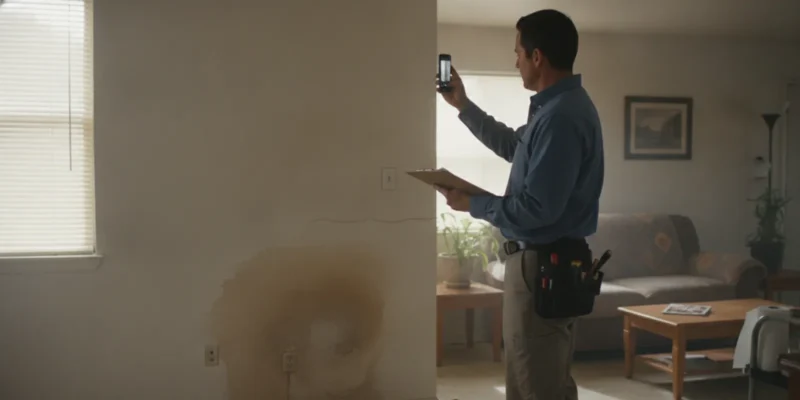
This table is a starting point for questions, not a coverage chart. The insurer’s policy and investigation determine how a specific claim is handled. For example, the same wet wall could lead to different questions if the water came from a sudden broken pipe, a roof opening, or repeated leakage that went unreported.
What exclusions and policy details deserve a closer look?
Before a loss, locate the declarations page and the full policy form, including endorsements. After a loss, ask the insurer to point to the exact language relevant to the cause and the damaged property. If the explanation is unclear, ask for it in writing. Keep your own notes with the date, the person you spoke with, and any requested next steps.
- Gradual damage: Ask how the contract treats repeated seepage, long-term leakage, or moisture that developed over time.
- Maintenance and wear: Find out whether the insurer sees a maintenance issue, a sudden event, or both, and how that affects the evaluation.
- Flood: Confirm whether water entering from outside is handled under the dwelling policy or a separate flood policy. Do not assume that “water coverage” means flood protection.
- Building versus contents: Separate damage to the structure and owner-supplied property from a tenant’s personal possessions. Ask who should submit information for each.
- Mold or secondary damage: Ask about any applicable limits, time requirements, and documentation needed when moisture leads to additional damage.
- Deductibles, limits, and duties after loss: Ask what amounts, deadlines, mitigation steps, and records apply to your contract. Do not infer these from another owner’s policy.
A denial or partial decision should not be guessed at from a short phone summary. Ask the insurer to explain the decision, identify the policy provisions it relied on, and tell you what information is still needed. If you disagree, follow the insurer’s stated review or appeal process. For additional general context, the insurance claim assistance resource can help you understand restoration-related coordination, but it cannot determine your coverage.
What should you do first when a rental has water damage?
Protect people first. If there is a risk around electricity, contaminated water, ceiling collapse, or another unsafe condition, keep tenants and visitors away from the affected area and contact the appropriate emergency professional. Do not ask a tenant to enter standing water or handle a hazardous cleanup.
- Stop the source when it is safe. If you can safely identify and shut off the relevant water supply, do so. Contact a plumber or other appropriate professional to address the cause. Avoid operating electrical equipment near water.
- Notify the insurer promptly. Use the notice method in your policy. Explain what is known and what remains uncertain. Ask whether an adjuster needs to inspect before damaged materials are moved or repairs begin.
- Take a first set of photographs. Capture the source if visible, affected rooms, wet materials, and nearby undamaged areas. Take wider views and close-ups. Do not delay urgent safety or mitigation work just to create a complete photo record.
- Make a written timeline. Record when the tenant first reported the issue, when you learned of it, what you observed, what steps were taken, and who was contacted. Save messages and emails.
- Keep receipts and work records. Save invoices, emergency service notes, material disposal records, and temporary protection costs. Ask the insurer what documentation it wants and retain copies of everything submitted.
- Coordinate access and updates. Tell the tenant what areas are affected, who will need access, and how to report changes. Keep communications factual and avoid promising that an insurer will pay for a repair.
For a more detailed response sequence, review this first-steps guide for water damage. If you need help assessing a property loss, learn about water damage restoration and the work involved in addressing affected building materials.
How can you document the loss without slowing urgent work?
Documentation should support the insurer’s review while allowing reasonable steps to limit further damage. Start with the facts you can observe. Note the date and time, address and unit, suspected source, rooms affected, and whether water is still entering. If the cause is uncertain, say so rather than recording a guess as fact.
Use a consistent photo method. Take an overall image from the doorway, then closer images of affected surfaces and visible water. If practical, include a reference point to show the location and scale. Keep original files and their dates. A simple room-by-room list can connect each photo to its location. Record later changes as separate updates so the timeline remains clear.
Keep building records together. Relevant items may include maintenance requests, prior leak repairs, inspection reports, appliance or plumbing service records, tenant notices, and communications with contractors. Do not edit or discard earlier records if they seem incomplete. Share them with the insurer when requested and explain the context accurately.
If immediate work is needed to protect the property, document the conditions before work when it is safe and feasible. Ask the insurer whether it wants an inspection or specific records. Keep removed materials or samples only if safe and appropriate, and follow professional advice about handling them. Do not delay necessary safety measures while waiting for an answer.
How does restoration work fit with the insurance process?
Insurance evaluation and property mitigation are related, but they are not the same decision. The insurer determines coverage under the policy. A restoration professional evaluates the affected area and carries out agreed work. A contractor’s assessment does not guarantee the insurer will approve or reimburse every item.
When speaking with a restoration provider, describe what happened, how long the water may have been present, which areas are affected, and whether the source has been stopped. Ask what the initial assessment includes, what work is urgent, and how findings will be documented. Request clear written notes about observed conditions and the work performed. Share those records with your adjuster, and ask the insurer how to proceed before authorizing work that is not urgent.
Owners managing more than one unit may also need to coordinate tenant access, building staff, and separate affected spaces. Keep a distinct timeline and photo folder for each unit. Explain to occupants how to report new moisture or changes, and record each follow-up. For local service-area information, see the Kern County restoration service areas. The technician certification information is available if you want to review qualifications when comparing providers.
911 Restoration of Bakersfield provides water damage restoration and can help document restoration findings for the property owner. The team offers 24/7 emergency response and free visual inspections. Your insurer—not a restoration company—makes coverage decisions, so keep the claim discussion with your carrier and retain copies of all estimates, notes, and approvals.
How should landlords compare restoration plans?
When comparing plans, focus on scope, documentation, communication, and safety rather than a promise about insurance payment. Ask each provider to describe what it observed and what it proposes to do. A useful plan makes it easier to understand the work and discuss it with the adjuster.
- Assessment: What rooms and materials were inspected? Are there areas that could not be accessed?
- Source and affected area: Does the plan distinguish the suspected source from the resulting damage? What facts remain unknown?
- Work sequence: Which actions are urgent, and which can wait for insurer review or additional approval?
- Records: Will you receive dated photographs, findings, and a written description of completed work?
- Tenant coordination: How will access, updates, and any safety restrictions be communicated?
- Insurance communication: Can the provider explain restoration steps clearly without guaranteeing what your policy will pay?
A clear scope also helps prevent misunderstandings. If the insurer, owner, tenant, and contractor are using different names for the same issue, ask them to describe the location, material, and observed condition. Keep approvals and changes in writing whenever possible.
What can landlords review before a water loss happens?
A little preparation can make the first hours after a leak more manageable. Keep a current copy of the declarations page, policy form, and endorsements where you can access them. Make a note of the insurer’s claims contact and the method for reporting an emergency. If the property has separate flood insurance, store those policy details with the dwelling policy rather than assuming one policy applies to every source of water.
Review the property’s maintenance and shutoff information. Know where the main water shutoff is, and make sure the people responsible for the property know how to contact you. Maintain a record of plumbing, roof, appliance, and water-heater work. A dated maintenance record can help establish what was inspected or repaired and when; it does not, by itself, determine insurance coverage.
Set up a simple incident file for each rental unit. Include the address and unit number, tenant contact details, relevant maintenance history, and a place to save messages, photographs, insurer correspondence, and work records. Avoid storing sensitive personal information where it is not needed. Explain to tenants how to report an active leak promptly and whom to contact if you cannot be reached. Give them clear instructions to avoid unsafe areas rather than asking them to investigate concealed spaces or perform repairs.
Finally, ask your insurance agent or carrier to explain policy-specific questions before a loss occurs. Ask how the policy treats sudden plumbing failures, repeated leakage, floodwater, owner-supplied appliances, and mold-related damage; ask about notice deadlines and what documentation is useful. Get answers in writing when possible. This preparation will not change policy terms, but it can help you locate the right information and make a timely report.
What is the next step after a rental property water loss?
Start by protecting people, stopping the water source when safe, and notifying your insurer. Document the conditions and the response as you go. Then clarify which policy provisions and records the insurer needs, while arranging appropriate mitigation for the building. Do not assume coverage based only on the type of damage or on another property owner’s experience.
Contact the Bakersfield team about water damage
Careful documentation and direct questions to your insurer can help you make informed decisions while restoration needs are addressed.
