Office Building Mold Remediation: What Does It Involve?

Finding mold in an office can raise immediate questions about employees, schedules, and how much of the building may be affected. Office building mold remediation is a planned process: identify and address the moisture source, determine the affected area, limit disturbance and exposure during work, remove or clean affected materials as appropriate, and confirm the space is ready for its intended use. The exact plan depends on the building and the conditions found.
Call to discuss an office mold concern: (661) 220-7584
In brief: Effective remediation is not just surface cleaning. The response needs to address the moisture that allowed growth, manage the affected materials and work area, and plan how the office can operate safely during and after the work.
What does office building mold remediation involve?
Remediation typically begins with a site assessment and a clear scope of work. The restoration team and property representative determine where moisture is present, what materials are affected, and whether the source is still active. They then plan containment and work practices, remove or clean affected materials, dry the area, and coordinate restoration or repairs.
The goal is not simply to cover a stain or apply a product. The U.S. Environmental Protection Agency explains that a remediation plan should include steps to fix the water or moisture problem, because the problem can return if its cause remains. Its guidance also notes that cleanup actions can stir up mold, which is why the work area and method matter. See the EPA guide to mold remediation in schools and commercial buildings.
For an office, the work plan must also fit the building’s use. A small affected area beside a private office may be handled differently from a moisture problem spanning a shared wall, ceiling, or HVAC-related area. The property manager should receive a scope that explains what will be worked on, which spaces may be unavailable, and what needs to happen before normal use resumes.
Think of the scope as a working map rather than a one-line instruction to “remove mold.” It should connect the observed condition to the planned action: for example, identify a damp ceiling area, note whether the leak source has been corrected, state which ceiling materials need removal or cleaning, and describe how adjacent offices will be separated from the work. If the team cannot confirm what lies behind a finish before opening it, the plan can note that investigation may change the scope and explain how the property representative will review that change.
How is the source and extent of moisture assessed?
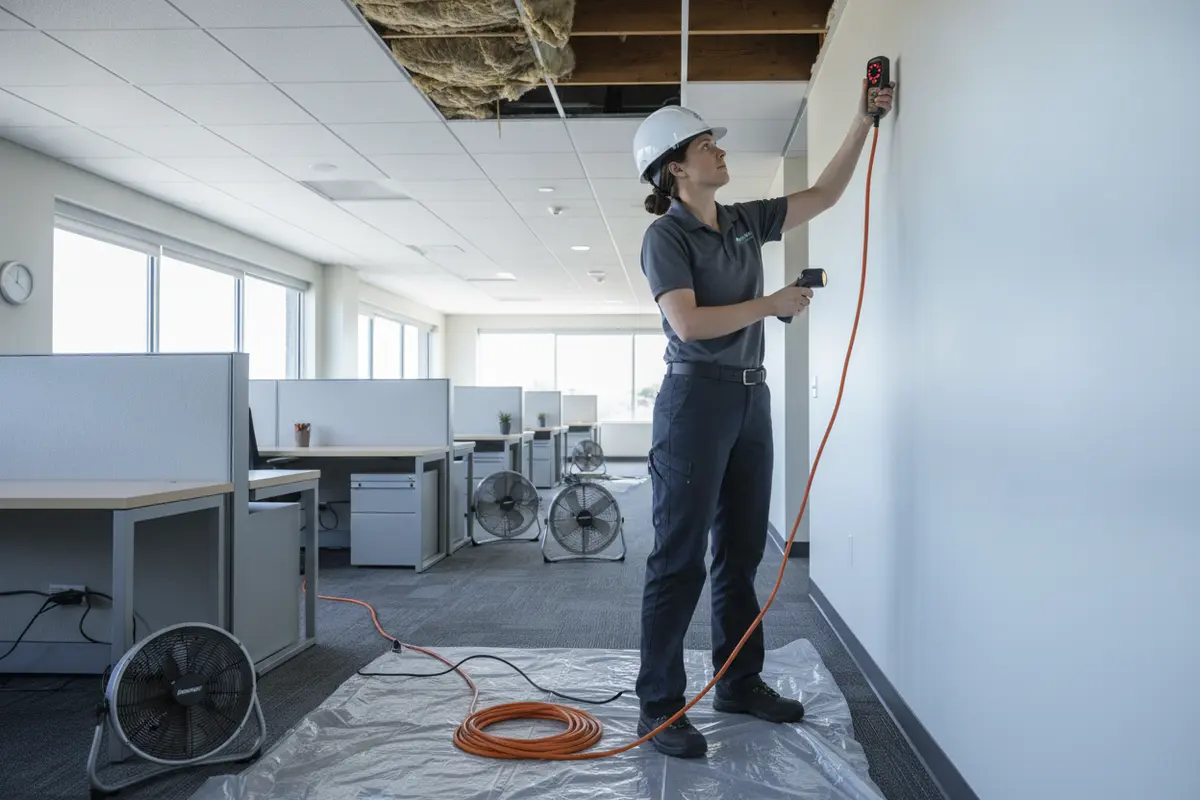
Before cleanup, the team needs to understand why the materials became damp. Common building situations include a roof or window leak, plumbing failure, water entering after a storm, or condensation around a cool surface. These are examples, not a diagnosis. A visible patch may not show the full extent of moisture, so assessment may include checking nearby building materials and tracing the conditions that could have fed the growth.
Give the restoration provider useful building history: when the issue was first noticed, whether there was a leak or overflow, which repairs have already been attempted, and whether the area has become wet more than once. Point out stains, musty odors, bubbling paint, or damaged ceiling tiles, while avoiding unnecessary contact with suspect materials. If water is still entering, report that promptly so the source can be addressed.
Assessment should produce a practical scope, not an unsupported promise about what is behind every wall. Ask the provider to distinguish observed conditions from areas that may need further investigation once work begins. If conditions differ from the initial scope, the building representative should know how the change will be documented and approved.
A simple timeline can help the assessment. Note when staff first reported an odor or stain, when maintenance inspected it, and whether the condition changed after rain, plumbing work, or a change in building operation. Share work orders and repair notes that relate to the area. This does not establish a cause by itself, but it gives the team useful context and can help distinguish a recurring moisture issue from a recently discovered one.
For a commercial property, the commercial restoration service page explains the relevant property-restoration context. 911 Restoration of Bakersfield also provides mold remediation services; standalone mold testing is not offered.
How should an office prepare for remediation work?
Choose one building contact to coordinate the response. That person can share access instructions, communicate with the restoration team, notify affected occupants, and keep decisions from getting lost across email threads. For a multi-tenant building, confirm who has authority over shared areas and how tenants should report concerns.
- Map the work area. Identify affected rooms, adjacent spaces, shared corridors, and routes for workers and materials.
- Plan around occupancy. Discuss which desks, meeting rooms, or common areas could be temporarily unavailable. Set expectations for any changes to access or work hours.
- Protect records and equipment. Follow the provider’s instructions for moving or protecting items. Do not move visibly affected materials through occupied areas without discussing the plan.
- Share building information. Provide relevant leak history, maintenance records, prior repairs, and access to the areas related to the moisture source.
- Document decisions. Keep the scope, schedule, affected-area notes, change approvals, and progress communications together.
It also helps to agree on how the building will function while work is underway. Ask whether the team needs access to a loading area, service elevator, parking spaces, or particular building systems, and identify any security or escort requirements. Coordinate delivery and debris-removal routes in advance so the work does not create avoidable disruption in busy shared areas. If the site has operating hours, scheduled client visits, or rooms that cannot be closed without notice, include those constraints in the planning discussion.
Set a simple update routine before the first workday. Decide who receives progress reports, how urgent changes will be communicated, and who can approve scope or schedule adjustments. For a multi-tenant property, agree whether the building contact or each tenant will send occupant notices. Keep notices specific: name the affected area, explain access limits, provide the contact for questions, and update people if the plan changes. This is more useful than a broad warning that does not tell occupants what to do.
Before work starts, ask what the containment boundary will be and what controls will be used to limit dust and disturbance outside the work zone. The particular controls depend on the project. The Occupational Safety and Health Administration describes mold remediation as correcting the moisture problem and removing moldy or contaminated materials to prevent exposure and further damage. Its brief guide to mold in the workplace provides additional context for workplace mold response.
Building occupants should receive clear, factual instructions from the property representative. Explain which spaces are affected, how to avoid entering the work zone, who to contact with questions, and when updates will be provided. Avoid making medical conclusions about a building or its occupants based solely on a visible patch or odor; refer health concerns to an appropriate healthcare professional.
For example, if a conference room is next to the work area, tell staff whether it is unavailable, how long the restriction is expected to last if known, and where meetings should move. If the affected space is a tenant suite, make sure the tenant has a way to report access or scheduling conflicts. These practical details reduce confusion without promising a completion time before the team has assessed the work.
What happens during containment, removal, and drying?
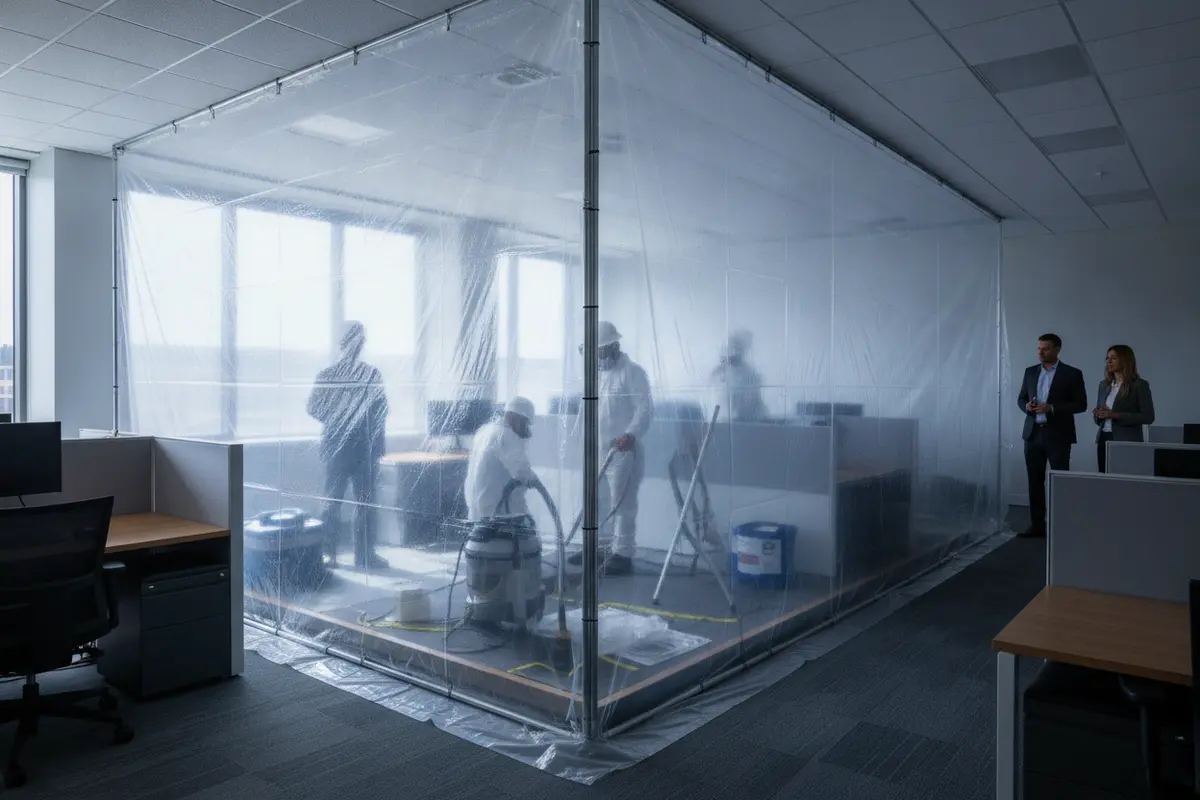
Once the scope and work plan are agreed, the team establishes the work area and carries out the planned remediation. Depending on conditions, this may involve isolating the area, removing affected porous materials that cannot be adequately cleaned, cleaning salvageable surfaces, and collecting debris in a controlled way. The appropriate method depends on the material, how far moisture has traveled, and the scope established for the job.
Containment is intended to limit the spread of dust and disturbed material into other parts of the office while work is underway. It is not a reason to assume the rest of the building is affected, nor a substitute for addressing the moisture source. Ask the provider to explain the work-zone boundary, expected access restrictions, and how changes will be handled if the team finds additional affected material.
Drying and moisture control are central to the process. If the source is a leak, the repair or control step needs to be part of the overall response. If the affected material remains damp, cleaning alone may not resolve the underlying issue. The EPA’s commercial-building guidance stresses including corrective moisture steps in the remediation plan to reduce the chance of recurrence.
During the work, keep the communication channel open. The building contact should receive updates about progress, unexpected conditions, schedule changes, and decisions that require approval. Keep a record of removed materials and areas treated as appropriate to the agreed scope. If the work affects a shared system or a neighboring tenant’s space, coordinate access and responsibilities before the team proceeds.
It can help to divide the project into visible milestones: work-area setup, removal or cleaning within the agreed scope, drying and moisture correction, and any follow-on repairs. Ask which milestones require a property representative’s review or access decision. If opening a wall reveals a larger area of affected material, pause to understand the new condition and revised scope before assuming the original schedule or access plan still applies.
How can you compare remediation plans?
A useful plan connects each activity to the observed condition and gives the property manager a clear next step. Compare providers on the explanation and coordination, not just on a brief promise to clean a surface. This table outlines questions to ask during planning; it is not a fixed sequence for every office.
| Phase | What the plan should address | Question for the property manager |
|---|---|---|
| Assessment and scope | Observed moisture, affected materials, likely source, work limits, and unknowns | What has been confirmed, and what may need reassessment? |
| Moisture correction | How the active water or moisture condition will be stopped or corrected | Who is responsible for the source repair, and how will completion be recorded? |
| Work-area controls | Containment, access, occupant communication, and material handling | Which spaces are restricted, and how will work limit disturbance outside them? |
| Remediation and drying | Materials to remove or clean, drying needs, and progress updates | How will changed conditions or added work be reviewed and approved? |
| Closeout and restoration | Work completion, remaining repairs, documentation, and return-to-use coordination | What needs to be complete before the office resumes normal use? |
As you compare proposals, look for enough detail to understand what is included and what is not. A plan should identify the affected locations, describe how materials will be handled, state how moisture correction fits in, and explain how the provider will report changes. If one proposal uses broad terms such as “treat the area” without describing what that means for the observed materials, ask for clarification before comparing it with a more detailed scope.
Also ask whether the provider has relevant training and credentials for the work. You can review the company’s IICRC certification information and learn more about the local restoration team. A credential is one factor to consider alongside a clear scope, communication, and a plan for correcting the moisture condition.
How do insurance and documentation fit in?
Coverage depends on the policy, the cause of the moisture, and the facts of the loss. Do not assume that every mold-related expense is covered or excluded. Notify your insurer as appropriate, keep records, and ask what documentation it needs before discarding damaged materials or approving work beyond urgent mitigation.
Useful records may include the date the issue was discovered, photographs of visible damage, known leak or repair history, the affected rooms, written scopes, and communications about changes. Keep copies of invoices and any reports or progress notes provided for the project. The property manager can use a single project file to coordinate the building owner, insurer, occupants, and restoration provider.
For a larger office, organize the record by location as well as by date. A note such as “north conference room ceiling, reported Tuesday” is easier to connect to a work update than a general reference to “the office.” Keep approval emails with the scope version they refer to, and record who authorized a change that affects access or cost. This makes it easier to answer follow-up questions without relying on memory.
911 Restoration of Bakersfield offers insurance claim assistance information. For an active commercial loss, confirm responsibilities and claim requirements directly with the relevant insurer and building decision-makers.
When can employees return to the affected area?
Return-to-use decisions should follow the project scope and the conditions at the site, not a guessed number of hours. Ask the restoration provider what work remains, whether the moisture source has been addressed, and what areas are still restricted. The property representative should communicate the decision and any practical instructions to staff and tenants.
Some projects may require repairs after remediation, such as replacing removed building materials or completing other restoration work. Ask for a closeout explanation that distinguishes completed remediation from any outstanding construction or maintenance tasks. If moisture returns or new signs appear, report them promptly and ask that the cause be reassessed rather than simply covering the visible mark.
Before reopening an affected room, the building contact can review the agreed closeout items with the provider: whether the planned remediation tasks are complete, whether drying or source-correction steps remain, whether follow-on repairs are pending, and whether any restrictions still apply. Make sure the people who use the space know about unfinished work or temporary changes. The final decision should reflect the project conditions and responsible parties’ guidance, not a generic timetable.
To discuss an office building mold remediation concern in Bakersfield or the surrounding service area, check the restoration service areas and contact the team. You can also review customer feedback as one part of choosing a provider.
Contact the team to discuss your office building’s mold remediation needs
What should you do next?
Start by documenting what you see, sharing any known moisture history, and arranging a clear assessment and scope before work begins. A well-coordinated plan should address the moisture condition, explain how the affected office area will be managed, and give you practical steps for communicating with occupants and returning the space to normal use.
