

What Should a Daycare Do After Water Damage? Daycare Water Damage Cleanup
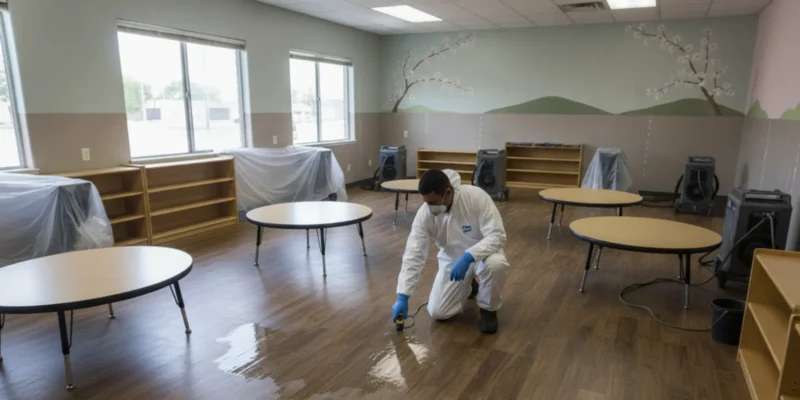
Water damage in a daycare can disrupt routines while raising immediate questions about child safety, room use, and reopening. A clear daycare water damage cleanup plan starts by moving children away from affected areas, addressing the source only when safe, and arranging an assessment before cleanup decisions are made.
What should daycare leaders do first?
Put people before property. Keep children, families, and staff away from standing water, wet flooring, ceiling damage, and any room where the source or extent of water is uncertain. Do not let children walk through a wet area, touch wet materials, or retrieve belongings from it. If water is near outlets, electrical equipment, or a ceiling light, do not enter the area; use your facility’s emergency procedures and contact the appropriate qualified help.
Take these first steps:
- Move children and staff to a dry, unaffected part of the building. If you cannot separate them from the affected area safely, follow your emergency plan for relocating or dismissing children.
- Restrict access. Close doors or use a visible barrier and tell staff not to enter or move wet materials. Keep the route to the affected area clear for authorized responders.
- Identify the source from a safe location. If it is a readily accessible supply valve and you can turn it off without entering water or approaching electrical hazards, shut it off. Otherwise, call the appropriate plumber, utility, or emergency service.
- Notify the people responsible for the building. Contact the owner or property manager, facility leadership, and your insurer as appropriate. Follow your established parent and staff communication procedures.
- Record what you see without disturbing it. Note the time discovered, suspected source, rooms affected, and any immediate actions. Take photos or video from a safe distance.
For a significant leak, flooding, sewage backup, or water entering through a damaged ceiling, do not assume that mopping the visible surface is enough. Water can travel under flooring, into walls, or above ceiling finishes. A qualified assessment helps clarify the affected area and what should happen next.
How should you determine whether a room can stay in use?
Make room-use decisions conservatively. A dry-looking patch of floor does not confirm that the entire room is dry or that hidden materials are unaffected. Consider the source, how far water traveled, whether it reached porous furnishings or wall materials, and whether there are electrical, structural, or sanitation concerns.
Keep children out of any space with standing water, damp or unstable flooring, a wet ceiling, active leaking, visible contamination, or an unknown water source. Also restrict access while workers are assessing or cleaning the area. If water came from a drain, sewer, or another potentially contaminated source, keep children away from all affected materials and avoid handling them. Do not try to decide that an area is safe based only on its appearance or smell.
Separate unaffected rooms from the work zone where practical. Do not route children through the affected room to reach another classroom, restroom, or exit if a safer route is available. If the building’s layout makes separation difficult, ask the property manager and relevant safety or licensing contacts what options are appropriate. The facility’s own emergency plan and applicable local requirements should guide relocation, parent notices, and any closure decision.
What details should you give the restoration provider?
When you arrange an assessment, provide practical information that helps the provider understand the situation before arriving:
- When you first noticed the water and whether it is still entering the building.
- The suspected source, such as a supply line, roof leak, appliance, exterior flooding, or drain backup. Say when the source is unknown.
- Which rooms, hallways, storage areas, and nearby spaces are affected.
- Whether water reached carpets, rugs, cabinets, toys, books, food-preparation areas, or other porous items.
- Any nearby electrical equipment, ceiling damage, or access limitations.
- Whether the building is occupied and which areas have been closed off.
Ask what the assessment will cover, how the work area will be separated from occupied areas, and how findings will be documented. A professional may need to evaluate adjacent spaces and materials that are not visibly wet. The scope should be based on observed conditions, not a guess based only on the size of the puddle.
It can help to make a simple room-by-room list before the assessment. For example, note that water is visible beside the reading corner, that a storage closet shares the affected wall, and that a hallway is the only route to a restroom. Label each area as visibly wet, possibly affected, or not known to be affected; do not treat those labels as a technical inspection. This gives the provider and facility lead a shared starting point and helps prevent a small visible area from becoming the only area discussed.
Also explain the daily schedule and any operational constraints. Identify nap periods, meal preparation areas, pickup times, and the times when children are present. Tell the provider who can approve access, where workers should check in, and which doors or routes must remain clear. These details support coordination; they do not replace the facility’s safety plan or the provider’s assessment.
If you are in the Bakersfield area, review the company’s water damage restoration service information and its commercial restoration services when deciding what kind of help fits your facility. A daycare is an occupied setting, so explain the schedule and child-safety constraints before work begins.
How does daycare water damage cleanup usually proceed?
The exact work depends on the source, materials, and extent of damage. A typical response may include stopping or coordinating repair of the source, documenting affected areas, removing water where appropriate, separating damaged materials, and drying the building. Ask the provider to explain which steps are proposed for your situation and what observations support that scope.
| Stage | What may happen | What daycare leaders should confirm |
|---|---|---|
| Assessment | The provider inspects visible damage and considers nearby or concealed areas that could be affected. | Which rooms and materials are included, and how will conditions be recorded? |
| Source control | The leak or water entry is stopped or coordinated with a plumber, roofer, property manager, or other responsible party. | Who is responsible for the repair, and is water still entering? |
| Water removal and material decisions | Water is removed where appropriate; affected contents or building materials are evaluated for cleaning, drying, or removal. | What will be moved or discarded, and how will items be identified and tracked? |
| Drying and monitoring | Equipment may be used to dry affected building materials, with follow-up checks as work progresses. | How will the work zone be separated, and what records will be provided? |
| Closeout and next steps | The provider reviews completed work and any remaining repair or reconstruction needs. | What areas were addressed, what remains, and who decides when the room can return to use? |
In a childcare building, ask how equipment, cords, and work materials will be secured away from children. Clarify the work hours, access route, noise, and any areas that must remain closed. Do not move drying equipment or remove barriers unless the provider and facility lead agree it is safe to do so.
Before work starts, agree on a practical communication routine. Decide who will receive updates, how urgent changes will be shared, and who can answer questions from staff. If a planned work area expands into a hallway or adjacent room, staff should learn about the change before they direct children through the area. Likewise, ask how visitors and delivery personnel should be routed while barriers are in place. A brief written update at the start or end of each day can identify areas still restricted, equipment that must remain undisturbed, and the next expected assessment step.
Moisture management and ventilation matter in daycare buildings. An academic study of daycare centers in Seoul describes proper ventilation and management of water or relative humidity as ways to help reduce exposure to certain biological and chemical pollutants; it does not set a cleanup standard for your facility. Read the study on indoor air quality in daycare centers for that limited context. For your building, use the restoration assessment and applicable local guidance rather than treating ventilation alone as proof that damage is resolved.
What should you compare when choosing a provider?
During an urgent event, it can be tempting to accept the first available option without clarifying the work. Ask focused questions so you understand the response, documentation, and precautions. You can also review a provider’s IICRC certification information and ask which technician or company credentials apply to the work being proposed.
- Response and availability: How soon can the team assess the damage, and how can you reach them if conditions change?
- Scope: What areas will be inspected, including adjacent rooms or concealed spaces where relevant?
- Child and staff separation: How will the work area, equipment, and access route be secured from children and other occupants?
- Water source: How will the approach differ if the water may be contaminated or its source is unclear?
- Records: What photos, notes, or progress updates will you receive to share with the owner, insurer, or other responsible parties?
- Items and materials: How will the provider identify items to clean, dry, remove, or evaluate further?
- Completion: What work remains after mitigation, and who should address repairs or reconstruction?
For more background on the restoration process, you can read the company’s about and service information. The provider can explain its own role, but facility leadership remains responsible for coordinating building operations and following applicable childcare requirements.
How should you document damage and coordinate insurance?
Keep one incident record that a director, owner, property manager, and insurer can refer to. Include the discovery time, suspected source, rooms affected, names or roles of people notified, steps taken, and any decisions about room closures. Save photos and videos before materials are moved when it is safe to do so. Add dated updates as the assessment and cleanup progress.
For contents, make a basic inventory before items are removed whenever conditions allow. Record the room, item type, approximate quantity, and visible condition. A photo of a shelf or play area can establish context, while closer images may show damage to particular items. Keep the inventory factual: note what is wet or visibly damaged rather than estimating replacement values unless the insurer asks for that information. If items must be moved for safety or access, note where they were moved and who handled them. Do not allow children to retrieve toys, books, bedding, or personal belongings from a restricted area.
Keep receipts and records for emergency work, temporary room changes, and damaged contents. Avoid discarding items before documenting them and checking with the owner or insurer about the process, unless leaving them in place would create an immediate safety concern. Do not promise families a reopening date until the people responsible for the facility have reviewed the condition of the affected areas and any applicable requirements.
Coverage depends on the policy and circumstances. Report the incident promptly and ask the insurer what documentation it needs and whether it wants to inspect before materials are removed. For general background, see the company’s page on insurance claim assistance. It is not a substitute for reviewing your policy or confirming coverage with your insurer.
How can you prepare for reopening?
Reopening is a facility decision, not simply the moment equipment is removed or a floor looks dry. Before returning children to an affected room, confirm that the source has been addressed, cleanup and drying work are complete for the agreed scope, and any required building repairs or inspections have been handled. Ask the restoration provider for a clear summary of work completed and any remaining concerns. Coordinate with the property owner, insurer, and licensing or public health contacts as appropriate for your situation.
Use a short review before putting the room back into service:
- Has the leak or water entry been stopped, with responsibility for the repair clear?
- Are affected rooms and materials accounted for, and is any remaining work documented?
- Are access routes, floors, ceilings, outlets, and equipment free of unresolved hazards identified during the assessment?
- Have barriers and equipment been removed or repositioned by the responsible workers?
- Have facility leadership and the relevant property or regulatory contacts agreed on the next step?
- Do staff know which areas can be used and what items or spaces remain off limits?
When only part of the daycare can resume normal use, write down the boundaries of the available space and share them with staff before children return. Mark the closed rooms clearly, review alternate routes, and identify any furniture or supplies that should not be brought back yet. Keep the plan simple enough for substitute staff and visitors to follow. If a room, corridor, or shared sink remains part of the work zone, do not count it as available simply because the main classroom appears ready.
If any answer is uncertain, pause the return to that area and get clarification from the appropriate professional or authority. Share only the reopening information you have confirmed with staff and families, and update them if the plan changes.
Request help assessing water damage
What can daycare teams do before the next leak?
Preparation can make the first response more organized. Keep shutoff information and emergency contacts accessible to facility leads. Identify a safe alternate room or relocation procedure, and make sure staff know who can authorize a room closure. Store incident forms and a camera-equipped device where an authorized adult can reach them without entering a hazard.
Review roofs, plumbing, appliances, and drainage as part of routine building maintenance, and report leaks or damp materials promptly to the person responsible for repairs. Keep toys, books, and supplies from obstructing access to shutoffs or emergency routes. If water damage occurs, protect children first, document what is safe to observe, and ask qualified professionals to assess the affected building materials before deciding that cleanup is complete.
