How can a hotel reopen safely after a fire? Hotel Fire Restoration Services
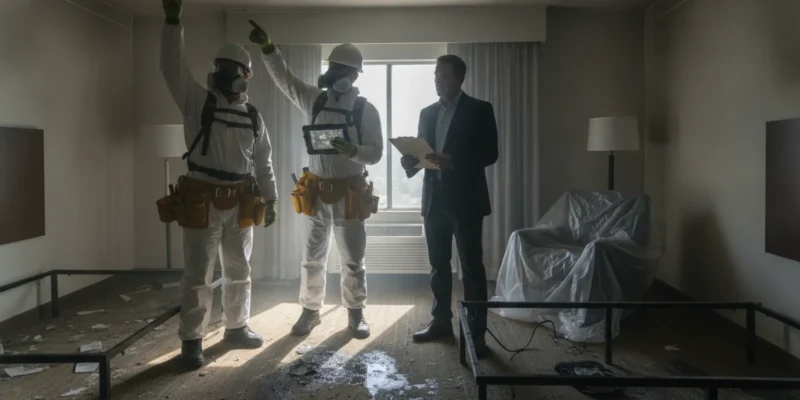
A fire can leave hotel management balancing urgent safety decisions with guest needs, employee schedules and reservations. If you are evaluating hotel fire restoration services, the safest route to reopening is a coordinated sequence: follow official access instructions, assess the property and systems, restore affected areas, verify readiness, then return operations in phases. A restoration provider can assist with property recovery, but cannot replace the fire department, building officials or qualified system inspectors.
Contact 911 Restoration of Bakersfield at (661) 220-7584 to discuss hotel fire restoration needs.
Begin with official clearance
Do not let the reservation calendar decide whether a building is safe to enter or occupy. Follow the fire department’s and local authorities’ directions first. Depending on the incident, officials may restrict access, require inspections or specify areas that must remain closed. Clarify which portions can be accessed, whether any follow-up review is required, and what conditions apply before staff or guests return.
Restoration work addresses damage and supports recovery; decisions about legal occupancy and required life-safety inspections belong to the relevant authorities and qualified professionals. Keep restricted rooms, floors, kitchens, corridors or mechanical spaces secured and clearly identified. Do not reopen an area just because it looks clean or has no visible charring.
For business preparedness and recovery planning, consult Ready.gov’s business guidance. It is a starting point for organizing response, not a substitute for local fire and building officials’ directions for your property.
Coordinate people, records and decisions
Designate one hotel representative to coordinate with ownership, management, fire officials, restoration professionals, insurers and any trade contractors or inspectors. Maintain a current contact list and a shared record of access restrictions, decisions, work completed and outstanding questions. Identify who can authorize access, who updates staff, and who communicates confirmed operational changes to guests.
Before cleanup starts, determine the known affected areas and immediate priorities. Fire damage may include charred materials, smoke residue and odor, along with water used to extinguish the fire. Effects may extend beyond the room where the fire began. The proper scope depends on inspection findings, so avoid assuming that all spaces are equally affected or that an apparently untouched area needs no evaluation.
Where safe and permitted, document conditions with photographs. Preserve incident information, room and floor plans, relevant maintenance records and communications with authorities. Coordinate documentation with your insurer and restoration team. Before disposing of damaged contents or authorizing work, clarify any applicable documentation and claim requirements with the appropriate parties.
How should a hotel assess which areas can reopen?
A key operational question is whether the hotel can be divided into safe, independent zones. A contained incident may leave some areas untouched, while smoke, firefighting water, utility interruptions or access restrictions can affect other parts of the property. An assessment should identify affected spaces and materials, locations requiring controlled access, and the work needed before a particular area can return to use.
Arrange for qualified professionals to evaluate building systems within their scope. This can include electrical service, heating and ventilation equipment, fire alarms, sprinklers, elevators, kitchens and other critical systems. Do not restart equipment just because power is available or a control panel appears normal. Follow official direction and the findings of the appropriate equipment specialist.
Include guest and staff routes in the reopening review. Entrances, exits, corridors, stairwells, elevators and accessible routes matter as much as individual rooms. Keep active work zones separate from occupied spaces and control access. If people cannot safely avoid restoration work, partial operation may not be practical.
| Decision area | Who should assess or confirm it | Reopening checkpoint |
|---|---|---|
| Access and occupancy restrictions | Fire department and applicable local authorities | Confirm which spaces are cleared, restricted or awaiting review. |
| Structural and material damage | Qualified building professionals and restoration team within their scopes | Document affected areas and complete required work before use. |
| Electrical, HVAC and other systems | Qualified system contractors or inspectors | Obtain appropriate findings before returning each system to service. |
| Guest routes and work separation | Hotel management with restoration and safety professionals | Ensure people can avoid restricted work and use approved routes. |
| Guest-ready rooms | Hotel management after relevant professional checks | Verify rooms are clean, functional, supplied and included in the approved plan. |
How should restoration work be sequenced?
Once access and the work plan are established, restoration should reflect site conditions and relevant official instructions. Work may include removing unsalvageable materials, cleaning smoke residue, treating odor, drying areas affected by firefighting water, and repairing or replacing finishes. Sequence matters: cleaning before damaged materials and moisture conditions are addressed can cause rework, while beginning without controlled access can disrupt hotel operations.
Ask the restoration provider to explain where work will occur, how areas will be separated from hotel operations, which contents and materials are in scope, how progress will be documented, and what tasks require other specialists. Clarify what is known and what remains uncertain. If new conditions are found after inspection or material removal, ask for an updated explanation and plan rather than relying on an old schedule.
Smoke odor is not resolved by masking it or simply airing out a room. The right approach depends on affected surfaces, contents and the extent of impact. Firefighting water also needs evaluation rather than ordinary housekeeping alone. To learn about the company’s work, review its fire and smoke damage restoration information. Confirm the scope and timing for the actual property rather than assuming a general service description sets them.
Check guest readiness, not just visible cleanliness
After applicable restoration work and inspections are complete, management should walk each proposed guest area and verify that it is clean, free of work materials, functional and suitable for its intended use. Consider the full guest experience: room entry, lighting, climate controls, bathroom fixtures, doors and locks, furnishings, signage and the route from the entrance to the room.
Review shared and back-of-house spaces needed for service, such as reception, food service, laundry, storage and staff facilities as relevant to the hotel’s operations. Confirm that alarms and other life-safety equipment have been addressed by qualified personnel where required. Completion of cleaning is not confirmation that a fire alarm, sprinkler, elevator or other system is ready; the applicable specialist or authority must provide any required check.
Record the date, area, person responsible and result of each readiness review. Track unresolved items with an owner and due date. A simple, current record supports consistent decisions about room inventory and gives staff a reliable answer when asked which areas are open.
Use a phased reopening only when conditions allow
If authorities and qualified professionals agree that certain zones may operate while others remain under repair, create a phased plan. Start with the areas that are cleared and ready, keep closed zones physically separated, and revisit the plan if work conditions or official instructions change. Never route guests through an active work zone to reach a room that is otherwise complete.
Give employees concise guidance on which entrances, floors and amenities are open, what to do if they notice new odor or residue, and whom to contact with a safety concern. Guest-facing statements should be accurate and limited to confirmed information. If reservations must move or be canceled, explain the change without promising a reopening date that has not been verified. Update booking channels and staff scripts together to avoid contradictory information.
While restoration and hotel operations overlap, hold a regular coordination check. Review open work, access boundaries, inspection status, system readiness, guest feedback and which area may be considered next. Phasing is not a shortcut around clearance: every zone must meet the applicable conditions before use.
Questions to ask before selecting restoration support
For a commercial property, ask practical questions before authorizing work:
- Which areas and kinds of damage are included in the assessment and proposed scope?
- How will work areas be separated from guests, staff and unaffected property?
- How will contents and completed work be documented?
- Which tasks need another trade contractor, inspector or authority, and who coordinates those handoffs?
- How will the team communicate schedule changes or newly discovered conditions?
- What needs to happen before management can consider a particular area for reopening?
Look for clear responsibilities rather than a guaranteed reopening date. A restoration provider can explain its own work and coordinate with the property team; it should not promise official occupancy approval or that every hotel system is safe without the relevant evaluation.
911 Restoration of Bakersfield lists 24/7 emergency availability and a 45-minute response time. A response visit can help discuss conditions and next steps; it does not replace official clearance, a complete scope review or required system inspections. The company serves Bakersfield and surrounding areas; confirm service availability for your location and needs. Learn more about the local team on its About Us page.
Keep insurance and property records organized as recovery proceeds. Work directly with your carrier or representative to understand policy-specific requirements. The company’s insurance claim assistance information offers additional context but does not replace the hotel’s policy terms or insurer guidance.
Commercial property owners can also review the company’s commercial fire damage restoration information, commercial damage restoration information and technician certification information when preparing questions. These pages are background for discussion, not a substitute for confirming the exact scope, responsibilities and qualifications needed for your incident.
Discuss a hotel fire restoration assessment with 911 Restoration of Bakersfield at (661) 220-7584.
Frequently asked questions
Can a hotel reopen part of the building while restoration continues?
Possibly, if the relevant authorities permit occupancy in that area and qualified professionals confirm that systems, access routes and separation from work zones are appropriate. The decision depends on the incident and property. Do not reopen a zone just because it is distant from the fire.
Who decides whether guests can return?
Fire and local building authorities determine applicable access or occupancy requirements. Qualified inspectors and system contractors address their scopes, while hotel management decides whether operations and services are ready after those checks. A restoration contractor does not replace these roles.
Does a room need restoration if it has no visible burn marks?
Not necessarily, but lack of visible charring alone does not establish that a space is unaffected. Smoke, water or building-system impacts can require evaluation beyond the room where the fire started. Have the affected areas assessed and follow applicable recommendations and restrictions.
What should hotel management document during recovery?
Keep authority communications, access restrictions, safely taken photographs, assessment and work records, inspection findings, room-inventory decisions and a list of unresolved items with responsible parties. Coordinate records with your insurer and professional advisers, and follow specific documentation instructions they provide.
How long does it take to reopen after a hotel fire?
There is no reliable universal timeline. Damage, official restrictions, system inspections, material availability and repair scope all affect the schedule. Ask for progress updates tied to completed work and outstanding approvals, and avoid announcing a date until necessary checks are complete.
Safe reopening is a series of verified decisions, not a single cleanup milestone. Coordinate with authorities, use qualified professionals for building systems, document the work, protect guests from active restoration zones and reopen only areas that are cleared and ready.
