Water Extraction: Process, Equipment, and When to Call
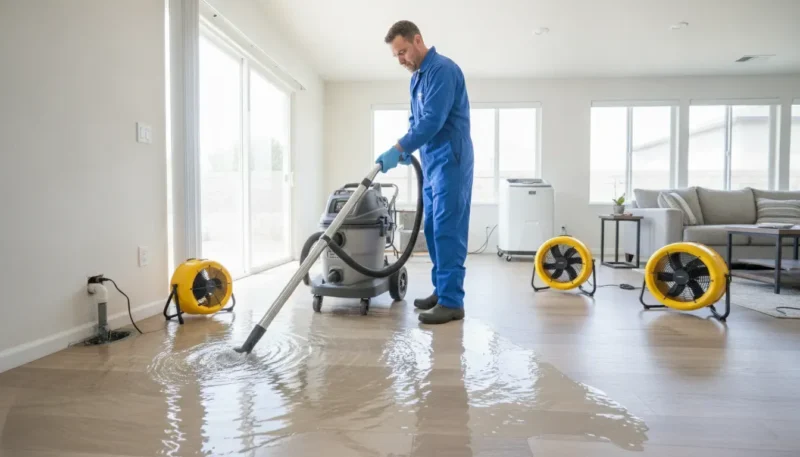
Water extraction is more than pushing visible water toward a drain. Professional water extraction removes standing water, finds moisture that has moved into floors and walls, and creates a plan to dry the structure before secondary damage develops. If a supply line breaks, an appliance overflows, or storm water enters your home, the first safe steps you take can protect your property while a trained restoration team prepares the right equipment.
What does water extraction include?
Water extraction is the controlled removal of water from a building and the materials inside it. The work starts with a safety assessment and source control, then moves through standing-water removal, moisture measurement, structural drying, cleaning, and a final check. Each stage answers a different question:
- Is the building safe to enter and work in?
- Where did the water come from, and can the source be stopped?
- How much water is visible, and where has it migrated?
- What equipment and drying conditions will return materials to an appropriate moisture level?
- Do any materials need cleaning, sanitizing, removal, or replacement?
A mop or household wet vacuum may remove a small amount of clean water from a hard, unaffected surface. It cannot reliably show whether water is trapped under flooring, behind baseboards, inside cabinets, or within drywall. That is why extraction and drying are related but separate parts of a professional water damage response.
The professional water extraction process, step by step
1. Safety assessment and source control
Technicians first identify hazards before moving equipment or entering affected rooms. Hazards can include electrical contact, unstable flooring or ceilings, contaminated water, gas appliances, sewage, and hidden structural damage. If it is safe to do so, the water source is shut off or controlled. A restoration crew may also document the affected areas and identify rooms that need to remain isolated.
Homeowners should not enter water near outlets, electrical panels, appliances, or damaged ceilings. Do not operate electrical equipment while standing in water. If the water may contain sewage, chemicals, fuel, or other contaminants, keep people and pets away and wait for trained guidance. The CDC floodwater safety guidance explains why floodwater should be treated as a potential health hazard rather than ordinary tap water.
2. Inspection and moisture mapping
Visible water is only the starting point. A technician checks floors, walls, ceilings, cabinets, closets, insulation, and nearby rooms for signs of migration. Moisture meters help measure dampness in building materials. Thermal imaging can help locate temperature patterns that suggest hidden moisture, but it does not replace direct moisture readings. Together, these tools help define the affected area and guide equipment placement.
Moisture mapping also helps distinguish a surface spill from a larger loss. Water can travel below flooring, along wall cavities, and into spaces that are not obvious from the room where the leak began. A written or photographed map gives the restoration team a baseline for monitoring and helps prevent a premature conclusion that the building is dry simply because the floor looks dry.
3. Standing-water removal
Deep or widespread standing water is usually removed before the drying phase begins. Submersible pumps can move large volumes of water from low areas. Truck-mounted extractors and portable extraction units use vacuum power to pull water from carpets, padding, flooring, and other accessible materials. The method depends on the depth of water, the affected materials, access to the property, and whether the water is clean or contaminated.
Extraction is performed in a controlled sequence so water is not spread into unaffected rooms. Contents may be moved or raised when it is safe and appropriate. Porous materials that have absorbed contaminated water may not be salvageable, while some clean-water-affected contents can be dried or cleaned. The goal is not simply to make the surface look better. It is to remove as much water as practical before it can continue moving into the structure.
4. Moisture removal from materials
Once bulk water is removed, moisture can remain in carpet backing, wood flooring, subfloors, drywall, insulation, and cabinet bases. Technicians use targeted extraction and controlled airflow to address these materials. They may lift carpet edges, create access points, or remove materials that cannot be dried safely. Any removal should be based on the material, water category, extent of absorption, and sanitation needs, not on guesswork.
This stage is one reason a single pass with a wet vacuum is not the same as professional extraction. A household vacuum may remove surface water but leave moisture below the visible layer. A restoration plan accounts for the layers of the assembly and the places water can remain after the room appears clear.
5. Structural drying and dehumidification
Air movers increase evaporation from wet surfaces, while dehumidifiers remove moisture from the air so evaporation can continue. Technicians position this equipment according to the affected materials and the airflow path. Excessive or poorly directed airflow can spread contamination or dry the wrong surfaces first, so equipment should be used as part of a monitored plan.
Drying is not complete when equipment has run for a certain number of hours. Conditions vary with the amount of water, building materials, temperature, humidity, ventilation, and the size of the affected area. Technicians take follow-up readings and adjust equipment until the drying goals are reached. This monitoring step is what separates a documented drying process from simply leaving fans in a room.
6. Cleaning and sanitation
Water type matters. A clean supply-line leak and a sewage backup do not present the same cleaning requirements. Gray or black water can contain microorganisms and other contaminants, while floodwater may carry soil, chemicals, or debris. Affected surfaces and contents should be evaluated for cleaning, disinfection, removal, or disposal based on the source and the material.
Do not mix cleaning products or use disinfectants as a substitute for removing water and cleaning a surface. The EPA flood cleanup guidance recommends staying safe, sorting materials, cleaning wet or moldy items, and drying the home completely. For a sewage backup, keep the area isolated and use a team trained for contaminated-water cleanup. Learn more about professional sewage backup cleanup before attempting to enter or clean the affected space.
7. Verification and next-step planning
A final moisture check compares readings with the baseline and the drying goals for the affected materials. The team also looks for remaining odor, visible residue, damaged materials, and areas that need reconstruction. If moisture remains, drying continues or the plan changes. If materials are dry but damaged, cleaning or repairs may still be necessary.
Water extraction is mitigation, not always the entire restoration project. Drywall, flooring, cabinets, insulation, and trim can require additional work after the water is removed. A complete plan should explain which areas were affected, what was dried or removed, what still needs attention, and how the property will be returned to use.
What equipment is used for water extraction?
Professional teams select equipment based on the water volume and the building materials, rather than bringing the same machine to every loss. Common equipment includes:
- Submersible pumps: Used to remove deeper standing water from floors, basements, crawl spaces, and other low areas.
- Truck-mounted extractors: High-capacity systems that can remove water efficiently when access and site conditions allow.
- Portable extractors: Vacuum-based units used where a truck-mounted system cannot reach or where indoor access requires a smaller setup.
- Moisture meters: Instruments used to measure moisture in materials and compare readings during drying.
- Thermal imaging cameras: Tools that help locate temperature differences associated with possible hidden moisture and guide further inspection.
- Air movers: Fans designed to increase evaporation from affected surfaces when used with proper containment and monitoring.
- Dehumidifiers: Machines that remove water vapor from the air so wet materials can continue to dry.
- HEPA air scrubbers and protective equipment: Used when the project involves dust, particles, or contamination that requires additional controls.
Equipment alone does not make a drying plan effective. Placement, containment, readings, cleaning decisions, and follow-up checks determine whether the equipment is addressing the actual moisture problem.
What can a homeowner do before help arrives?
When the property is safe to enter, homeowners can take limited steps while waiting for professional help:
- Stop the water source if you can do so without entering a hazard or attempting a repair beyond your ability.
- Turn off power to affected areas only from a dry, safe location. Do not touch electrical equipment while standing in water.
- Keep children, pets, and visitors out of the affected area.
- Move small, dry items away from the water if doing so will not spread contamination or cause injury.
- Take photos or video from a safe location for your records and insurance discussion.
- Use towels or a mop for a small amount of clean water on an unaffected hard surface, but do not rely on this for soaked flooring, walls, or contaminated water.
- Call for guidance if the water has spread, entered building materials, or continued after the source was stopped.
Do not use a household fan to blow air through sewage-contaminated areas. Do not use fuel-powered equipment indoors. If you see mold, smell sewage, suspect electrical damage, or cannot determine whether the structure is safe, stop and ask a trained professional what to do next. The EPA’s flooded-home cleanup guidance can help homeowners understand why some cleanup tasks require protective measures and careful material decisions.
When should you call a professional water extraction team?
Professional help is appropriate when water is more than a small, isolated spill or when the source and material conditions are uncertain. Call promptly when:
- Standing water covers a room, has reached walls, or is moving between rooms.
- Water has entered carpet padding, wood flooring, drywall, cabinets, insulation, or a crawl space.
- The source is sewage, a toilet backup, floodwater, a chemical, or another potentially contaminated material.
- Water is near outlets, electrical equipment, HVAC systems, or other building systems.
- A ceiling is sagging, flooring is unstable, or you see other signs of structural damage.
- A musty odor, stain, or recurring dampness suggests moisture remains hidden.
- You tried to clean the surface but materials remain wet or the affected area keeps growing.
- You need documented moisture readings, cleaning records, or help coordinating the next restoration step.
Fast action helps limit the time materials stay wet, but safety comes first. If the loss involves contaminated water or a large affected area, isolate the space and contact a restoration company rather than trying to handle the entire extraction alone. For a small clean spill that is fully removed from a hard surface with no material damage, professional extraction may not be necessary. When there is doubt, a prompt assessment can clarify the safest next step.
How long does water extraction and drying take?
The extraction portion may begin as soon as the crew arrives, but the full mitigation timeline depends on water depth, affected materials, the water source, humidity, temperature, access, and contamination. Removing visible water can be relatively quick while drying a subfloor, wall cavity, or cabinet base takes longer. Some materials can be dried in place; others may need controlled removal and replacement.
A reliable answer comes from inspection and monitoring, not a fixed promise based only on the number of fans in the room. Ask how the team will measure moisture, when readings will be repeated, which materials are being dried, and what would change the plan. If you need broader repairs after mitigation, the restoration timeline will extend beyond the extraction and drying phase.
Frequently asked questions about water extraction
What is the difference between water extraction and water damage restoration?
Water extraction is the removal of standing and absorbed water, followed by moisture measurement and drying work. Water damage restoration is the broader process, which can also include cleaning, sanitation, contents work, repairs, reconstruction, and insurance documentation. Extraction is often an early and essential part of the larger restoration plan.
Can I use a shop vacuum for water extraction?
A properly rated wet vacuum may help with a small amount of clean water on a hard surface when the area is safe. It is not a substitute for a professional assessment when water has entered walls, floors, cabinets, insulation, or carpet padding, or when the water may be contaminated. Never use an appliance or extension cord in a wet electrical hazard.
Does water extraction remove all moisture?
Bulk extraction removes much of the visible water, but materials can retain moisture after the surface looks dry. Moisture meters, targeted inspection, air movers, and dehumidifiers help identify and remove moisture that has moved into building assemblies. Follow-up readings are needed to confirm that drying is complete.
Why is sanitation part of the process?
Water from a clean supply line, an appliance drain, a sewage backup, and a flood can have different contamination risks. Sanitation decisions depend on the water source and the materials affected. Cleaning and disinfection should follow water removal and should be performed with appropriate protective measures, especially when contaminated water is involved.
Should I call if the water has already been removed?
Call for an assessment if flooring, drywall, cabinets, insulation, or other porous materials were wet, if a musty odor remains, or if the source was contaminated. Hidden moisture can continue causing damage after visible water is gone. A professional moisture check can show whether drying or additional cleaning is still needed.
For more guidance on the broader recovery process, visit 911 Restoration of Bakersfield’s water damage restoration service page. If your property has wet materials, standing water, or an uncertain source, do not wait for the damage to spread before asking for help.
