Mold Remediation Process Step by Step: A Homeowner’s Guide
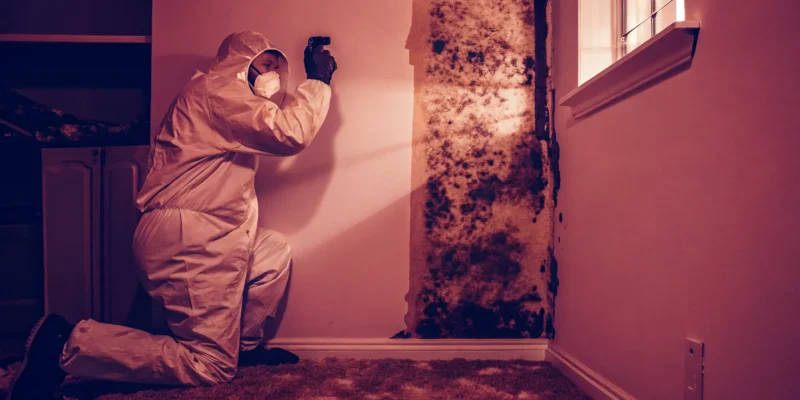
Finding mold in your home is stressful, but understanding how professionals eliminate it can give you peace of mind. When you know what to expect, you can make informed decisions about your property and your family’s health.
Schedule your free mold inspection with 911 Restoration of Bakersfield today. Call (661) 220-7584 for 24/7 emergency response in Kern County.
The mold remediation process step by step involves six key phases to safely remove spores and protect your Bakersfield home. Technicians perform a detailed inspection with moisture mapping and air sampling. They set up physical plastic containment zones and use negative air machines to prevent cross-contamination. Air scrubbers with HEPA filters capture airborne particles before surfaces are treated with EPA-approved antimicrobial solutions. After treatment, the area is dried completely and third-party clearance testing verifies the air is clean. For local help, contact 911 Restoration of Bakersfield for professional mold remediation services in Kern County.
Schedule your free mold inspection with 911 Restoration of Bakersfield today. Call (661) 220-7584 for 24/7 emergency response in Kern County.
If you suspect mold in your home, understanding the first steps of this sequence helps you prepare. The process begins with Phase 1: Mold Inspection and Air Quality Testing. For a complete overview, read our Mold Remediation and Testing in Bakersfield: The Definitive Guide.
Mold Remediation Process Step By Step: Phase 1: Mold Inspection and Air Quality Testing
Every successful remediation project starts with a thorough inspection. The goal is to identify where mold is growing, what type it is, and what caused it to appear. Without this foundation, any cleanup effort is guesswork.
Visual Assessment and Moisture Mapping
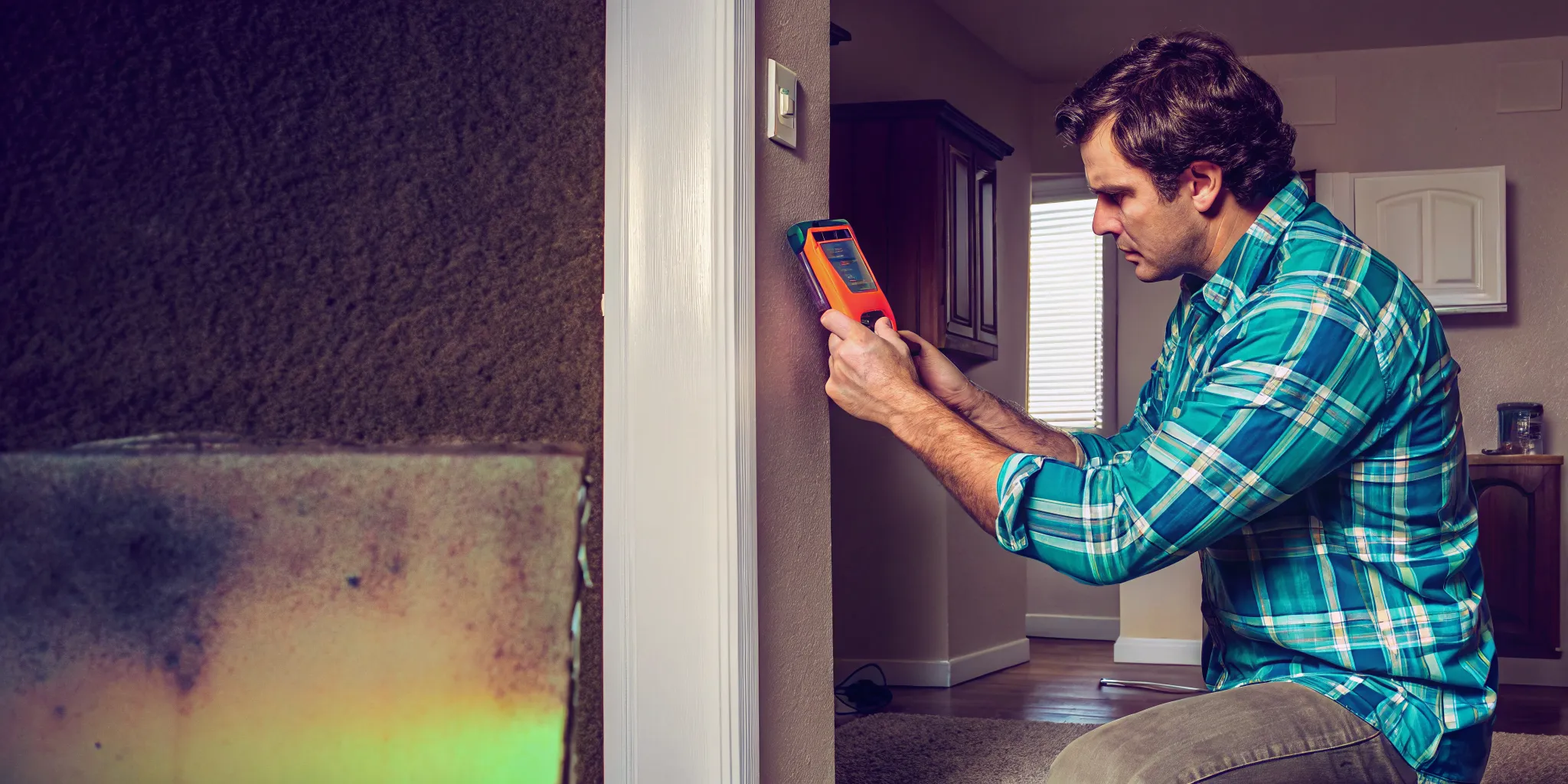
A deep visual check is the foundation of any good plan. Technicians search for water stains, peeling paint, condensation, and musty odors throughout the affected area. They also use moisture meters and thermal imaging cameras to detect hidden dampness inside walls and under flooring. This process is called moisture mapping. By finding every wet spot, even the ones you cannot see, the team can identify all areas where mold is likely growing.
Air Sampling and Spore Trapping
Spore testing is a vital part of this early phase. Since mold spores are microscopic, you cannot see them with the naked eye. Technicians collect air samples using a spore trap cassette that pulls a measured volume of air across a sticky slide. An outdoor air sample is taken at the same time to serve as a baseline. By comparing your indoor spore levels to the outdoor baseline, the lab can tell if you have an active indoor mold problem. The results also reveal which species of mold are present.
Following the IICRC S520 Standard
All professional mold remediation follows the IICRC S520 standard, the industry benchmark for mold remediation protocols. This document governs every phase from inspection through final verification. Certified teams follow these rules to find every trace of mold and create a clear plan to clean your home. 911 Restoration of Bakersfield holds IICRC Master certifications, meaning their teams train to this highest standard.
Why Is Containment Critical in the Mold Remediation Process?
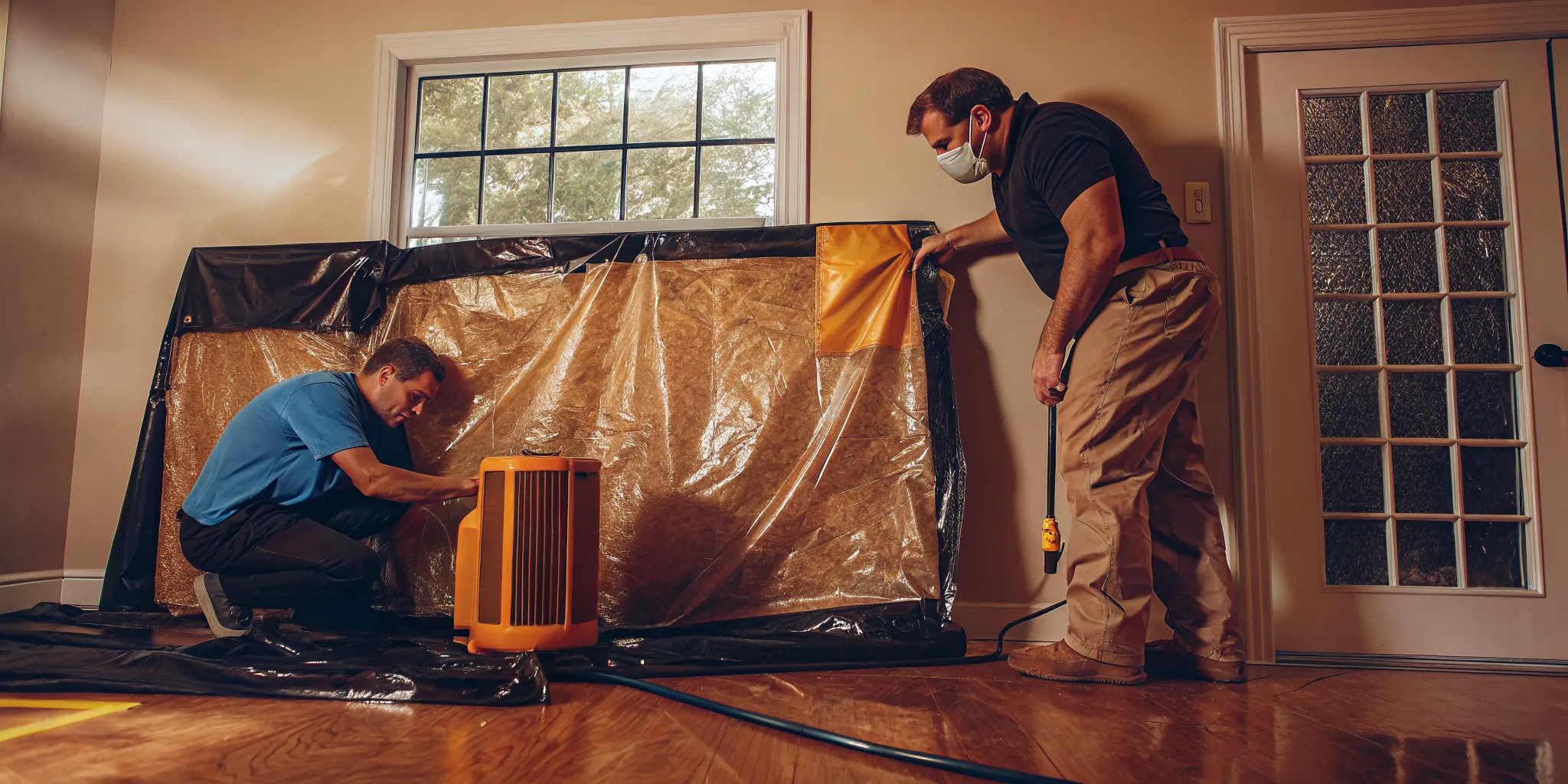
Containment is a critical part of the mold remediation process step by step. Before any removal work begins, the affected area must be sealed off from the rest of the home. Without containment, spores released during cleaning could spread to clean areas and create new problems. This is especially important when dealing with water damage, which often creates the moisture conditions that fuel mold growth.
Physical Barriers and Heavy Plastic Sheeting
To block the spread of spores, technicians build walls using heavy polyethylene plastic sheeting, typically 4 to 6 mils thick. These barriers cover doorways, vents, and openings. Zipper-entry systems allow workers to move in and out while keeping the seal intact. Keeping spores in one area is the best way to protect healthy living spaces from contaminated air during cleanup.
Negative Air Pressure
Negative air machines are placed inside the containment zone to create negative air pressure. This means air flows into the containment from surrounding rooms but cannot flow out. The exhaust air passes through a HEPA filter before being released, capturing 99.97 percent of particles at 0.3 microns. A smoke test is used to verify the seal is working. If there are any leaks, smoke will show them clearly before work begins.
Personal Protective Equipment
Workers inside containment wear full personal protective equipment, including Tyvek suits, gloves, boot covers, and respirators. The level of respiratory protection depends on the extent of contamination. In most residential jobs, a half-face respirator with P100 filters provides adequate protection. For severe cases, full-face respirators or powered air-purifying respirators are used.
Phase 3: Air Filtration and HEPA Vacuuming
Once containment is established, the next step is to clean the air inside the zone. HEPA filtration removes airborne spores before any surface cleaning begins. This step protects both the workers and the rest of your home.
- Set up HEPA air scrubbers. Commercial-grade air scrubbers with true HEPA filters are positioned inside the containment. These machines cycle the entire room volume through the filter multiple times per hour. They continuously capture airborne spores and dust.
- Perform a pre-cleaning HEPA vacuum. Every surface inside the containment is vacuumed with a HEPA vacuum cleaner. This includes walls, floors, ceilings, furniture, and fixtures. The pre-vacuum removes loose spores and debris so antimicrobial treatments can penetrate surfaces.
- Run continuous filtration during work. The air scrubbers remain on throughout the entire remediation process. HEPA filters are checked and replaced as needed. The combination of negative air pressure and continuous filtration keeps airborne spore levels low while workers treat contaminated materials.
A true HEPA filter captures 99.97 percent of particles at 0.3 microns. Mold spores range from 1 to 30 microns, so HEPA filtration is highly effective at removing them from the air. This is why professional-grade filtration is non-negotiable in any proper remediation protocol.
Phase 4: Mold Removal and Treatment of Affected Materials
The core phase of the mold remediation process step by step focuses on direct source removal and chemical treatment. Every surface inside the containment is cleaned using a combination of physical removal and EPA-registered antimicrobial solutions. If water damage caused the mold, addressing water damage cleanup is essential before or alongside remediation to prevent regrowth.
EPA-Registered Antimicrobial Agents
Technicians use antimicrobial products registered with the Environmental Protection Agency for mold remediation. These include fungicides that kill mold on contact, disinfectants that eliminate surface microbes, and sanitizers that reduce spore populations. Each product has specific dwell times and application methods that must be followed for the chemical to work. Workers let the cleaning solution sit on treated surfaces for 10 to 15 minutes before performing a final wipe-down.
Cleaning versus Removal by Material Type
| Material Type | Can Be Cleaned | Must Be Removed |
|---|---|---|
| Hard, non-porous surfaces (glass, metal, plastic, tile). | Yes. | No. |
| Sem-porous surfaces (concrete, brick, wood framing). | Yes, with sanding and HEPA vacuum. | Only if severely compromised. |
| Porous, non-washable surfaces (drywall, carpet, pad, insulation). | No. | Yes. |
| Wood subflooring and structural lumber. | Yes, treated in place. | Only if waterlogged or rotting. |
| Particleboard, MDF, laminate. | No. | Yes. |
Specialized Treatments
For difficult surfaces, technicians may use dry ice blasting, which uses pressurized carbon dioxide pellets to clean wood framing without leaving moisture behind. Soda blasting is another option for delicate surfaces like historic brick or soft wood. After any abrasive cleaning, the area is HEPA-vacuumed again to capture all dust. Wood framing is sanded, vacuumed, and treated with an antimicrobial sealer that penetrates the grain and kills remaining spores.
Phase 5: How Is Final Cleaning and Clearance Testing Performed?
The cleanup stage is not complete when the visible mold is gone. The final cleaning protocol is rigorous and systematic. Every surface must be cleaned again to remove residue from the treatment phase.
The Multi-Step Final Clean
Technicians perform a three-pass cleaning. First, a complete HEPA vacuum of every surface including walls, ceilings, and floors. Second, all surfaces are wiped down with a damp cloth and antimicrobial solution. Third, a final HEPA vacuum captures any particles that settled during wiping. This deep cleaning pattern helps capture lingering dust or loose spores. Even the interior of the HEPA vacuum is cleaned between passes to prevent re-contamination.
How Clearance Testing Works
An independent third-party hygienist, not the remediation company, performs the final clearance test. They collect air samples inside the former containment area and compare them to outdoor baseline samples. The passing standard is simple: indoor spore levels must be at or below outdoor levels. The hygienist also inspects for any signs of moisture or visible residue. Only when the clearance report confirms the air is safe is containment dismantled.
Fixing the Moisture Source
Final air testing is only useful if the moisture source that caused the mold has been resolved. If a leaky pipe, poor ventilation, or groundwater intrusion is not fixed, mold will return within weeks. A good remediation company addresses the moisture issue as part of the process. For more information, see our guide on navigating insurance claims for water and mold damage. You can also read about safe indoor air practices from the Centers for Disease Control and Prevention.
What Happens if Structural Materials Must Be Removed?
When mold grows on porous building materials like drywall, insulation, or carpet, cleaning is not enough. These materials absorb moisture and mold spores deep into their structure. In these cases, complete removal is the only way to ensure your home remains safe.
Which Materials Are Affected
The most common materials that require removal include: drywall and plaster. Which absorb water quickly and provide food for spores; fiberglass and cellulose insulation, which trap spores and cannot be cleaned. Carpet and carpet padding, which hold moisture and harbor deep growth; particleboard, MDF trim, and laminate flooring. Which swell and degrade when wet; and ceiling tiles, which are porous and almost always replaced.
The Controlled Demolition Process
Removing damaged materials is done carefully to prevent spore spread. Drywall is cut 12 to 24 inches above the visible mold line to ensure all contaminated material is removed. All debris is placed in 6-mil contractor bags and sealed inside the containment. The bags are wiped down with antimicrobial solution before being removed from the zone. Once all contaminated materials are gone, the exposed cavity is HEPA-vacuumed and inspected before rebuilding begins.
From Remediation to Full Restoration
After removal, the next phase is rebuilding. New drywall is hung, taped, and finished. Walls are primed and painted. Flooring, trim, and baseboards are replaced. 911 Restoration of Bakersfield handles both the remediation and the reconstruction, so you work with one team from start to finish. This continuity saves time and ensures the restoration meets the same quality standards as the cleanup. For comprehensive restoration services, learn more about our fire damage restoration and water damage restoration services. Read more about Bakersfield mold remediation services from the local team.
Frequently Asked Questions
How long does mold remediation take?
The timeline depends on the size of the affected area and the extent of the damage. A small bathroom with localized mold may be completed in two to three days. A larger infestation involving multiple rooms can take one to two weeks. Your remediation team will give you a clear timeline after the initial inspection is complete.
Can I do mold remediation myself?
You can clean small patches of mold on hard surfaces if the area is under ten square feet. For larger areas, or if mold is in your HVAC system, behind walls, or in insulation, professional remediation is strongly recommended. Improper cleanup can scatter spores and make the problem worse. Professionals have the equipment, training, and containment systems to remove mold safely.
What kills mold immediately?
EPA-registered antimicrobial products kill mold on contact when applied correctly. Household bleach only kills surface mold and does not penetrate porous materials. Professional-grade fungicides are formulated to reach deeper into surfaces and include a residual barrier that helps prevent regrowth.
Does mold grow back after remediation?
Mold returns if the moisture problem is not fixed. Professional remediation removes the existing mold, but if a leak, high humidity, or poor ventilation continues, new mold will appear. Your remediation team should identify and address the moisture source as part of the process.
How long should I stay out of the house?
For small contained jobs, you may be able to stay in the home as long as you are not near the work area. For larger projects involving whole-room containment, you may need to stay elsewhere for two to five days. Your remediation team will advise based on the specific scope of work.
Schedule a Mold Inspection in Bakersfield Today
Delaying mold remediation allows the infestation to spread deeper into your walls and subfloors. This increases structural damage and leads to more expensive repairs. Acting quickly stops the spread and protects your property from long-term moisture issues.
Ready to restore your home? Call (661) 220-7584 to schedule a free visual inspection with the 911 Restoration of Bakersfield team. We serve all of Kern County with 24/7 emergency response and bilingual English-Spanish service. Contact us online or call now to get started.
