How to Prevent Mold After Water Damage in Your Bakersfield Home
How to prevent mold after water damage is a question every homeowner hopes they never need to answer. Yet a burst pipe, an overflowing toilet, or heavy rain seeping through a foundation can leave you facing that exact problem within hours. Mold spores are present in every home naturally. They float through the air, waiting for the right conditions to settle and grow. After any water intrusion. You have a narrow window of 24 to 48 hours to dry everything completely before mold begins colonizing porous materials like drywall, carpet, and wood framing. This guide covers what causes mold growth after water damage, how fast it develops, and the step-by-step actions you can take to stop it. You will also learn when professional help is needed and how 911 Restoration of Bakersfield’s IICRC-certified team can respond within 45 minutes to protect your home.
This article is part of our comprehensive Mold Remediation and Testing in Bakersfield: The Definitive Guide series.
How to Prevent Mold After Water Damage: Why Water Damage Creates the Perfect Conditions for Mold Growth
Mold needs three things to grow: moisture, food, and warmth. Water damage supplies all three at once. When water enters your home, it soaks into drywall, wood, carpet, and insulation. These materials become an instant food source for the mold spores already floating through your indoor air. Given the warm climate in Bakersfield, where summer temperatures regularly top 100 degrees Fahrenheit, the conditions for mold growth are nearly ideal within hours of a water event.
How Spores Find Food
Once mold spores land on a wet surface, they need food to survive. Many common building materials serve as a perfect food source. According to the Centers for Disease Control and Prevention, mold grows on paper, cardboard, ceiling tiles, and wood products. Wet drywall and carpet give mold the nutrients it needs to spread through your home. The mold feeds on these organic surfaces, which can ruin your home’s structure over time if left unchecked.
The Fast Growth Timeline
You do not have much time to act after water damage occurs. The Environmental Protection Agency warns that you must dry water-damaged areas and items within 24 to 48 hours to prevent mold growth. If wood or drywall stays wet past this window, spores will germinate and begin colonizing. Keeping indoor moisture low is the most vital step to keep your home safe after a leak or flood.
Bakersfield Heat Accelerates the Clock
Bakersfield’s hot summers make indoor mold growth faster than in cooler regions. When a pipe leak raises indoor humidity above 50 percent inside a home that is already 90 to 100 degrees, mold spores find a perfect environment. According to the EPA, keeping humidity below 50 percent is a key step to prevent mold. In Bakersfield, that means running dehumidifiers and air conditioning immediately after any water intrusion.
The 24-72 Hour Window: When Mold Risk Is Highest After Water Damage
Water damage is a race against the clock. When water enters your home, you have a very short time to act before mold begins to grow. The 24-to-72-hour window after a water event is the most critical period for preventing mold. Understanding this timeline helps you prioritize the right actions at the right moment.
How Fast Does Mold Grow After Water Damage?
Mold spores are naturally present in the air, but they need moisture to settle and grow. According to the U.S. Environmental Protection Agency, mold can begin to grow indoors within 24 to 48 hours after landing on a wet surface. This is why standing water must be dried as soon as possible. If water-damaged areas are not dried within 48 hours of flooding, mold risk climbs significantly.
The IICRC Standards for Fast Mitigation
To stop spores from colonizing, professional standards set by the IICRC recommend that water mitigation begin within 2 to 4 hours of the water event. Our team at 911 Restoration of Bakersfield guarantees a 45-minute response time to any water emergency in Kern County. Getting professional help on-site quickly is the most reliable way to protect your property and ensure that standing water does not begin promoting mold growth.
Why Wet Porous Materials Must Be Removed
Porous materials like drywall, carpet padding, and wood absorb water like a sponge. If these materials stay wet for more than 48 hours, they usually cannot be saved and require professional removal. Mold requires water to grow, and none of it will grow without moisture. Removing saturated porous items before the 72-hour mark is crucial to keep mold from spreading deeper into your walls and floors. For more details on the first 24 hours, read our guide on immediate steps after water damage.
Seven Steps to Prevent Mold After Water Damage
You can protect your home from mold growth if you act fast. When leaks or floods strike, you must start drying within 24 to 48 hours. This quick response is the key to keeping spores from turning into a big problem. Follow these seven clear steps to keep your home dry and safe.
- Stop the water source. Shut off the main water valve or repair the leak immediately to prevent more water from entering your home. This is your first and most urgent action.
- Extract standing water. Use a wet vacuum, pump, or towels to remove all water pools from your floors. The faster you remove standing water, the less time mold has to settle.
- Remove wet porous materials. Take out wet carpet, padding, and drywall within 24 to 48 hours. These materials absorb water and become breeding grounds for mold. If they stay wet past 48 hours, they usually must be thrown away.
- Set up drying equipment. Place high-powered fans and dehumidifiers in the wet rooms. Run them day and night to dry the air and walls. In Bakersfield’s heat, this step is even more critical because warm air holds more moisture.
- Clean and disinfect. Wipe down hard surfaces with an EPA-approved cleaner or a solution of 1 cup household bleach per 1 gallon of water. Never mix bleach with ammonia, as it creates dangerous gases. This kills microscopic mold spores on contact.
- Dispose of unsalvageable items. Throw away wet cardboard, paper, and ruined rugs that cannot be fully dried or cleaned. These items will grow mold even after the surrounding area is dry.
- Monitor indoor humidity. Keep your indoor humidity below 50 percent for several days using a simple humidity gauge. The EPA states that this is the single most effective way to prevent mold regrowth after drying.
If the moldy area is less than 10 square feet, roughly a three-foot by three-foot patch, the EPA recommends that you can handle the job yourself using basic safety steps. For larger areas, always call a professional restoration team.
How Professionals Prevent Mold During the Drying Phase
Stopping mold before it takes hold requires more than just household fans and a mop. While a store-bought fan might dry the surface of a wet floor, it cannot reach the moisture trapped deep inside your walls or subflooring. Professional restoration teams use a systematic approach to water extraction and structural drying that consumer equipment simply cannot match.
Advanced Moisture Mapping and Thermal Imaging
Water behaves in unpredictable ways. It often runs down wall studs or pools beneath floorboards where you cannot see it. Professional restoration teams use thermal imaging cameras and specialized moisture meters to map out every wet zone. Finding these hidden pockets of water is vital because any damp spot left behind can spark a major mold infestation within two days. Expert technicians track these moisture levels daily to ensure your home meets IICRC dry standards.
Industrial Extraction and Dehumidification
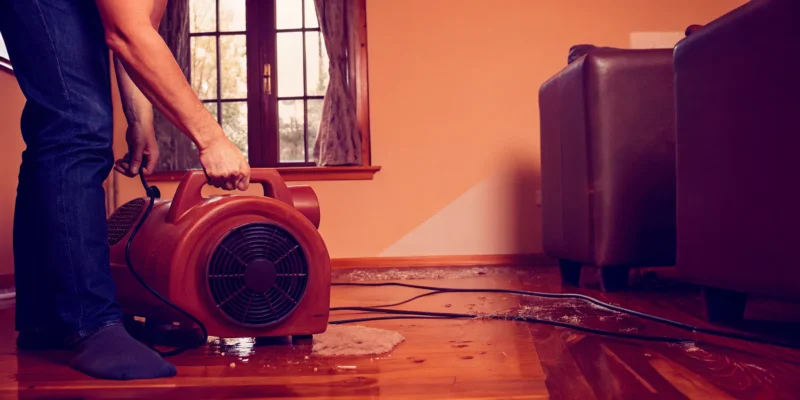
To dry a building fast enough to stop spore growth, experts use commercial-grade gear that outmatches standard consumer equipment. Heavy-duty water extraction units pull deep moisture from carpets and pads, while high-velocity air movers speed up evaporation. These air movers work alongside industrial dehumidifiers to pull gallons of water vapor out of the air each day. This keeps indoor humidity low, which stops mold from finding the moisture it needs to colonize your property. For a full overview, see our guide on professional water damage restoration.
Sanitization and Antimicrobial Treatment
Applying EPA-approved antimicrobial treatments is a key step to clean up mold and fix the water problem at the same time. The U.S. Environmental Protection Agency states that you must address both issues to fully resolve a mold threat. If water damage is severe and covers more than 10 square feet, the EPA guidelines suggest consulting experts to handle the cleanup safely. Hiring a certified team for professional water damage restoration ensures your drying process meets strict industry standards.
When Is It Too Late? Signs Mold Has Already Grown After Water Damage
Sometimes, despite your best efforts, you cannot dry out your home fast enough. Knowing when your prevention efforts have failed is key to protecting your property. Active mold growth means you must shift from drying to safe cleanup and removal before the problem spreads further.
Visible Spots and Odors
The most obvious sign of a problem is seeing the growth itself. You might see dark, green, or white spots on your walls or floors. Common indoor mold types like Cladosporium, Penicillium, and Aspergillus often show up as fuzzy patches after water leaks. According to the Centers for Disease Control and Prevention, these are the most common molds found inside homes. Another major sign is a musty odor that does not go away even after you dry the area. These odors mean spores are active and feeding on damp wood or drywall.
Physical Health Symptoms
Your body may react to active spores before you even see them. Active indoor growth can destroy your home and cause real health issues. Exposure to these damp areas often causes a stuffy nose, sore throat, coughing, or wheezing. The EPA notes that mold can also trigger asthma attacks in people who have asthma. If family members start sneezing or have burning eyes, spores may already be in your indoor air.
DIY vs Professional Remediation
| Factor | DIY Cleanup | Professional Remediation |
|---|---|---|
| Affected area | Less than 10 sq ft (3 ft x 3 ft) | More than 10 sq ft |
| Water type | Clean water (pipe leak, rain) | Contaminated water (sewage, flood) |
| Materials affected | Non-porous surfaces (tile, metal) | Porous materials (drywall, carpet, insulation) |
| Drying equipment | Household fans and dehumidifier | Industrial air movers, HEPA filtration, negative air pressure |
| Hidden moisture | Visible surfaces only | Thermal imaging and moisture mapping |
| Health concerns | No allergies or respiratory conditions | Asthma, allergies, or immune sensitivity present |
If active mold covers less than 10 square feet and the water was clean, you can usually handle cleanup yourself with proper safety gear. For larger areas, contaminated water, or if anyone in your home has respiratory issues, call a professional. Read our guide on water damage mold repair or mold removal services in Bakersfield for more details.
How Bakersfield’s Climate Affects Mold Risk After Water Damage
Bakersfield homes face a unique threat after a leak or flood because our local weather speeds up indoor mold growth. High heat from Central Valley summers combined with regional moisture creates a fast window for mold to spread. You must act quickly to dry out your property and stop spores from growing.
Central Valley Heat Speeds Up the Clock
In Bakersfield, summer temperatures often soar past 100 degrees. High heat accelerates the growth of mold spores. While the CDC states that mold can begin growing within 24 to 48 hours after water damage, our local heat makes that window even shorter. Warm, damp indoor spaces become perfect incubators for spores, making rapid drying a top priority.
Farm Humidity Raises Indoor Moisture
Agriculture in Kern County adds moisture to the local air, creating higher humidity levels than many homeowners expect. According to the EPA, you should keep indoor humidity below 50 percent to prevent mold. In our valley climate, a minor leak can easily push indoor moisture past this safe limit, causing mold to thrive on drywall, wood, and carpets. Many older Bakersfield homes also use evaporative coolers, which add moisture to indoor air.
Local Response Built for Kern County
Because 53.4 percent of the Bakersfield population is Hispanic, having a bilingual team is vital for clear, fast communication during emergencies. Our IICRC-certified crews operate 24/7/365 to handle water damage in Kern County. We understand local home structures like concrete slab foundations and older crawlspaces. We arrive on-site within 45 minutes to start drying before mold takes root. Learn more about our mold remediation services in Bakersfield.
Frequently Asked Questions
How quickly does mold grow after water damage?
Mold can begin to grow within 24 to 48 hours after water damage occurs. According to the EPA, mold spores thrive on wet surfaces when moisture is left untreated. This makes fast water extraction and thorough drying critical to protecting your home.
Can I spray something to prevent mold after water damage?
You can use EPA-approved antimicrobial sprays to disinfect wet areas and kill lingering mold spores. However, according to the CDC, sprays alone will not prevent mold if you do not dry the structure. Removing the water source and completely drying all materials is the only way to stop growth.
When should I call a professional for mold prevention?
Call a professional if the wet area is larger than 10 square feet, if the water is contaminated (sewage or floodwater), or if mold is already visible. The EPA recommends professional help for areas over 10 square feet. Experts use industrial drying equipment and moisture meters to find hidden damp spots that household fans cannot reach.
How soon should water-damaged areas be dried?
All wet areas should be completely dried within 24 to 48 hours to prevent mold growth. The EPA states that quick drying stops spores from germinating. Professional restoration standards recommend mitigation begin within 2 to 4 hours of a water event for best results.
What prevents mold from coming back after cleanup?
To prevent mold from returning, address the root cause of the moisture. Fix leaking pipes, improve ventilation, use dehumidifiers to keep indoor humidity below 50 percent, and ensure proper drainage around your home’s foundation. Antimicrobial treatments applied during professional remediation create an additional barrier against regrowth.
Ready to schedule a free consultation?
Delaying cleanup after water damage increases the risk of mold growing rapidly inside your walls, floors, and cabinets. Mold can begin spreading in as little as 24 hours, making swift professional drying absolutely vital. Our certified team in Bakersfield works around the clock to extract water and dry your home before mold takes hold. Waiting even one extra day can turn a simple water extraction job into an expensive mold removal project. Let our experienced specialists restore your home and protect your family from health hazards.
Ready to protect your property? Call (661) 220-7584 to schedule a free consultation with our local emergency response team. We are available 24/7/365.
