
What Restoration Does a Bakery Need After Smoke Damage? Fire and Smoke Damage Cleanup
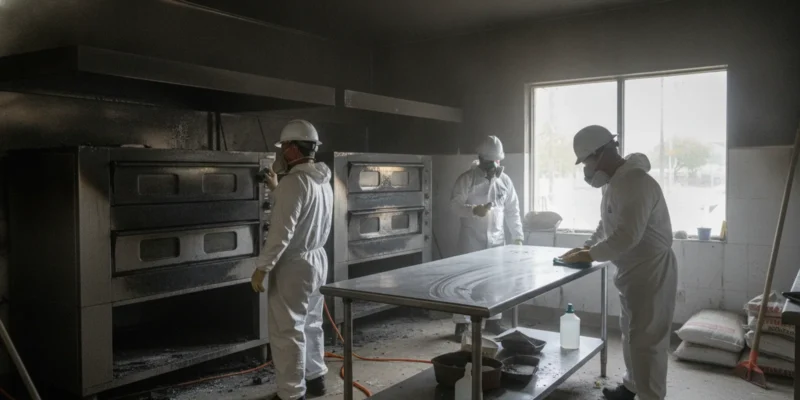
Smoke damage in a bakery can affect more than the room where a fire started. Soot and odor may reach preparation areas, storage, equipment, and customer spaces, so fire and smoke damage cleanup should begin with a careful assessment of what is affected and what can safely be restored. If your bakery has had a fire, it is understandable to feel pressure to reopen quickly. A clear, documented plan helps you make decisions in the right order.
Request a restoration assessment
What restoration does a bakery need after smoke damage?
A bakery generally needs a coordinated assessment, removal of loose soot and residue, cleaning of affected surfaces and contents, odor treatment where appropriate, and repair or replacement of materials that cannot be restored. The exact work depends on the fire location, smoke movement, affected materials, and the condition of food-contact surfaces and equipment. There is no reliable one-size-fits-all checklist that can replace an on-site inspection.
First, keep staff and customers away from areas that may be unsafe or contaminated. Then document visible damage and contact your insurer and a qualified restoration provider. Do not restart ovens, ventilation, or other affected equipment until the appropriate professionals have assessed it. Restoration should be planned around both building recovery and the bakery’s food-safety responsibilities; a cleaned-looking surface is not, by itself, proof that an area is ready for food preparation.
911 Restoration of Bakersfield provides fire and smoke damage restoration, commercial restoration, and insurance claim assistance. A local assessment can help identify the affected areas and the next practical steps. Learn about the company’s fire and smoke damage restoration service and commercial restoration.
What should bakery owners do before cleanup begins?
Once emergency responders have cleared the property for entry, focus on protecting people, preserving useful information, and preventing additional damage. Follow directions from fire officials, your insurer, and any relevant local authorities. If the building has structural damage, active electrical hazards, or lingering fire conditions, do not enter until you are told it is safe.
- Restrict access. Keep employees, customers, and delivery personnel out of affected rooms. Mark closed areas clearly, and do not let staff handle soot-covered food or equipment as a cleanup shortcut.
- Make a visual record. Take dated photos or video of each affected room, equipment, inventory, packaging, and visible residue before moving or discarding items, unless an immediate safety direction says otherwise.
- Protect unaffected areas. Avoid walking through clean areas with contaminated shoes, moving dusty items through the bakery, or switching on fans that might spread residue. Do not apply household cleaners or fragrances to conceal smoke odor.
- Notify your insurer. Ask how to report the loss, what records they need, and whether they want to inspect before non-emergency work begins. Keep copies of messages and claim information. For more on coordinating restoration and a claim, review the company’s insurance claim assistance information.
- Contact a restoration professional. Share where the fire began, what was affected, whether sprinklers or firefighting water were used, and what operations were underway. This helps the assessment cover smoke, soot, water, and related building impacts rather than just the obvious burn area.
Do not throw away potentially affected inventory before you have documented it and checked the insurer’s instructions. If food or packaging may have been exposed, keep it separate from usable stock and seek direction from the appropriate food-safety authority and your insurer before deciding whether it can be retained. Restoration contractors can address property conditions, but they do not replace a food-safety decision-maker.
It can help to create a quick room-and-item log while details are fresh. Note the room, item or surface, visible condition, and any immediate question that needs an answer. For example, record whether a flour bag was open, whether a sealed carton has soot on its exterior, or whether a mixer was operating when the incident occurred. Do not treat the log as a safety determination; it is a way to preserve details for the restoration assessment, insurer, and food-safety contact.
How is smoke damage assessed in a bakery?
Smoke can travel beyond the room with visible fire damage. A proper assessment considers the route it took, the residue on different materials, and the building systems that could have carried odor or particles. One display case may look clean while a nearby storage shelf or return-air area has residue. The assessment should define the work area and record what needs cleaning, further evaluation, repair, or replacement.
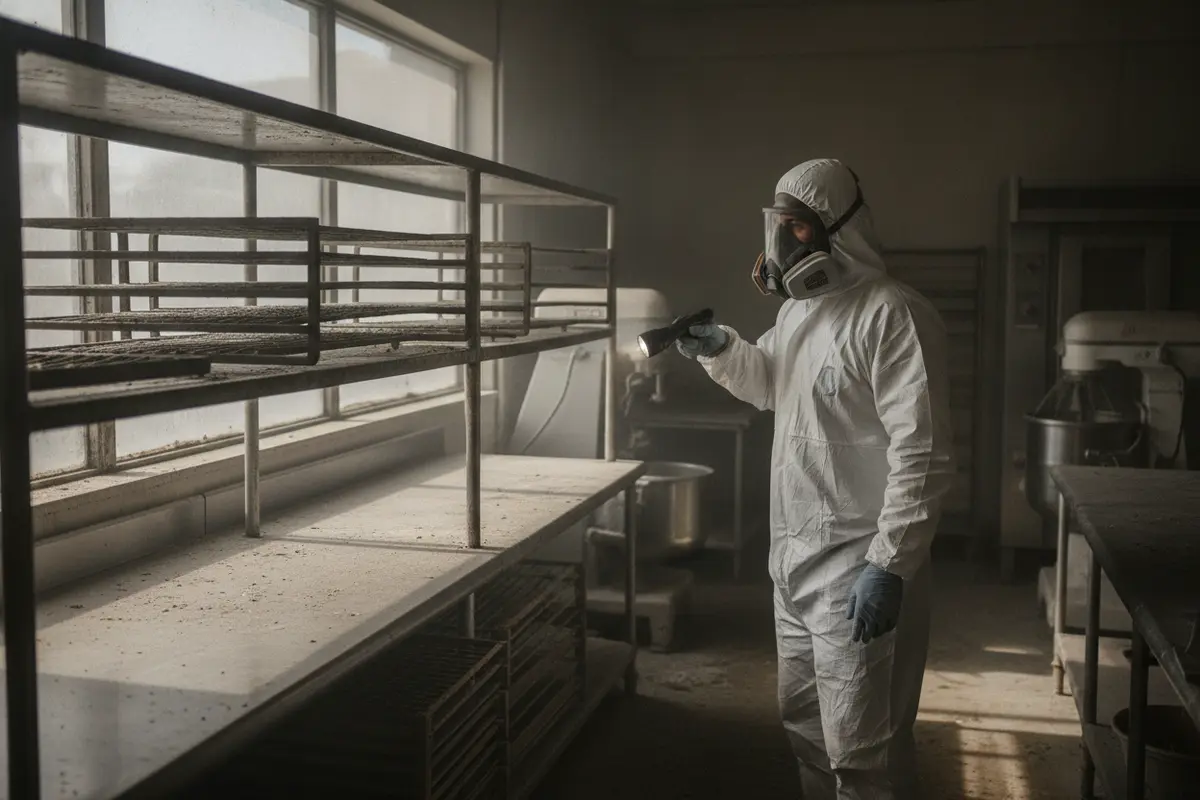
In a bakery, the review may include the production kitchen, ovens and surrounding surfaces, mixers and other equipment, ingredient and packaging storage, refrigeration areas, customer seating, offices, and corridors. It should also consider ceilings, wall cavities or other concealed spaces when smoke or heat may have reached them. If firefighting water was used, note that separately: water may require its own drying and repair plan.
The Federal Emergency Management Agency’s homeowner guide to smoke damage remediation describes recommended restoration steps for different levels of smoke damage. While a bakery is a commercial property, the guide offers useful background on why restoration steps should reflect the amount and location of contamination, rather than treating every surface the same way. The nonprofit United Policyholders also provides a smoke restoration guide that discusses cleaning contaminated surfaces and documenting restoration work.
Ask for the findings to be explained in terms of both location and material. A hard, washable surface, a porous ceiling tile, and a piece of operating equipment do not present the same restoration questions. A written room-by-room scope can note what was observed, which items need further evaluation, what work is proposed, and what remains undecided. If you are unsure why a storage room or customer area is included, ask the assessor to show how the observed conditions or smoke pathway relate to it.
What work may be part of bakery smoke damage restoration?
The scope varies by site. A restoration plan may include several different tasks, with the order adjusted to the building’s condition and the assessment findings.
- Containment and protection: The team may isolate work areas and protect materials that are not affected, limiting the spread of dust and residue during cleanup.
- Removal of loose residue: Soot and ash are handled with methods suited to the material and residue. Wiping a dry, delicate surface with the wrong technique can smear residue or drive it farther into the material.
- Cleaning of salvageable surfaces: Walls, ceilings, counters, shelving, and other contents may need cleaning with methods selected for their material and condition. Food-contact surfaces require particular care and must be addressed in line with applicable food-safety requirements before use.
- Contents evaluation: Smallwares, furniture, packaged supplies, and other contents can be sorted for cleaning, further review, or disposal. Items with heat damage or residue that cannot be safely removed may not be suitable to keep.
- Odor treatment: Smoke odor may remain in porous materials or concealed spaces after visible residue is removed. The source should be addressed; simply masking the smell does not complete restoration.
- Building and system repairs: Damaged finishes or components may need repair or replacement. Equipment, electrical systems, and ventilation affected by fire or smoke should be evaluated by the appropriate qualified professionals before being returned to service.
- Final review: The project team should walk through the scope and completed work with you, identify any remaining work, and provide records of the restoration steps completed.
These steps do not mean every bakery needs every service. For example, a contained event in one room may have a different scope from smoke that moved through a ventilation system. Ask the provider to explain what was found, why each step is proposed, and which decisions require your insurer, equipment specialist, or food-safety authority.
Think of the work as a sequence of decisions rather than a single cleaning visit. First, the team identifies the affected area and protects spaces that should remain clean. Next, it addresses residue and evaluates which surfaces or contents can be cleaned and which need another professional’s review. After that, any necessary repair and odor work can be planned, followed by a review of completed tasks. If new conditions appear after materials are opened or equipment is inspected, request an updated scope before assuming the original plan still covers the work.
For example, if smoke was contained to a small back room, the plan may focus on that room, nearby surfaces, and any connected pathway indicated by the assessment. If smoke moved into the kitchen through a shared air route, the scope may need to address multiple rooms or system components. These are not automatic conclusions: the site findings should support the work proposed, and specialists should make decisions that fall within their expertise.
Which bakery areas and contents need special attention?
Production and storage spaces deserve a room-by-room review, because they contain different surfaces and business-critical items. Make sure the scope does not overlook less visible locations simply because the sales floor looks presentable.
| Area or item | What to check | Decision before use |
|---|---|---|
| Preparation counters and food-contact surfaces | Visible residue, smoke exposure, and cleaning requirements for the surface | Confirm appropriate cleaning and food-safety clearance before preparing food |
| Ovens, mixers, and other equipment | Residue, heat effects, odor, and possible impact on operation | Have affected equipment evaluated before restarting or using it |
| Ingredients and packaged products | Exposure to smoke, soot, heat, water, or damaged packaging | Separate and document; ask the insurer and relevant food-safety authority how to proceed |
| Storage shelves and walk-in areas | Residue on surfaces, stored materials, and odor that may have traveled | Clean and assess the space before returning stock |
| Ceilings, vents, and connected rooms | Smoke movement, residue, and odor outside the fire room | Determine whether additional cleaning or system evaluation is needed |
| Customer and employee areas | Residue on furnishings, walls, floors, and belongings | Restore and review the area before reopening it to staff or visitors |
Use the table as a discussion checklist, not as a substitute for an inspection or an official reopening decision. Ask the restoration provider to identify the method and intended result for each affected category. Keep questionable stock out of circulation while you are waiting for a decision.
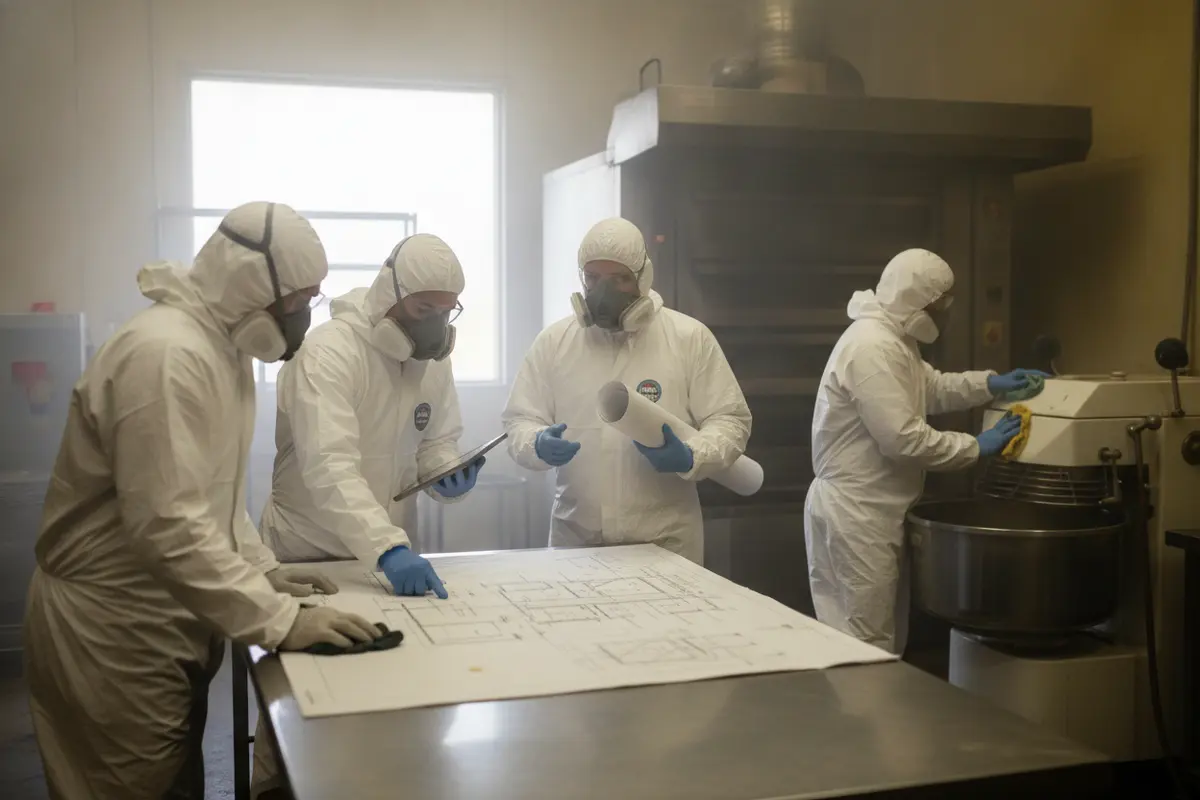
Inventory tracking can also make the work more manageable. If there are many affected items, group them by room and category rather than trying to make a keep-or-discard decision for everything at once. Photograph labels and packaging where useful, but avoid relocating questionable stock into clean storage. Set aside a clearly identified area for items awaiting review, if it can be done without spreading residue or creating a safety concern. Record when a decision is made and who provided it, so staff do not accidentally return an unresolved item to production.
For equipment, list each unit separately instead of treating the kitchen as one category. Include the equipment name, location, whether it was operating, and any visible residue or odor. That gives the restoration team and equipment specialist a more precise starting point. Keep manuals, service records, and model information available if you have them; they may help the appropriate technician assess the unit, but do not use them as a reason to restart equipment before it is checked.
How can you coordinate restoration with an insurance claim?
Early, organized records can make conversations with the insurer and restoration team easier. Keep a simple claim folder with the incident date, claim number, photos, inventory notes, estimates, invoices, and names of people you speak with. Record questions and answers in writing when possible. If urgent steps are needed to protect the property, document why they were taken and keep receipts.
Ask the insurer what inspection or approval steps apply before beginning non-emergency work. Request a written scope from the restoration provider that separates assessment findings, cleaning, contents work, repairs, and any items that need another specialist. Compare the scope with your photos and ask about anything missing or unclear. Do not assume that a proposed restoration step is automatically covered; coverage depends on the policy and the facts of the loss.
911 Restoration of Bakersfield notes that it offers insurance claim assistance and serves commercial properties. You can read more about the local team on its company information page and review its certification information. Those pages can help you prepare questions about the team and its qualifications before selecting a provider.
When sharing records, keep originals and send copies unless your insurer asks for something else. Label files with the room and date, and save a version of each scope or estimate so you can compare revisions. If the bakery needs temporary operational changes, write down which areas are closed, what work is still pending, and who must approve the next step. Clear records do not determine coverage, but they help everyone discuss the same facts and reduce confusion about what has already been inspected or completed.
How should you compare restoration providers?
After a fire, speed matters, but so does a clear and appropriate scope. Ask each provider questions you can compare side by side. A useful conversation should leave you understanding the proposed work, not pressured to approve language you do not understand.
- Can you inspect the bakery and explain how you will determine which areas and contents are affected?
- Will the written scope separate smoke and soot cleanup from repairs, water mitigation, and equipment evaluation?
- How will you protect unaffected areas and limit the spread of residue during work?
- What records, photographs, and completion documents will you provide for our files and insurer?
- Which tasks need to be handled by an equipment technician, building professional, insurer, or food-safety authority?
- What is the expected sequence of work, and what conditions could change the schedule?
Check whether the provider can explain its relevant experience and certifications without making unsupported promises about coverage, health outcomes, or reopening dates. For Bakersfield-area coverage, see the company’s service area information. A practical plan should identify both what the restoration team will do and what decisions remain with you or other authorities.
To compare proposals, use the same questions with each provider and ask for answers in writing. Look for a scope that names affected areas, describes the work planned for each category, identifies exclusions or unresolved questions, and states what documentation will be supplied. If two scopes differ, ask what site observation accounts for the difference rather than comparing only the number of tasks. You can also ask how the work area will be kept separate from ongoing business activity, if any limited operation is approved by the appropriate authorities. A clear explanation is more useful than a broad promise that everything will be handled.
Explore fire and smoke restoration options
When can a bakery reopen after smoke damage?
There is no universal reopening timetable. The answer depends on the extent of damage, completion of needed cleaning and repairs, equipment condition, and any applicable direction from local authorities or food-safety officials. Do not base the decision only on the absence of visible soot or a reduced odor.
Before reopening, confirm that affected areas have been addressed, equipment has been evaluated where needed, and any required inspections or approvals are complete. Make a list of outstanding work and keep relevant completion records. If only part of the bakery is affected, ask the appropriate authorities and your insurer whether any limited operation is permitted; do not assume that separating a room is sufficient.
A smoke incident can disrupt production and leave difficult decisions about inventory, equipment, and repairs. Start with safety and documentation, get a clear assessment, and coordinate restoration with your insurer and the appropriate food-safety contacts. When you are ready to discuss the property and next steps, contact 911 Restoration of Bakersfield for a restoration assessment.
A careful, documented restoration plan can help you make informed decisions about the building and move toward reopening only when the affected areas are ready.
