How Is Smoke Damage Restored in an Apartment Building? Apartment Fire and Smoke Restoration
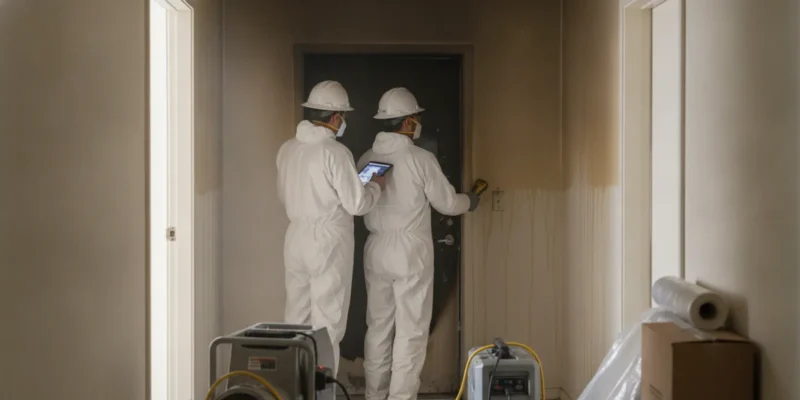
A fire in one apartment can leave smoke and soot in nearby units and shared spaces, creating a stressful situation for residents and property managers. Apartment fire and smoke restoration is a coordinated process: once authorities say the building is safe to enter, qualified restoration professionals assess where smoke traveled, plan work with building management, clean affected materials, address odor, and document the work.
Talk with a restoration professional about the damage and next steps, or call (661) 220-7584.
In brief: Restoration is not limited to the room where the fire started. The team evaluates affected apartments and shared areas, identifies soot and odor impacts, sets safe work boundaries, cleans or removes affected materials as appropriate, and checks the results. Management, residents, the insurer, and the restoration provider should coordinate access, records, and updates throughout.
What should happen before restoration work begins?
First, follow instructions from the fire department and other authorities. Do not enter a fire-damaged building or apartment until officials have cleared it. A building that looks intact may still have unsafe areas or restricted access. The FEMA homeowner’s guide to residential smoke damage advises waiting for clearance and using professional contractors to address structural fire and smoke damage.
Once access is permitted, the property manager or owner can help organize the response. Identify a point person for residents, the restoration provider, the insurer, and any building professionals involved. Confirm which areas are accessible, whether utilities or building systems remain restricted, and how crews can enter affected units. Do not ask residents or staff to disturb soot-covered items or enter areas that have not been cleared.
In a multi-unit property, the initial fire location is only one part of the picture. Smoke may have moved through a hallway, stairwell, ceiling or wall cavity, or building system. The affected area can differ from one apartment to another. Assessment should determine what is affected instead of assuming that every unit needs identical work, or that only the room with visible soot requires attention.
How does apartment fire and smoke restoration assess each unit?
A restoration assessment maps the known fire area and looks for smoke and soot impacts in surrounding apartments and common areas. The professional considers visible residue, odor, affected surfaces and contents, and possible pathways through the building. Findings help determine the work area, what may be cleaned, and what materials may need removal or further evaluation.
In an apartment building, the assessment should be organized by location. A useful record identifies each affected unit and shared space separately, notes observed conditions, and records areas that could not yet be accessed. This makes it easier to communicate with residents and track work without treating the whole property as one undifferentiated room.
- Inside the fire unit: Record the apparent fire area and smoke impacts, while keeping structural or safety questions with the appropriate qualified professional.
- Adjacent apartments: Check nearby rooms and surfaces for smoke residue or odor, including areas that may not be visibly soiled.
- Shared spaces: Assess hallways, stairs, lobbies, and other common areas along likely smoke paths.
- Contents and finishes: List affected items and surfaces so cleaning, handling, or removal decisions can be made deliberately.
- Building systems: Note whether HVAC or other systems may have been exposed; coordinate any system-specific inspection or service with qualified specialists.
Photographs and written notes can help property management, residents, and the insurer understand what was observed and what work is proposed. Ask the restoration provider to explain the scope by unit and common area, including any limits or areas that need another professional’s review. For broader property restoration context, see the company’s commercial restoration services page.
A practical walkthrough is easier to follow when it produces a location list rather than a general statement that the building has smoke damage. For example, management might record “Unit 204: odor reported in living room; no visible residue noted during visit” separately from “second-floor hallway: visible residue near the fire unit.” That distinction does not decide the final treatment; it tells the team what was observed, where follow-up is needed, and which resident should receive an update. If a locked unit or a resident’s schedule prevents access, note that gap and arrange another visit rather than treating an uninspected space as cleared.
It also helps to distinguish observations from conclusions. Record the date, location, and person who made each note, then keep the provider’s assessment and any specialist findings alongside it. If residents report an odor later, log the room and time rather than rewriting the original inspection record. A clear timeline lets everyone see what was checked initially and what prompted a return assessment.
How do managers coordinate work across occupied units?
Clear coordination can reduce confusion and help crews work in a controlled sequence. Management should designate a contact who can share access instructions, gather resident questions, and send consistent updates. Tell residents what areas are being assessed, how to request information about their belongings, and whom to contact about access or scheduling. Avoid promising a return date until the appropriate officials and professionals confirm the space is ready.
The work plan may separate the fire-origin apartment from nearby units and shared areas. Containment or other controls may be used to keep work areas distinct, depending on the conditions and work being done. The provider should explain the boundaries, the effect on access, and how residents will be notified if the plan changes. Keep residents out of active work zones and follow posted instructions.
Before work starts, management can prepare a simple access plan with the provider. List which doors or common-area routes crews may use, who can authorize entry, and how a resident can arrange access if they are not home. Agree on where residents should wait or walk if a hallway or entrance is temporarily unavailable. The plan should be updated when the work area changes, not left as an outdated notice on a door. Where residents need to protect pets, medications, or essential belongings, tell them not to enter a restricted area to retrieve items; direct those questions to the designated contact and the professionals managing access.
Short, regular updates are more useful than vague assurances. A notice can state which area is being assessed or cleaned, whether access is temporarily limited, what residents should avoid, and when management expects to provide the next update. If no reliable completion date is available, say that the date is still being assessed and explain what information is pending. This gives residents a practical next step without creating a promise the team may have to retract.
| Area or responsibility | What to coordinate | Useful record |
|---|---|---|
| Apartment where fire began | Authority clearance, access, assessment, and the planned restoration scope | Unit-specific photos, observations, and work notes |
| Nearby apartments | Resident access, inspection timing, and any discovered smoke impacts | Separate notes for each unit and resident communication |
| Hallways and shared spaces | Safe routes, work boundaries, and temporary access changes | Common-area condition log and update notices |
| Contents and personal property | Who owns or manages each item, handling decisions, and insurer documentation | Itemized inventory and photographs where appropriate |
| Building systems or structural questions | Coordination with the qualified specialist or authority responsible for that issue | Inspection findings and any written clearance or service records |
The table is a coordination aid, not a substitute for a fire department’s instructions, building requirements, or an insurer’s documentation process. For property-specific insurance questions, review the insurance claim assistance information and confirm coverage, approvals, and documentation needs directly with the carrier.
What happens during apartment fire and smoke restoration?
After assessment and work planning, the restoration team addresses affected surfaces and contents using methods suitable for the material and the type of residue. A method that works on one surface may damage another, so cleaning choices should follow evaluation rather than a one-size-fits-all recipe. The work may include cleaning salvageable items and surfaces, removing materials that cannot be restored, and managing debris from the work area.
Do not dry-wipe soot, vacuum it with ordinary household equipment, or apply cleaners to an unfamiliar surface before receiving appropriate guidance. These actions can spread residue or cause additional damage. Residents should avoid moving affected belongings unless the restoration provider or property manager has explained how to handle them safely. The City of Victoria’s after-the-fire guide offers general recovery information for people dealing with fire damage; follow local authorities and qualified professionals for decisions specific to an apartment building.
Some materials may be candidates for cleaning; others may require removal or separate evaluation. That decision depends on the observed damage, material, and project conditions. Ask the provider to identify the affected locations, describe the proposed approach, and explain how residents’ belongings will be separated from work areas. If reconstruction is needed after cleanup, clarify which tasks are included in the restoration scope and which require a separate contractor.
Residents can help by leaving affected items in place until the handling plan is clear and by telling management about anything that may need special attention. Examples include an item that was in a closed closet near an affected area, a fabric item with a persistent odor, or belongings that cannot be moved without help. Share its location and ownership information, and ask whether it should be inventoried, isolated, cleaned, or referred for a separate decision. Do not assume that an item is unaffected just because it looks clean, and do not discard belongings before documenting them and checking the insurer’s process.
For common property, managers can separate building-owned items from residents’ personal belongings in the inventory. That may include hallway furnishings, maintenance supplies, or equipment stored near an affected area. Label records by unit or shared location, and avoid combining items from different apartments in a single unspecific list. A careful handoff reduces mix-ups when items are moved for cleaning or when residents ask what happened to a particular belonging.
How is smoke odor addressed and checked?
Odor control starts with addressing the source. Covering an odor without dealing with smoke residue may not resolve the underlying issue. The restoration plan should explain which affected materials are being cleaned or removed and what odor-control measures are appropriate for the space. Some treatments require the area to be unoccupied or controlled; follow the provider’s directions and do not re-enter a restricted work area.
After the planned work, the provider should review treated areas and discuss any remaining concerns with management. Ask what was completed, what could not be addressed, and whether any additional inspection or specialist work is recommended. If an odor remains or returns, note where and when it is noticed and share those details rather than applying fragrances or household products that can mask the issue.
A useful follow-up is specific. Instead of reporting only “the building still smells,” identify the unit or common area, the room, when the odor is strongest, and whether it is continuous or noticed only under certain conditions. Management can pass that information to the provider for review. Keep the follow-up record with the original assessment and completed-work notes, so the team can compare the reported location with the work already performed and decide whether another inspection is appropriate.
For an overview of the company’s fire and smoke restoration offering, visit the fire damage restoration page. You can also review the team’s IICRC certification information when comparing providers. Ask any restoration company to explain its relevant qualifications, scope, and communication plan for a multi-unit property.
What should property managers document?
Keep a central project file and organize it by unit or common area. A clear record helps management answer resident questions and gives the insurer and restoration team a shared reference. Follow the carrier’s instructions about claim forms, approvals, and deadlines; do not assume every item or service is covered.
- Record the incident date, the authority or fire department instructions received, and any access restrictions.
- Keep dated photographs and notes of observed damage before work begins when access is authorized and it is safe to do so.
- Maintain a unit-by-unit list of reported impacts, inspection findings, and work performed.
- Save estimates, work plans, change notes, invoices, and communications with the restoration provider and insurer.
- Track resident notices, access arrangements, and questions that need a response.
- Ask the carrier what documentation it needs for the building, shared property, and individual contents claims.
Residents should be told how to report belongings or apartment conditions that may not have been visible during the first visit. Management can route those reports to the restoration provider and insurer without guaranteeing a particular coverage outcome. For company background and local service information, see About 911 Restoration of Bakersfield and its service area information.
To make the file useful to someone who was not present during the incident, keep the records in a consistent order. A manager might use a separate folder or labeled section for each apartment, plus one for common areas and building systems. Within each section, keep the initial observations, photos, provider scope, work updates, and follow-up notes together. Record when a document was received and who supplied it. If the insurer requests a specific form or format, follow that instruction and retain a copy of what was submitted.
Include changes to the scope as they happen. If a newly accessible room reveals additional residue, add the location and date, ask the provider to explain whether the plan changes, and document any approval needed before added work proceeds. This avoids confusing the original estimate with later decisions. It also gives residents a clearer response when they ask whether a reported condition was inspected and what the next step will be.
How can you compare restoration plans?
When reviewing proposals, compare how clearly each one defines the affected locations, cleaning and removal approach, access requirements, communication process, and documentation. Ask whether the assessment covers shared spaces and neighboring apartments, not only the fire-origin unit. Find out who will provide updates to management and how newly discovered impacts will be handled.
- Does the plan list apartments and common areas separately?
- Does it explain the basis for cleaning, removal, or referral for additional evaluation?
- Are access limits and resident coordination needs described?
- Will management receive a written record of work performed and any unresolved concerns?
- Are qualifications and relevant experience explained in a way you can verify?
- Does the provider distinguish its restoration work from structural, electrical, HVAC, or other specialist services?
A useful proposal makes the scope understandable without claiming that every building needs the same treatment. If conditions change once work begins, ask for an explanation of the revised scope and any cost or schedule implications before approving additional work, and coordinate those decisions with the insurer as appropriate. Avoid choosing on a promised timeline alone; the plan should account for the building’s actual condition and required clearances.
For an apples-to-apples review, ask each provider to respond to the same property information: which areas were inspected, which areas still need access, what work is proposed in each location, and what records management will receive. Compare exclusions as carefully as included tasks. One estimate may cover only initial cleaning, while another may include a broader set of locations or follow-up steps; the written scope, not a general label, is what allows you to see the difference.
Ask how the provider will handle a new finding before it becomes an unexpected change. Who will explain the condition, document it, and request approval? How will management learn whether the discovery affects resident access or the planned sequence? A clear answer does not guarantee that conditions will stay the same, but it sets a sensible process for decisions. Keep the insurer informed when required, and do not treat a restoration proposal as confirmation of coverage.
Request help coordinating an assessment for your apartment property.
What is the clearest next step after an apartment fire?
Wait for official clearance before entering, then organize a documented assessment of the fire unit, neighboring apartments, and shared spaces. Give residents one clear point of contact, preserve records, and ask the restoration provider to explain the work area, cleaning approach, odor plan, and any specialist referrals. For a Bakersfield property, 911 Restoration of Bakersfield provides fire and smoke damage restoration and can discuss the next steps through its contact page.
