

Crawl Space Mold Remediation: A Homeowner’s Guide
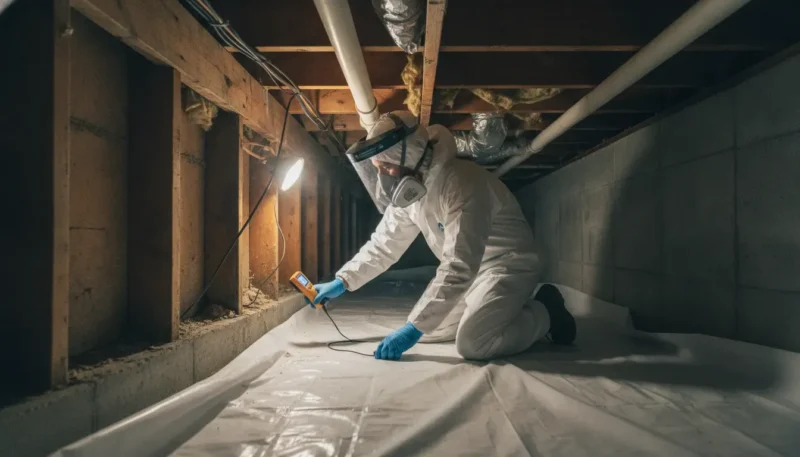
Crawl space mold remediation is more than wiping visible growth from floor joists. The lasting fix starts with finding the moisture source, protecting the rest of the home, removing or cleaning affected materials, and drying the space so mold has less opportunity to return. For Kern County homeowners, a crawl space inspection can reveal plumbing leaks, condensation, poor drainage, or damp soil that is easy to miss from inside the home.
This guide explains how crawl space mold develops, what warning signs to look for, what professional remediation includes, when a do-it-yourself approach is unsafe, and which prevention steps can help protect your home. The goal is not to promise a one-size-fits-all treatment. Every crawl space needs a response based on its construction, moisture conditions, affected materials, and the source of the growth.
What is crawl space mold remediation?
Crawl space mold remediation is the controlled process of identifying moisture, containing the work area, removing or cleaning mold-affected materials, filtering airborne particles, drying the structure, and correcting the condition that allowed growth. A professional plan should address both the visible mold and the moisture pathway behind it.
The word remediation matters because mold can return when a leak, condensation problem, drainage issue, or damp soil remains. A spray may change the appearance of a surface without correcting the environment. The U.S. Environmental Protection Agency explains that moisture control is the key to mold prevention and cleanup, and that moldy porous materials can be difficult to clean completely. Read the EPA guide to mold, moisture, and your home for general homeowner guidance.
For a Bakersfield home, the crawl space may contain plumbing lines, ductwork, insulation, wood framing, a concrete or bare-earth floor, and limited access. The inspection must consider how those components interact. Removing mold from one joist without checking the subfloor, insulation, adjacent framing, and humidity can leave the underlying problem unresolved.
Why do crawl spaces develop mold?
Crawl spaces develop mold when moisture stays on or inside materials long enough for growth to begin. Common contributors include plumbing leaks, rainwater intrusion, poor grading, standing water, bare soil, condensation on cool pipes or ducts, blocked vents, and inadequate air movement. Warm, enclosed spaces can hide the problem until odors or staining appear indoors.
- Plumbing leaks: Supply lines, drain lines, water heaters, and HVAC condensate lines can release water below the home.
- Ground moisture: Bare soil can add water vapor to crawl space air, especially when a vapor barrier is missing, damaged, or poorly sealed.
- Rain and drainage: Roof runoff, poor yard grading, clogged gutters, or foundation seepage can move water toward the crawl space.
- Condensation: Cold ducts and pipes can collect moisture when humid air reaches their surfaces.
- Ventilation and humidity: Air that cannot dry out may keep wood and insulation damp even when there is no active leak.
- Past water damage: A previous overflow or flood may leave wet insulation, subflooring, or debris that was never fully dried.
The EPA notes that crawl spaces with high relative humidity and bare earth floors are common locations for hidden mold because soil can release moisture into the air. If a recent leak or flood is involved, the safest next step may include professional water damage restoration before mold cleanup begins.
What are the signs of mold in a crawl space?
Possible signs include a persistent musty odor, dark or light patches on wood, fuzzy or powdery surface growth, damp insulation, condensation, peeling vapor-barrier seams, wet soil, and elevated indoor humidity. Because a crawl space is out of sight, an unexplained odor or recurring indoor moisture problem may justify an inspection even when no mold is visible upstairs.
Musty odors and indoor air concerns
A musty odor can point to microbial growth or damp materials, but smell alone cannot identify the source, type, or extent of mold. Odors may move through floor gaps, ductwork, plumbing openings, or wall cavities. Treat the odor as a reason to investigate, not as proof that every nearby surface is contaminated.
Staining and surface growth on wood
Discoloration on joists, beams, subflooring, or insulation can have several causes, including mold, dirt, water staining, or salts. Do not rely on color alone to determine what a material is. A qualified technician can inspect the surface, measure moisture, and identify whether the area needs cleaning, removal, drying, or a different repair.
Damp materials and recurring moisture
Wet insulation, soft wood, rusted fasteners, condensation, or a damp crawl space floor indicate that moisture control deserves attention. A dry-looking surface may still hide moisture inside wood or insulation, so a visual check should be paired with moisture measurements where appropriate.
How is crawl space mold inspected?
A crawl space mold inspection should establish where moisture is coming from, what materials are affected, how far the condition extends, and whether the work area can be accessed safely. The inspection may include a visual review, moisture readings, thermal imaging, humidity measurements, and testing when the project or property owner requires it.
- Check safety and access: The technician looks for electrical hazards, standing water, structural concerns, sewage contamination, low-clearance areas, and other conditions that affect entry.
- Trace the moisture: Plumbing, drainage, grading, condensation, groundwater, and vapor movement are considered instead of treating the visible patch alone.
- Map affected materials: Wood framing, subflooring, insulation, vapor barriers, ducts, and stored items are reviewed for staining, dampness, odor, or growth.
- Measure conditions: Moisture meters, humidity readings, and thermal imaging can help identify areas that are not obvious during a visual inspection.
- Define the work area: The plan identifies what can be cleaned, what may need removal, how containment will be arranged, and how debris will be handled.
- Document the findings: Photos, measurements, and a written scope make it easier to coordinate repairs, restoration, and insurance documentation when applicable.
Testing is not automatically required for every visible mold condition. A professional can explain whether testing would answer a specific question, such as identifying an uncertain material or documenting clearance. The inspection should produce a practical plan rather than a test result without a path to correct the moisture.
What does professional crawl space mold remediation include?
Professional crawl space mold remediation typically combines source control, containment, filtration, material cleaning or removal, drying, and follow-up verification. The exact sequence depends on the type of contamination, the size of the affected area, the condition of the building materials, and whether water or sewage damage is also present.
| Remediation phase | What it addresses |
|---|---|
| Moisture correction | Leaks, drainage, condensation, damp soil, or other conditions that support mold growth |
| Containment | Separating the work area and limiting the movement of dust and airborne particles |
| Air filtration | Using appropriate filtration equipment to help manage airborne particles during the work |
| Cleaning or removal | Cleaning suitable materials and removing porous or unsalvageable materials when necessary |
| Drying | Reducing moisture in framing, subflooring, insulation, and the crawl space environment |
| Verification and repairs | Checking the completed work and coordinating repairs that reduce the chance of recurrence |
Source control comes before cosmetic cleanup
If a supply line is leaking, water is entering through the foundation, or damp soil is adding vapor, those conditions must be corrected as part of the plan. A surface treatment without source control can leave the structure in the same environment that produced the growth.
Containment and filtration protect the rest of the home
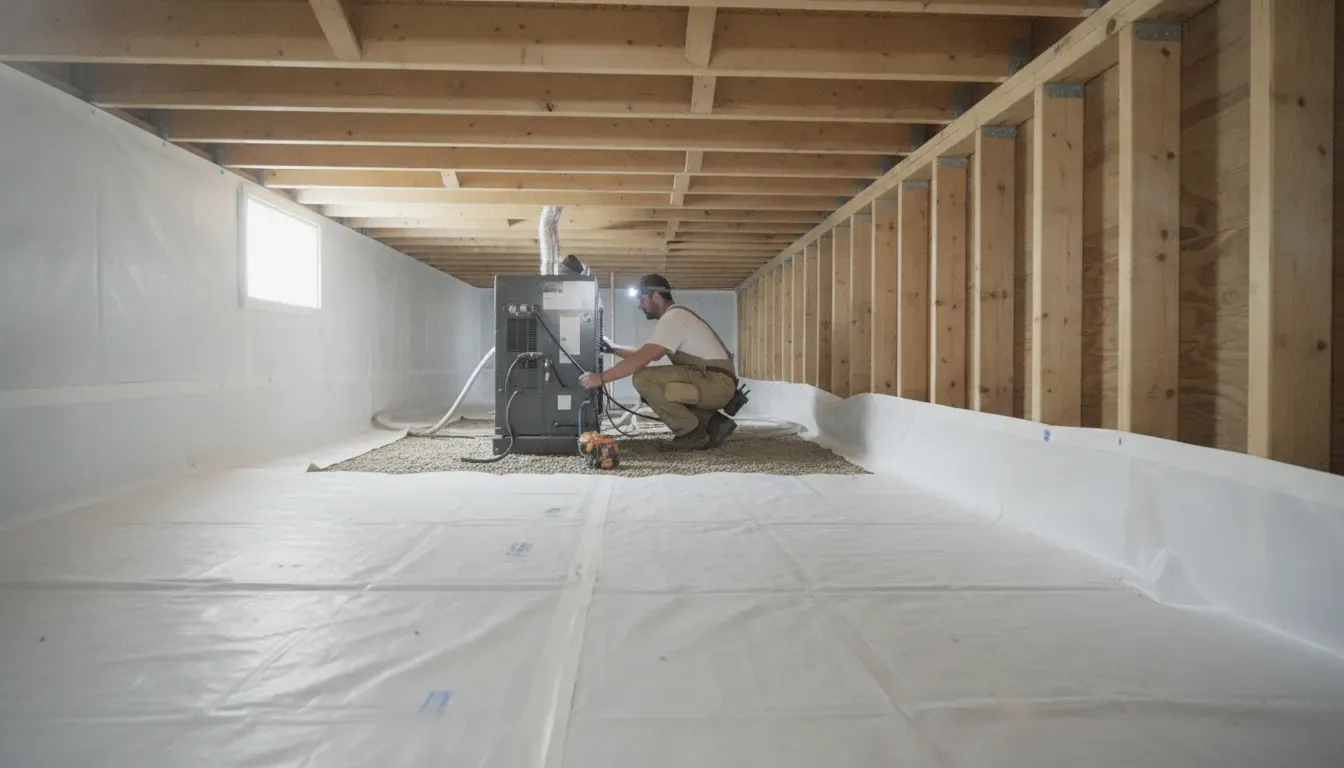
Crawl space access points connect to the living area through floor penetrations and utility openings. Professionals may use containment barriers, negative air equipment, and HEPA filtration according to the work conditions. These controls are intended to keep the remediation area managed while affected materials are cleaned or removed.
Cleaning, removal, and drying are material-specific
Hard, cleanable surfaces may be treated differently from porous insulation, damaged drywall, or heavily affected wood. The right decision depends on the material, the extent of growth, the moisture history, and whether cleaning can be completed without spreading contamination. After cleanup, drying and moisture verification are essential parts of the work.
911 Restoration of Bakersfield provides mold inspection and remediation for crawl spaces, walls, ceilings, floors, and other areas where moisture can remain hidden. The company uses moisture assessment, containment, HEPA filtration, safe material handling, and moisture-control planning as part of its mold service approach. Learn more about mold removal in Bakersfield.
Can homeowners remove crawl space mold themselves?
Some small, accessible areas on suitable hard surfaces may be candidates for careful homeowner cleaning, but crawl space mold is often harder to evaluate and safer to delegate. Low clearance, poor ventilation, electrical hazards, contaminated water, extensive growth, porous materials, and the risk of spreading particles can all change the decision.
The EPA recommends minimizing exposure during mold cleanup and explains that porous materials may need to be discarded when mold has grown into them. Homeowners should not enter a contaminated crawl space without considering protective equipment, access conditions, and the chance that the work will disturb hidden growth. Do not paint, caulk, or cover moldy material before it is cleaned and dried.
Professional help is especially appropriate when:
- The affected area is extensive, hidden, or difficult to reach.
- There is standing water, sewage, or a strong contamination concern.
- Wood, insulation, subflooring, or other porous materials are involved.
- Someone in the home has respiratory sensitivity or another reason to avoid exposure.
- The moisture source is not obvious or keeps returning after cleaning.
- You need documentation for a property transaction, landlord file, or insurance claim.
How can you prevent crawl space mold from coming back?
Preventing recurrence means keeping the crawl space dry, limiting moisture entry, and monitoring the conditions that caused the original problem. Repairs may include fixing plumbing, improving drainage, sealing a vapor barrier, managing condensation, correcting ventilation or dehumidification needs, and keeping gutters and downspouts away from the foundation.
- Repair plumbing leaks promptly and check lines under sinks, bathrooms, kitchens, and HVAC equipment.
- Keep gutters clear and direct downspouts away from the foundation.
- Watch for grading or drainage that sends rainwater toward the home.
- Inspect the crawl space after heavy rain, a plumbing failure, or a long period of high humidity.
- Keep vapor-barrier seams and edges sealed when that system is part of the home’s moisture-control plan.
- Do not store wet cardboard, fabric, or organic debris in the crawl space.
- Ask a professional whether ventilation, air movement, or dehumidification fits the crawl space design.
- Track recurring odors, condensation, or indoor humidity instead of waiting for visible growth.
Moisture prevention should match the structure. Adding a fan or opening vents without understanding the local conditions can move humid air into a cooler space and create more condensation. The EPA moisture-control guidance recommends addressing leaks, drainage, ventilation, and humidity as parts of a complete approach.
When should you call a mold remediation professional?
Call a mold remediation professional when you see recurring growth, smell persistent mustiness, find damp insulation or wood, suspect a hidden leak, or cannot identify why the crawl space remains wet. A prompt assessment is also appropriate after flooding, sewage backup, or a plumbing failure that affected the area below the home.
911 Restoration of Bakersfield serves homeowners and property managers throughout Bakersfield and surrounding Kern County communities. The team offers 24/7 emergency response, bilingual English and Spanish communication, IICRC-certified technicians, and direct insurance claim support. A project manager can help explain the scope and next steps after the initial assessment.
A crawl space problem may begin below the floor, but it can affect the comfort, structure, and air quality of the home. The most useful response is to identify the moisture source, avoid disturbing materials unnecessarily, and choose a remediation plan that includes drying and prevention. For related water intrusion, see the company’s disaster restoration services.
Request a crawl space mold assessment from 911 Restoration of Bakersfield at (661) 220-7584.
Frequently asked questions about crawl space mold remediation
Is crawl space mold dangerous?
Mold can cause allergic or irritant reactions in some people, and cleanup can disturb airborne particles. The seriousness depends on the amount, material, moisture source, access conditions, and the occupants’ sensitivities. Avoid unnecessary exposure and ask a qualified professional to assess extensive, hidden, or contaminated areas.
How quickly can crawl space mold grow?
Mold growth depends on moisture, temperature, material, and time. Wet materials should be dried promptly because delays make growth and damage more likely. The EPA commonly advises drying wet items within 24 to 48 hours when possible, but the actual response depends on the event and the materials involved.
Will bleach permanently remove crawl space mold?
No single household product guarantees permanent remediation. Cleaning without fixing the moisture source does not address why growth developed, and porous materials may not be fully cleanable. A remediation plan should match the material and include source control, cleaning or removal, drying, and verification.
Does homeowners insurance cover crawl space mold remediation?
Coverage depends on the policy, the cause of the mold, exclusions, and the documentation available. Mold that follows a covered water event may be handled differently from long-term maintenance moisture. Contact your insurer and keep photos, dates, repair records, and the remediation scope. 911 Restoration of Bakersfield can help document the damage and coordinate with insurance.
How much does crawl space mold remediation cost?
There is no responsible one-size-fits-all price without an inspection. Cost depends on the affected area, access, materials, moisture source, containment, disposal, drying, repairs, and testing requirements. A professional assessment can define what the project includes before work begins.
How do I keep crawl space mold from returning?
Correct the moisture source, keep the area dry, address drainage and plumbing, maintain an effective vapor barrier where appropriate, and monitor for recurring humidity or leaks. If growth returns after cleaning, request a new assessment rather than repeatedly treating the visible surface.
