
Mold Remediation After Flood: Homeowner Guide
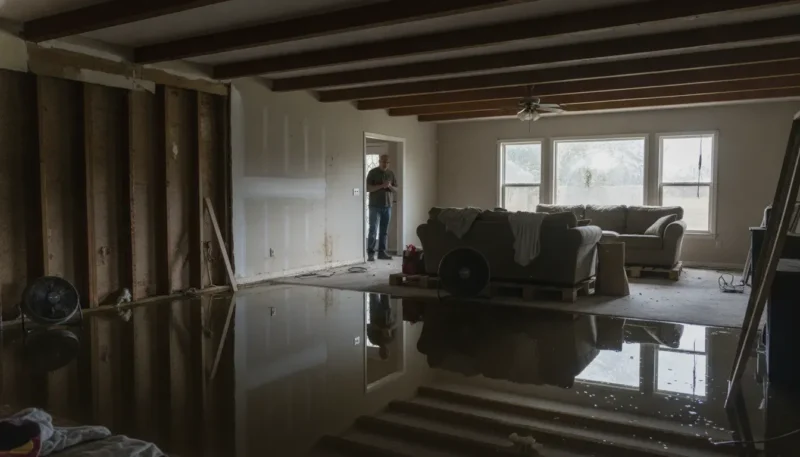
When floodwater enters a home, mold remediation after a flood may become necessary even if the visible water is gone. Moisture can remain behind drywall, under flooring, inside cabinets, or in insulation. The safest response is to protect people first, document the damage, remove the moisture source, and have the affected areas assessed before hidden growth spreads.
Why Flooding Creates a Mold Risk
After a flood, mold risk comes from trapped moisture, wet building materials, and contaminants carried by the water. Drying the property quickly is important, but drying only the visible surface is not enough. A flood can wet wall cavities, subfloors, insulation, furniture, and other porous materials that continue releasing moisture after the room looks dry.
The U.S. Environmental Protection Agency guide to mold cleanup after disasters recommends treating flood cleanup as a health and safety project, not just a cosmetic repair. Its core messages are to use appropriate protective equipment, operate generators safely, and finish cleanup before reoccupying the home.
In Bakersfield and surrounding Kern County communities, a dry-looking room can still have moisture inside drywall or under flooring. Do not assume warm weather has solved the problem. The practical question is whether the structure and contents are dry enough to prevent continued growth.
What Should You Do Immediately After a Flood?
Immediately after a flood, keep people out of unsafe areas, photograph the damage, stop the water source if you can do so safely, and arrange professional water removal. Do not disturb suspected mold or contaminated materials until you know the water category, electrical conditions, and structural risks.
- Wait for a safe re-entry decision. Stay out if there are downed power lines, gas concerns, unstable ceilings or floors, sewage, chemical odors, or standing water near electrical equipment. Follow instructions from emergency officials and qualified professionals.
- Keep vulnerable people away. Children, older adults, people with asthma, and people with weakened immune systems should not participate in flood or mold cleanup. Pets should also be kept away from contaminated areas.
- Document before moving items. Take wide and close-up photos of rooms, flooring, walls, contents, the water line, and the apparent source. Make a simple list of damaged belongings and keep receipts for emergency expenses.
- Stop the water source only when safe. Shut off a local supply valve if you can reach it without entering a hazard. Do not attempt electrical or structural repairs during the initial response.
- Call for water extraction and drying. Standing water should be removed quickly, followed by moisture mapping and drying of materials that may look unaffected.
The CDC homeowner and renter guide to mold cleanup after disasters advises documenting the home and belongings for insurance, prioritizing drying, and treating a home that could not be dried within 24 to 48 hours as a likely mold-growth concern.
How Fast Can Mold Develop After Flooding?
Mold can develop when flood-damaged materials remain wet, and the risk becomes especially serious when the home cannot be thoroughly dried within 24 to 48 hours. That timeframe is a drying priority, not a guarantee that every material is safe afterward. Hidden moisture and contaminated floodwater still require assessment.
| Time after flooding | Priority | What to watch for |
|---|---|---|
| First few hours | Safety and source control | Electrical hazards, structural instability, sewage, chemicals, and the active water source |
| Within 24 hours | Document and begin controlled water removal | Wet drywall, flooring, cabinets, insulation, furniture, and moisture moving into wall cavities |
| 24 to 48 hours | Complete professional drying and check hidden areas | Musty odors, swelling, staining, damp insulation, and materials that remain cool or wet |
| After 48 hours | Assess for mold and secondary damage | Visible growth, persistent odor, damaged porous materials, and moisture that keeps returning |
A timeline cannot replace moisture readings. A room may feel dry while a subfloor, cabinet toe-kick, or wall cavity remains wet. That is why water damage restoration should include moisture detection, drying equipment, and follow-up measurements rather than a quick surface wipe-down.
Which Flood Cleanup Tasks Are Safe to Do Yourself?
Limited cleanup may be reasonable when the water was clean, the area is small, the electricity is confirmed safe, and there is no visible mold or structural damage. Wear gloves, eye protection, and at least an N-95 respirator when appropriate. Never mix cleaning products, and stop if conditions become uncertain.
- Move dry, unaffected belongings away from the wet area if you can do so without entering danger.
- Open doors and cabinets only when doing so is structurally safe.
- Blot or remove small amounts of clean water without spreading contamination.
- Separate wet porous materials from dry contents for professional evaluation.
- Keep a written timeline of what was wet, what was removed, and when drying started.
Do not use household fans to blow across visible mold or contaminated floodwater. Air movement can spread particles or contaminants. Do not paint, caulk, or cover a stained or musty surface before the moisture problem is found and corrected. Do not use bleach and ammonia together, and do not rely on a strong fragrance to hide a mold odor.
Floodwater from outside, a sewage backup, or an unknown source may contain bacteria, chemicals, or other hazards. For those situations, use the sewage cleanup and contaminated-water service guidance from 911 Restoration of Bakersfield rather than treating the water like a clean plumbing leak.
When Do You Need Professional Mold Remediation After a Flood?
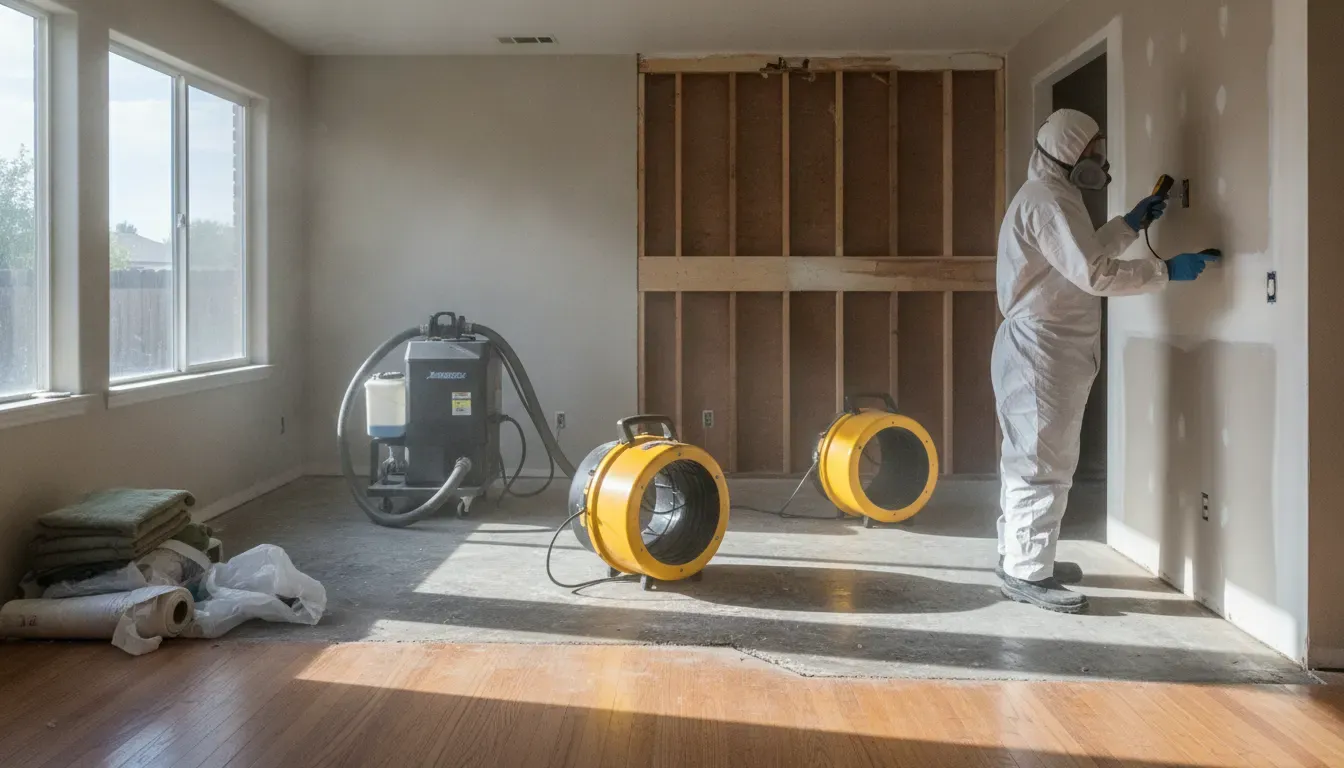
Professional mold remediation after a flood is appropriate when the affected area is extensive, the water may be contaminated, visible mold or a persistent musty odor is present, porous materials stayed wet, or moisture is hidden inside walls and floors. A professional can separate safe drying from containment and material removal.
- The flood involved sewage, groundwater, storm runoff, or an unknown source.
- Drywall, insulation, flooring, cabinets, or other porous materials stayed wet beyond the initial drying window.
- You see mold, repeated staining, bubbling paint, warped flooring, or a musty odor.
- Moisture readings remain elevated after fans or a dehumidifier have run.
- The affected area is larger than you can safely isolate and clean.
- Someone in the household has asthma, allergies, or a weakened immune system.
- You cannot confirm that electricity, gas, structure, and air quality are safe.
A qualified assessment should identify the water source, affected materials, visible and hidden moisture, and areas that need containment. Depending on the condition, the work may include controlled removal of damaged materials, HEPA filtration, drying, cleaning, and clearance or verification steps. Sampling is not a substitute for correcting the moisture source.
911 Restoration of Bakersfield provides mold removal and remediation services for homes and businesses in Bakersfield and Kern County. Its service information describes moisture detection, containment, HEPA filtration, and professional remediation as part of a complete response.
How Does Water Damage Restoration Connect to Mold Remediation?
Water damage restoration removes the conditions that allow mold to grow, while mold remediation addresses contamination that is already present. After a flood, these services overlap: the team must extract water, dry the structure, locate hidden moisture, contain affected areas, and remove or clean materials according to their condition.
For a flood with no visible mold, the first priority is usually the water damage restoration process: source control, extraction, moisture mapping, drying, and monitoring. If mold or a persistent odor is found, the plan should expand to include containment and remediation rather than simply adding air freshener or paint.
This distinction matters because replacing visible drywall without drying the framing can leave moisture behind. Likewise, removing mold without repairing the water source invites recurrence. The right sequence is to make the area safe, identify the source, dry the structure, contain the affected area, remove or clean damaged materials, and verify that moisture conditions are controlled.
What Should You Ask a Restoration Professional?
Before work begins, ask the restoration professional to explain the water source, safety concerns, drying plan, affected materials, containment approach, documentation, and verification steps. Clear answers help you understand what is being done and create a useful record for your insurance company.
- What is the suspected source of the floodwater, and does it change the safety plan?
- Which rooms and materials were affected, including areas hidden behind walls or under floors?
- How will moisture be measured, and how will you know drying is complete?
- What materials can be cleaned, and which materials may need controlled removal?
- How will the work area be contained to limit cross-contamination?
- What photos, moisture readings, and work records will be provided?
- What should household members avoid until the area is cleared for re-entry?
911 Restoration of Bakersfield states that it offers 24/7 emergency response, bilingual English and Spanish support, IICRC-certified technicians, and a 45-minute response time for emergencies. Confirm the current scope and timing for your property when you contact the team, because conditions and travel time vary by incident.
Frequently Asked Questions
Should I assume there is mold after a flood?
If the home or its contents could not be thoroughly dried within 24 to 48 hours, treat mold growth as a serious possibility. A professional moisture assessment can identify hidden wet materials and help determine whether remediation is needed.
Can I remove mold myself after a flood?
Small areas from a clean water event may be manageable for some homeowners who can work safely and use appropriate protection. Do not attempt cleanup when water is contaminated, mold is extensive, materials are hidden or structural, or household members are vulnerable to exposure.
Will drying the room remove mold?
Drying stops the moisture source but does not automatically remove mold that has already grown. Visible or hidden contamination may require containment, cleaning, and removal of affected materials after the structure is dry enough to work safely.
Should I use fans after a flood?
Fans and dehumidifiers can support drying when electricity and the structure are safe and no visible mold or contaminated water is present. Avoid blowing air across visible mold or contaminated materials because it can spread particles or contaminants.
Does insurance cover mold remediation after a flood?
Coverage depends on the policy, the cause of the water damage, exclusions, and the facts of the loss. Photograph the damage, notify your insurer promptly, and keep records. Read the customer site’s insurance and restoration guidance, but ask your insurer about your specific policy.
Protect Your Home After Flooding
Mold remediation after a flood is not just about removing what you can see. It is a coordinated response to safety, water extraction, hidden moisture, contaminated materials, and indoor air concerns. If a flood has affected your Bakersfield-area home, start with safe documentation and source control, then arrange a professional assessment before moisture or mold creates a larger restoration problem.
