Restoration Services Tulare CA: Water and Fire Help
Water spreading across a floor, smoke settling into walls, or a sewage backup can turn a manageable property problem into secondary damage quickly. The first priorities are safety, stopping the source when it is safe to do so, and getting a clear record of what happened. For more on choosing a local restoration partner, read our guide to why 911 Restoration of Bakersfield serves local communities.
For restoration services tulare ca, 911 Restoration of Bakersfield provides 24/7/365 emergency support across Tulare County, including rural and agricultural communities, with a stated 45-minute on-site response commitment. The team can help with water, fire, smoke, mold, sewage, and related property damage, along with documentation and insurance coordination.
You do not need to determine the full repair plan before asking for help. A professional assessment can identify hidden moisture, contamination, or structural concerns and outline the safest next steps. Here is how local emergency response begins and what property owners can do while help is on the way.
Get Help Now! Request a free visual inspection for your Tulare property.
24/7 Emergency Restoration Services in Tulare City, CA
When your Tulare City property is damaged, focus first on keeping people safe. Leave the building if there is fire, smoke, structural instability, exposed wiring, or another immediate hazard. After a disaster, do not reenter until local authorities say it is safe. Keep children and pets away from affected areas, and avoid walking through standing water when electrical hazards may be present.
If you can do so without putting anyone at risk, stop the source of the damage. Shut off the main water supply for a plumbing emergency, or turn off electricity only when the panel and surrounding area are dry and safe to access. Do not attempt to clean up fire debris, contaminated water, or unstable materials yourself. The safest next step is a professional assessment that identifies visible and less obvious damage.
Document conditions before moving or discarding items. Take photos and video from several angles, including damaged rooms, ceilings, floors, personal property, and the suspected source. Write down when you noticed the damage and any actions you took to limit it. This record can help you explain what happened to your insurance company and gives the restoration team useful information when planning the response.
911 Restoration of Bakersfield is the operating company serving all of Tulare County, including rural and agricultural communities. It does not operate from a Tulare City office, but its emergency operations are available 24/7/365. The company states a 45-minute on-site response commitment for emergency calls, helping property owners move from uncertainty to a documented plan. Support is available in both English and Spanish. See our guide to 911 Restoration of Bakersfield’s local coverage and support for more context.
Once the team arrives, share what you know about the source, affected areas, and safety concerns. A professional assessment can clarify the next steps and help prevent decisions based on guesswork. For an overview of available disaster restoration services, review the company’s emergency restoration options. Prompt communication matters, especially when damage continues to change after the initial event.
Water Damage Restoration Services in Tulare
Water problems can begin with a burst pipe or plumbing failure, but they are not limited to indoor leaks. Appliance leaks, roof or window leaks, storm flooding, sewage backups, and HVAC condensation can all leave water where it does not belong. In Tulare City and throughout Tulare County, 911 Restoration of Bakersfield provides a complete mitigation and repair process for affected homes, businesses, and properties. The goal is to identify the full extent of the damage, remove the water safely, and restore the property rather than simply dry the surface.
Learn more about water damage restoration when you need help evaluating a leak, flood, or other water emergency.
From water extraction to structural drying
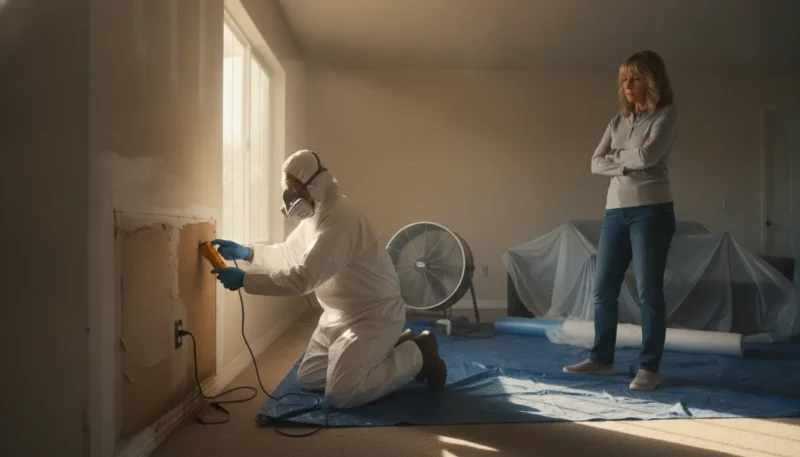
The first phase is water extraction. Removing standing water helps the team evaluate floors, walls, contents, and other affected areas. Technicians then use moisture detection, moisture mapping, and thermal imaging to look beyond what is visible. These tools help identify damp materials and define where drying equipment is needed.
Structural drying and dehumidification address moisture held in building materials and the surrounding air. Drying is not complete just because a room feels comfortable or the floor looks dry. Moisture can remain behind baseboards, beneath flooring, inside wall cavities, or around cabinets. The Centers for Disease Control and Prevention notes that mold may be hidden under or behind cabinets, carpet, and cushions, or inside walls. A careful inspection is therefore important after a leak or flood, especially when water reached concealed areas. If the source is difficult to locate, the related leak detection guide may help you understand what to look for.
Cleaning, sanitization, and reconstruction
Water restoration can also include cleaning and sanitization. The appropriate approach depends on the source of the water and the materials involved. Sewage or contaminated water requires particular care and should not be treated like a small clean-water spill. After affected areas are cleaned and dried, reconstruction can address damaged building components and move the property toward a functional, finished condition.
The service model follows IICRC S500 water damage standards, EPA-approved sanitization protocols, and OSHA safety practices. Photo and video documentation can record conditions and completed work for the property owner and insurance coordination. Because every loss differs, an assessment is needed to determine the appropriate scope. Prompt professional evaluation can help uncover hidden moisture before it becomes a larger restoration problem.
Fire, Smoke, Mold, and Sewage Damage Help
Property damage does not always stay within one category. A fire can leave soot and smoke odor behind, while the water used during firefighting can create additional moisture concerns. A plumbing failure can lead to hidden dampness and mold, and a sewage backup can introduce contaminated water that requires a careful professional response. In Tulare, 911 Restoration of Bakersfield can help property owners assess the damage and plan the next safe steps.
Fire and smoke cleanup goes beyond visible damage
Fire damage includes more than the area touched by flames. Smoke and soot can affect surfaces, contents, and the air in surrounding rooms. Depending on the condition of the property, cleanup may include board-up services, soot removal, odor treatment, contents cleaning, structural cleaning, and reconstruction. The appropriate scope depends on what the inspection finds, so avoid discarding affected items or attempting extensive cleaning before the damage is assessed.
Learn more about fire and smoke damage restoration and the steps available for homes and businesses after a fire.
Mold may be hidden and can worsen over time
Mold is not always visible on an open wall or floor. The CDC notes that it may be hidden under or behind cabinets, carpet, and cushions, or inside walls. If a flooded home and its contents cannot be completely dried within 24 to 48 hours, mold is probable. The EPA also explains that mold can damage the material it grows on, and the longer it grows, the more damage it can cause.
Health and safety should guide your decision about cleanup. The CDC says people with asthma or mold allergies may have severe reactions. It advises people with asthma, COPD, other respiratory conditions, or weakened immune systems to stay away from moldy spaces. For larger mold problems, extensive water damage, or moisture hidden inside building materials, consult an experienced professional. You can review mold removal and remediation options for the property.
Sewage and contaminated water need specialized care
Sewage backups and other contaminated-water events should not be treated like a minor clean-water spill. The EPA advises calling a professional who has experience cleaning and fixing buildings damaged by contaminated water. Keep people away from the affected area and avoid unnecessary contact with the water. Do not begin cleanup if conditions may expose you to health or structural hazards.
Professional sewage backup cleanup can help address the affected area with an appropriate assessment, cleaning, and sanitization plan. Whether the event involves smoke, mold, or contaminated water. Prompt documentation and a careful inspection help clarify what must be cleaned, what may need removal, and what restoration work comes next.
| Damage type | Common restoration needs |
|---|---|
| Water. | Extraction, moisture detection, drying, dehumidification, cleaning, sanitization, and reconstruction. |
| Fire and smoke. | Board-up, soot removal, odor treatment, contents cleaning, structural cleaning, and reconstruction. |
| Mold or sewage. | Safety assessment, containment-aware cleaning, sanitization, moisture control, and appropriate repairs. |
The table summarizes common needs. An inspection determines the actual scope for each property.
How Restoration Services Respond to Tulare Emergencies
A restoration response should bring order to a stressful situation. The exact work and timing depend on the type and extent of damage. But a professional team can use a clear sequence to protect people, limit secondary damage, and plan the work ahead.
- Make the property safe. The first priority is safety, not cleanup. The team evaluates visible hazards and helps keep people away from unsafe areas. After a major event, follow local authorities’ instructions before entering a building. If water, smoke, sewage, or structural damage creates a risk, do not begin work that could expose your family or employees to danger.
- Inspect and document the damage. Once the area can be approached safely, technicians assess what happened and what materials may be affected. Moisture mapping and thermal imaging can help identify wet areas that are not visible from the surface. Photo and video documentation records conditions for the restoration plan and can support insurance claim documentation. A careful inspection also helps separate immediate mitigation from later repairs.
- Mitigate the source and moisture. The next step is to address the active problem when it can be done safely. That may include stopping a plumbing leak, containing roof or window intrusion, or responding to contaminated water with appropriate precautions. Water work can include extraction and moisture detection. Acting promptly matters because trapped moisture can spread into materials and create additional damage.
- Clean and dry the affected areas. Restoration teams may use structural drying and dehumidification to remove moisture from the building. Cleaning and sanitization are selected based on the type of damage and the materials involved. Water work follows IICRC S500 water damage standards, with moisture readings helping guide decisions rather than relying only on how a surface feels. For sewage or other contaminated water, use a professional with experience in contaminated-water cleanup, as recommended by the EPA.
- Repair or rebuild. After mitigation and cleaning, the project can move into repairs. Restoration may include replacing damaged materials, completing structural work, and rebuilding affected rooms. Reconstruction is planned around the documented condition of the property, so the scope is based on the actual damage rather than a one-size-fits-all timeline.
- Communicate throughout. Clear updates help property owners understand what has been found, what happens next, and which decisions require approval. A project manager can assist with claim documentation, coverage questions, and coordination. That support does not guarantee insurance coverage, but it can make the process easier to organize while restoration services continue through the appropriate stages.
What Property Owners in Tulare Valley Should Do First
When damage happens, protect people before property. After a flood, fire, or other disaster, wait until local authorities say the building is safe before re-entering. Watch for unstable ceilings, electrical hazards, gas odors, standing water, broken glass, and structural damage. Do not enter an area that feels unsafe, and keep children away from all disaster cleanup work.
If you can do so safely, stop the source of the damage. Shut off the water at the main valve for a plumbing leak, but do not touch electrical equipment while standing in water. Leave gas-related concerns to the utility or emergency professionals. Do not try to move heavy, wet, or contaminated materials if doing so could cause injury.
Document conditions before cleanup changes the scene. Take wide photos and close-up photos of affected rooms, walls, flooring, ceilings, furniture, equipment, and visible contents. Short videos can show the extent of standing water or other damage. Save the files, note when the damage occurred, and keep receipts for emergency purchases. This record can help you communicate with your insurance company and restoration team.
Use extra caution around mold and contaminated water. Mold may be hidden under cabinets, carpet, cushions, or inside walls. The CDC explains that mold is probable when flooded contents cannot be completely dried within 24 to 48 hours. People with asthma, COPD, mold allergies, or weakened immune systems should stay away from moldy spaces. Sewage and other contaminated water require experienced professional cleanup, not ordinary household cleaning.
Call for an assessment when damage affects wiring, structure, multiple rooms, contents, or business operations, or when you cannot safely identify the source. 911 Restoration of Bakersfield provides bilingual restoration support and serves Tulare County, including rural and agricultural communities. For businesses and property managers, commercial restoration can help coordinate the response while you focus on protecting occupants and limiting interruption.
Insurance Support and Restoration Planning
After property damage, insurance paperwork can feel almost as stressful as the damage itself. A clear record of what happened, what was affected, and what work is needed gives you a stronger starting point for conversations with your insurer. During the inspection, take photos and video when it is safe to do so. Capture the source of the damage, affected rooms, damaged belongings, and visible conditions before cleanup changes the scene. Do not enter an unsafe structure or handle contaminated materials just to collect evidence.
Professional restoration teams can add technical documentation to that record. Moisture mapping, thermal imaging, and photo or video documentation help identify affected areas, including moisture that is not obvious from a quick visual check. This information can support a practical restoration plan and help property owners, adjusters, and contractors discuss the same scope of work.
A project manager can help organize claim documentation, answer questions about the restoration scope, and coordinate communication with your insurance company. 911 Restoration of Bakersfield states that it works with all insurance companies. That assistance is coordination and documentation support, not a promise that a policy covers a particular loss or that a claim will be approved. Your policy, deductible, exclusions, and the specific cause of damage determine what your insurer may cover. For more information about the team and its approach, visit the 911 Restoration of Bakersfield team page.
Planning should account for both immediate mitigation and the repairs that may follow. The assessment can identify whether the project needs extraction, drying, cleaning, sanitization, structural work, or reconstruction. Costs vary by damage severity, the affected area, and insurance coverage, so a meaningful estimate requires an inspection rather than a fixed price stated in advance. Free visual inspections and estimates are available to help clarify the next steps.
If your home or business in Tulare City or Tulare County has damage, you can request restoration help through the contact page. Share what happened, whether the site is safe to enter, and any steps already taken. That gives the restoration team useful context for planning the inspection and coordinating the response.
Call Today! Connect with a restoration team serving Tulare County.
Frequently Asked Questions
How quickly can restoration services respond to an emergency in Tulare?
Emergency operations are available 24/7/365, and 911 Restoration of Bakersfield states a 45-minute on-site response commitment for emergency calls. The service area includes Tulare City, rural communities, and agricultural properties throughout Tulare County. Contact the team as soon as the property is safe to enter.
What types of property damage do restoration services handle?
Services can address water, fire, smoke, mold, sewage, biohazard, and related property damage. Water work may include extraction, moisture detection, drying, dehumidification, cleaning, sanitization, and reconstruction. Fire and smoke work may include board-up, soot removal, odor treatment, contents cleaning, structural cleaning, and reconstruction.
Can the restoration team help with my insurance claim?
Yes. A project manager can assist with documenting damage, answering coverage questions, and coordinating with your insurance company. The team states that it works with all insurance companies, but your policy determines coverage and claim approval is never guaranteed. Keep photos, videos, receipts, and related records when possible.
Do restoration services include full repairs after cleanup?
They can. The restoration process may continue from emergency mitigation and cleaning through reconstruction, depending on the damage and the property’s needs. An inspection helps identify affected materials and define the work. Final costs vary by damage severity, affected area, and insurance coverage, so fixed pricing should not be assumed.
What standards and equipment are used during restoration?
The service model includes IICRC S500 water damage standards, EPA-approved sanitization protocols, OSHA safety practices, moisture mapping, thermal imaging, and photo and video documentation. These tools help the team locate hidden moisture, track drying conditions, follow safety procedures, and create a clearer record of the restoration work.
Get Started With Restoration Help in Tulare County
When water, fire, or another property emergency disrupts your Tulare City or Tulare County home or business, a prompt assessment can help clarify the next steps. Request help through our contact page for 24/7/365 support, a free visual inspection, and bilingual English/Spanish assistance. Get Help Now! HABLAMOS ESPAÑOL.
