IICRC Certified Restoration Company Bakersfield Guide
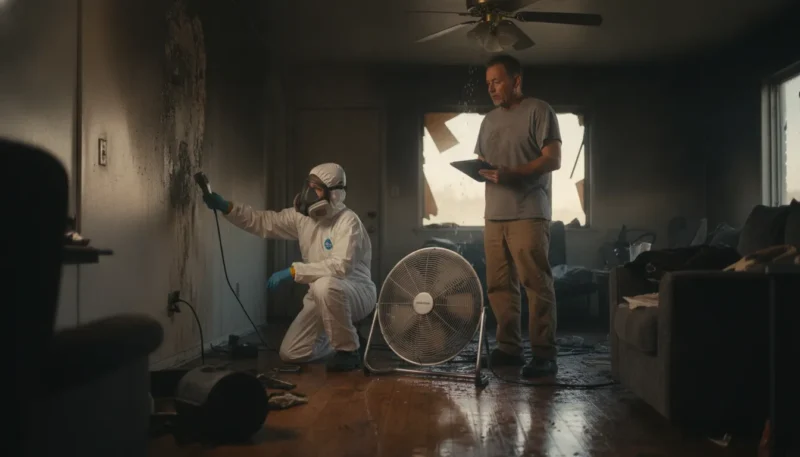
An IICRC certified restoration company Bakersfield property owners can verify has documented training in professional cleaning, inspection, and restoration practices.
Need restoration guidance now? Contact 911 Restoration of Bakersfield 24/7 at (661) 220-7584.
IICRC certification is a useful trust signal. It is not a guarantee of a particular outcome, insurance payment, or project timeline.
Request a property damage assessment from the Bakersfield restoration team.
This guide explains what the credential means, how it relates to water, mold, and fire work, and how to verify a company’s claims. It also connects certification to the broader trust, local coverage, and Spanish-language support discussed in our Bakersfield restoration company guide.
What Does an IICRC Certified Restoration Company Bakersfield Credential Mean?
Answer: An IICRC credential indicates that an individual technician or restoration firm has completed relevant professional education and examination through the Institute of Inspection Cleaning and Restoration Certification. It helps property owners identify trained professionals, but it should be evaluated alongside the proposed scope, communication process, and experience with the specific type of loss.
IICRC stands for the Institute of Inspection Cleaning and Restoration Certification. The organization develops certifications and standards for cleaning, inspection, and restoration disciplines. Its certification information helps consumers distinguish a professional credential from a general statement that a company is experienced. That distinction is important when a property owner has limited time to compare providers.
Technician certification and firm certification are not the same
A certified technician is an individual who has completed training and testing for a particular discipline. Firm certification applies to the business. One does not automatically prove the other. Ask whether the company is certified, which technicians will be assigned, and whether their training fits the damage at your home or business.
For example, a technician trained in water damage restoration may bring useful knowledge to a burst-pipe loss. That does not answer every question about mold remediation, fire residue, sewage contamination, or reconstruction. The relevant credential and the team’s actual experience should match the conditions being addressed.
Certification also does not replace a written explanation. Before work begins, ask what the team found, which materials are affected, what immediate steps are recommended, and what documentation you will receive. A provider should explain these points without presenting the credential as a promise that every material can be saved or every claim will be approved.
How Do IICRC Standards Apply to Water, Mold, and Fire Restoration?
Answer: IICRC standards give trained restoration professionals a shared framework for assessing damage, selecting methods, controlling contamination, drying structures, cleaning materials, and documenting work. The appropriate standard depends on the loss. Water, mold, and fire conditions require different evaluations, controls, equipment, and follow-up decisions.
Standards are useful because visible damage does not always show the full problem. Moisture can move behind walls or beneath flooring. Smoke residue can remain after flames are out. Mold remediation may require containment and source correction rather than surface cleaning alone. A trained team should connect its recommendations to the actual condition of the building.
Water damage restoration
Water restoration commonly involves locating the source, extracting standing water, measuring moisture, drying structural materials, and monitoring progress. The IICRC identifies S500 as the standard for professional water damage restoration. Property owners can ask which drying goals, readings, equipment, and records will be used. Learn more about the company’s water damage restoration services when comparing next steps.
Mold remediation
Mold-related work calls for attention to the moisture source, affected materials, containment, air movement, and safe removal. The IICRC identifies S520 as the standard for professional mold remediation. Ask how the team will limit cross-contamination, what materials may need removal, and how the completed work will be evaluated. The local mold removal service page provides additional context.
Fire and smoke restoration
Fire losses may include structural damage, soot, smoke odor, and affected personal property. The response can involve safety assessment, cleaning, odor treatment, content handling, and reconstruction. A credential does not make every fire loss identical. Ask how the team will evaluate residue and smoke migration, protect salvageable items, and document the work. You can review fire and smoke damage restoration options before calling.
The IICRC’s standards overview and its pages for S500 and S520 are useful starting points. They explain the role of professional standards. They do not replace a property-specific inspection or determine insurance coverage.
Why Does Certification Matter When You Hire After Property Damage?
Answer: Certification matters because it gives homeowners, landlords, property managers, and businesses a verifiable starting point when choosing help under pressure. It signals documented training and examination in a restoration discipline. It should be combined with a clear scope, local availability, communication, safety practices, and evidence that the assigned team can handle the loss.
Choosing a non-certified provider is not automatically proof that the work will fail. However, a company that cannot explain who is trained, what standard applies, or how it will document the job gives you less information to evaluate. A credential can reduce uncertainty, especially when several providers make similar claims about emergency service.
Use certification as one part of a hiring screen
- Verify the credential: Ask whether the firm, the technician, or both hold the relevant certification.
- Match training to the loss: Water extraction, mold remediation, fire cleaning, and sewage cleanup involve different risks.
- Ask about the assessment: A professional should describe affected areas, immediate hazards, and the proposed first steps.
- Request documentation: Confirm how moisture readings, photographs, contents, and completed work will be recorded.
- Clarify communication: Ask who will provide updates and how questions about the scope or insurance process will be handled.
| What to verify | Why it matters |
|---|---|
| Firm or technician credential | Shows whether the claim applies to the business, the assigned professional, or both. |
| Relevant discipline | Connects training to water, mold, fire, smoke, or sewage conditions. |
| Written scope and records | Clarifies planned work, exclusions, readings, photographs, and progress updates. |
For contaminated water or sewage, safety is especially important. The response may involve isolation, protective equipment, extraction, sanitization, and disposal of porous materials. A company that advertises general cleanup should still explain how it will handle the specific hazard. Review the local sewage backup cleanup service details and ask questions before authorizing work.
Commercial properties may also need a plan that addresses employees, customers, inventory, and business interruption. Property managers and business owners can compare the company’s commercial restoration services with the needs of the affected building. The key question is not simply whether a logo appears on a website. It is whether the team can explain its process and apply it to the property.
How Can You Verify a Restoration Company’s IICRC Credentials?
Answer: Verify an IICRC credential by checking the official IICRC firm or certification information. Ask whether the firm or assigned technician is certified. Confirm that the discipline matches the damage, and request a written scope. Then evaluate response time, communication, documentation, and insurance coordination before authorizing restoration work.
- Search the official source. Start with the IICRC certified firm information rather than relying only on an advertisement or logo. Search the operating or legal business name and review the result carefully.
- Ask who holds the credential. Request the firm’s certification status and the names or designations of technicians who may work on the project. Firm certification and individual certification are related, but they are not interchangeable.
- Confirm the discipline. Ask which training applies to your loss. Water, mold, fire, and sewage conditions have different technical concerns. A general answer is not enough if the project involves microbial growth or contamination.
- Request a written scope. Ask for affected areas, proposed services, exclusions, documentation, and immediate safety steps. The scope may change as hidden conditions are found, so ask how changes will be explained.
- Evaluate the complete service. Certification is one trust signal. Also confirm who will communicate updates, how quickly the team can reach your property, and whether the company can help organize records for an insurance conversation.
Do not treat a certification as a substitute for checking the provider’s identity, local service area, or work plan. The IICRC’s certification categories can help you understand the type of credential being discussed. If a company avoids specific answers, presents a credential that does not fit the loss. Or pressures you to sign without an understandable scope, pause and ask for clarification.
What Should an IICRC Certified Restoration Company Bakersfield Team Explain?
Answer: A qualified Bakersfield restoration team should explain what happened and which areas are affected. It should identify urgent actions, the relevant IICRC discipline, and how progress will be documented. Certification supports that conversation. It does not eliminate the need for clear, local communication.
911 Restoration of Bakersfield documents IICRC Master Certification within its leadership, IICRC-certified technicians, 24/7 emergency availability, and a 45-minute emergency arrival commitment in its company materials. Its team serves homeowners, property managers, landlords, and businesses in Bakersfield and surrounding areas. Bilingual English and Spanish communication is available for customers who need it during a stressful event.
Those details are meaningful only when connected to the actual loss. During an initial conversation, ask:
- Which person will inspect the property?
- What credential or training applies to this type of damage?
- What should be done immediately to protect people and limit secondary damage?
- What equipment, readings, photographs, or reports will be used?
- Who will explain the scope and provide updates?
- What information should be gathered for an insurance discussion?
The company’s broader trust and local coverage guide explains why credentials, geographic availability, and language access belong in the same hiring conversation. Property owners can also ask about reconstruction when damage extends beyond cleanup. A restoration plan should make clear where emergency mitigation ends and repair or rebuilding begins.
Certification does not guarantee insurance coverage, a specific cost, or a perfect result. Restoration pricing depends on the type and extent of damage, affected materials, and project requirements. Ask for an assessment and written explanation rather than relying on a generic online figure.
Frequently Asked Questions
What does IICRC certification mean for a restoration company?
IICRC certification indicates that a restoration professional or firm has completed relevant training and examination through the Institute of Inspection Cleaning and Restoration Certification. It is a useful trust signal, but property owners should also review the proposed scope, communication process, documentation, and experience with the specific loss.
Does IICRC certification guarantee successful restoration?
No. Certification supports confidence in documented training and professional standards, but it does not guarantee a specific result, cost, timeline, or insurance decision. The condition of the property, the materials affected, and the quality of execution also influence the outcome.
How do I verify an IICRC credential?
Ask whether the firm, the assigned technician, or both are certified. Confirm the discipline that applies to your damage, review official IICRC information, and request a written scope. A reputable provider should explain the credential and its relevance without using it as a substitute for specific answers.
Do the same IICRC standards apply to water and mold?
No. IICRC S500 addresses professional water damage restoration, while S520 addresses professional mold remediation. Ask the restoration company which standard and controls fit the conditions at your property. Water extraction, structural drying, containment, and microbial remediation may require different steps.
Why should Bakersfield property owners ask about local and bilingual support?
Local availability affects how quickly a team can assess an emergency, while clear communication helps property owners understand safety steps, scope changes, and documentation. 911 Restoration of Bakersfield documents 24/7 response, a 45-minute arrival commitment, and English and Spanish service. Confirm details directly when you call.
Contact 911 Restoration of Bakersfield for Next Steps
If water, fire, mold, smoke, or sewage has affected your home or business, ask for a clear assessment. Also ask for an explanation of the credentials relevant to your loss. 911 Restoration of Bakersfield serves Kern County and nearby areas. The team offers emergency support, bilingual communication, and IICRC-trained professionals.
