Water Damage and Mold Restoration Kern County Guide
When a supply line breaks or a storm pushes water indoors, the visible damage is only the beginning. Moisture can move behind walls, under flooring, and into insulation, creating conditions where mold may begin growing in as little as two days. For homeowners searching for water damage and mold restoration kern county, the safest path is a prompt response that addresses the water source and hidden moisture together. 911 Restoration of Bakersfield is an IICRC Master-certified disaster restoration company serving Bakersfield and communities across Kern County, with a 45-minute emergency response promise.
Quick, combined water damage and mold restoration protects both your home and your health by stopping moisture. Identifying areas that may be hidden from view, and restoring affected materials before the problem spreads. A professional inspection also helps determine what can be cleaned, what must be removed, and what steps your property needs next.
You do not have to coordinate separate teams while managing a stressful loss. The restoration process can include emergency mitigation, mold assessment, cleanup, and reconstruction, with clear guidance throughout. For related property recovery needs, see Fire, Smoke, and Commercial Damage Restoration in Bakersfield. Understanding why water and mold so often appear together is the first step toward making a calm, informed decision.
Schedule a free water and mold inspection in Kern County today | (661) 220-7584
Why Water Damage and Mold Restoration in Kern County Often Go Together
Water and mold are often part of the same restoration problem, even when the first signs appear unrelated. A burst supply line, roof leak, appliance failure, or flood can leave moisture behind in flooring, drywall, insulation, and other materials. Mold spores are common indoors, but they generally become a concern when they land on a wet or damp surface and begin growing. Under the right conditions, growth can start in as little as two days.
That timing matters in Bakersfield and throughout Kern County. A property may look mostly dry while moisture remains behind a wall, beneath flooring, or around cabinets. Because hidden growth is difficult to identify from the surface, a professional inspection can help determine where moisture traveled and whether mold is present. This is also why a quick cleanup of visible water does not always address the complete problem.
Moisture determines the scope of cleanup
The appropriate cleanup depends on how much water damage occurred and where mold is growing. A small, isolated area may require a different response than a widespread loss involving porous materials or concealed cavities. Restoration professionals evaluate the affected materials, locate remaining moisture, and develop a plan that addresses both the water source and any mold growth. The goal is not to create unnecessary disruption. It is to match the work to the actual conditions of the property.
911 Restoration of Bakersfield brings an IICRC Master-certified team to that evaluation and offers a 45-minute emergency response for properties in the area. Early response can help limit additional damage while the team determines whether the project calls for water extraction, drying, mold remediation, repairs, or a combination of services. Owners can also review our Fire, Smoke, and Commercial Damage Restoration in Bakersfield resources when a larger property loss involves multiple types of damage.
Whether the property is in Bakersfield, Lamont, Arvin, Shafter, or Delano, the next step is a careful assessment rather than guesswork. Our team can explain the findings, coordinate the restoration plan, and help you move forward with less uncertainty.
The Combined Water and Mold Remediation Process
When a leak, flood, or plumbing failure leaves moisture behind, the visible damage may be only part of the problem. A careful restoration plan addresses the water source, affected materials, and any mold growth that follows. Because mold can be difficult to detect in walls or beneath flooring, the process should be based on inspection rather than guesswork. The Centers for Disease Control and Prevention explains that cleanup depends on both the extent of the water damage and where mold is growing: CDC mold cleanup guidance.
For homeowners, having one qualified team coordinate the work can make recovery more manageable. An IICRC Master-certified restoration company can organize mitigation, remediation, and reconstruction as one connected project instead of leaving you to coordinate several contractors.
- Emergency response and water extraction. The team begins by responding to the loss, identifying active leaks or other water sources, and removing standing water. 911 Restoration of Bakersfield offers a 45-minute emergency response in Bakersfield and surrounding Kern County communities, with service available 24/7/365. Rapid extraction helps limit additional damage while the property is assessed.
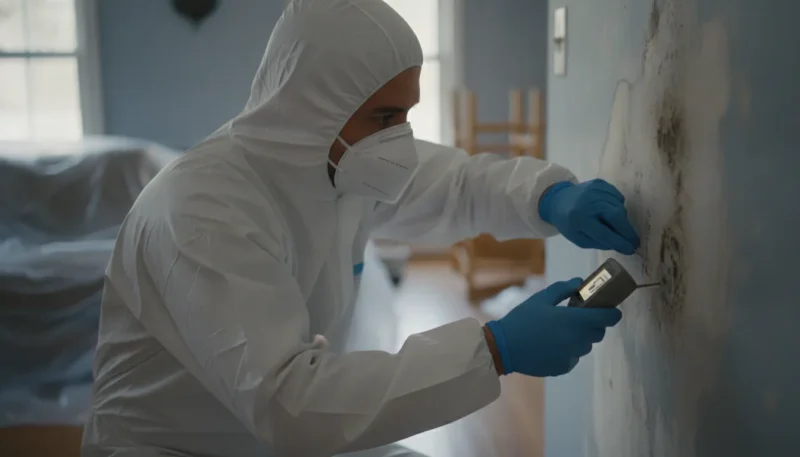
- Moisture assessment and inspection. Technicians use a detailed inspection to identify wet materials and investigate areas where moisture may be concealed. That can include wall cavities, flooring systems, cabinets, and other locations that are not obvious during a visual walk-through. Finding hidden moisture and possible growth helps determine the appropriate scope of work.
- Containment and preparation. If mold is present, the affected area is contained before removal begins. This step helps control movement of spores into clean portions of the home and establishes a safer work zone. The plan is adjusted to the location and extent of growth, rather than applying the same treatment to every property.
- Drying and professional antimicrobial mold removal. Commercial-grade drying equipment removes remaining moisture from the structure and contents. Once conditions support safe remediation, trained professionals remove affected materials and perform antimicrobial treatment appropriate to the project. Drying is essential because mold commonly begins growing when spores land on damp material, as noted by the U.S. Environmental Protection Agency.
- Verification and reconstruction. After cleanup, the team reviews the work, confirms that moisture problems have been addressed, and identifies any materials that require repair or replacement. Reconstruction then restores the property and helps protect its long-term structural integrity. Coordinating the full cycle, from emergency response through reconstruction, can reduce the burden of managing multiple contractors while your household is recovering.
Throughout the project, IICRC Master-certified standards provide an important quality benchmark. A calm explanation of each stage, clear documentation. And one point of coordination can give homeowners in Kern County a more predictable path from damage to a safe, functional home.
Service Area: Cities We Cover Across Kern County
Water and mold problems do not stop at the Bakersfield city limits. 911 Restoration of Bakersfield serves homeowners, renters, landlords, and businesses throughout Kern County, including communities where getting a prompt restoration team can otherwise be difficult. Our coverage includes Bakersfield and surrounding areas such as Lamont, Arvin, Shafter, Delano, and Wasco, as well as communities farther out, including Ridgecrest and Tehachapi.
That broad service area matters after a burst pipe, appliance leak, roof intrusion, flood, or other moisture event. Mold can begin growing in a damp environment in as little as two days. So waiting for normal business hours or searching for separate contractors can allow damage to spread. Our team provides emergency coverage 24 hours a day, 7 days a week, 365 days a year across the county. When you call, we can help assess the situation, explain the next practical step, and begin limiting additional damage.
We provide water damage restoration services for the source and resulting property damage, then address moisture-related growth through mold removal and remediation when needed. Because the extent and location of water damage affect the cleanup plan, an inspection is important even when the visible area appears small. Moisture may be present behind walls, beneath flooring, or in other concealed spaces.
Residents throughout the region can also communicate comfortably with native-level bilingual English and Spanish project managers and technicians. That is especially valuable when a stressful loss requires clear explanations about safety, cleanup, and next steps. Whether your property is in central Bakersfield or in Lamont, Arvin, Shafter, Delano, Wasco. Ridgecrest, or Tehachapi, our goal is the same: provide calm, direct help when you need water damage and mold restoration kern county services.
How Much Does Combined Water and Mold Restoration Cost in Kern County?
There is no honest one-size-fits-all price for combined water damage and mold restoration in Kern County. A small, contained leak that is found quickly is a very different project from widespread saturation with mold growth behind drywall, beneath flooring, or inside cabinetry. The final scope depends on the extent of the water damage, the surface area affected by mold. The materials that require removal, and whether hidden growth is discovered during inspection.
That is why a professional moisture and mold inspection is the only reliable starting point. A qualified team can identify wet building materials, trace moisture into less visible areas. Evaluate where mold may be growing, and provide a written estimate based on the property rather than a generic price range. The CDC notes that proper mold cleanup depends on how much water damage occurred and where the mold is growing: CDC cleanup guidance.
What the estimate should account for
A complete estimate may include emergency water extraction, drying and dehumidification, containment, removal of unsalvageable materials, cleaning, mold remediation, clearance or verification steps, and repairs or reconstruction. Ask what is included, which areas were inspected, and whether the estimate separates mitigation from rebuilding. If the source of moisture is still active, that issue also needs to be addressed before the project can be considered complete.
Choosing one qualified provider for both problems can also simplify the financial and practical side of recovery. A full-cycle restoration company can coordinate the work from emergency response through reconstruction, reducing the need to manage multiple contractors. That does not guarantee a lower invoice, but it can reduce duplicated coordination and help keep the scope, documentation, and communication in one place.
| Consideration | DIY attempt | Professional restoration |
|---|---|---|
| Safety | May expose occupants to mold, contaminated materials, or unsafe moisture conditions. | Uses a controlled process and appropriate protective equipment for the known conditions. |
| Hidden mold detection | Usually limited to visible surfaces and accessible materials. | Includes moisture investigation and evaluation of concealed areas where growth may be present. |
| Equipment | Household fans and cleaners may not dry assemblies thoroughly. | Uses commercial extraction, air movement, drying, and dehumidification equipment. |
| Insurance navigation | Property owner handles documentation and claim questions alone. | Can help organize project documentation and navigate the restoration claim process. |
| Long-term outcome | Unresolved moisture or hidden growth can lead to recurring problems. | Combines mitigation, remediation, and needed repairs into a documented recovery plan. |
For a property-specific answer, schedule an inspection before relying on an online cost estimate. The written scope gives you a clearer basis for deciding what must happen now, what can be repaired later, and how to move forward with confidence.
Does Homeowners Insurance Cover Mold From Water Damage in California?
Homeowners insurance coverage for mold is usually tied to what caused the moisture and how quickly the problem was addressed. A sudden, accidental event, such as a burst supply line or an unexpected appliance failure. May be treated differently from a slow plumbing leak, repeated seepage, deferred maintenance, or mold that existed before the water event. Your policy language, exclusions, deductible, cause of loss, and claim history all matter, so no restoration company can guarantee that an insurer will approve a payout.
It is also important to separate water damage from mold damage. A policy may respond to certain sudden water losses while limiting or excluding mold cleanup, unless the mold resulted from a covered event. California property owners should review their policy and contact their insurance provider promptly after discovering damage. Ask what documentation is required, whether mitigation must begin immediately, and whether the insurer wants to inspect the property before materials are removed. Do not delay necessary steps that protect the building, but keep damaged materials when it is safe and practical to do so.
How documentation can support your claim
Professional documentation creates a clearer record of what happened and what was done. An experienced restoration team can photograph affected areas, identify visible and suspected moisture damage. Record moisture readings, outline the mitigation work, and keep an itemized account of services and materials. This information does not determine coverage, but it can help you and your adjuster evaluate the timeline, source, extent, and response to the loss.
At 911 Restoration of Bakersfield, insurance navigation means helping property owners work through that process without promising an insurance outcome. Our team documents the damage, communicates with providers when appropriate, and helps organize the claims process while restoration work moves forward. Because hidden moisture can lead to mold growth, an inspection should consider areas behind walls, under flooring, and near the original leak. The CDC notes that cleanup depends on the extent of the water damage and where mold is growing: CDC mold cleanup guidance.
If you need water damage and mold restoration kern county property owners can rely on for careful documentation and practical next steps, contact the team for an inspection. You remain responsible for understanding your policy, while trained restoration professionals can help you protect the property and build an accurate record of the work.
When Should You Call a Professional for Water and Mold Damage?
Call a professional as soon as water damage is more than a small, surface-level spill or you cannot confirm that the area is fully dry. Mold can begin growing in as little as two days after moisture exposure. And hidden growth may develop behind walls, beneath flooring, or in other areas you cannot inspect safely. A prompt evaluation helps identify the source, stop ongoing moisture, and determine whether materials need specialized removal.
Professional help is especially important when you see visible mold, notice a persistent damp or musty smell. Have a history of flooding or plumbing leaks, or find water stains, bubbling paint, warped flooring, or recurring dampness. A leaking roof or pipe should also be addressed quickly. Cleanup requirements depend on both the extent of the water damage and where mold is growing, so treating only what is visible may leave the underlying problem unresolved. See our water damage restoration services and mold removal and remediation for more information about a coordinated response.
This is also a health and safety decision. Mold can produce allergens, irritants, and, in some cases, mycotoxins that affect allergic and non-allergic people. Exposure may irritate the eyes, skin, nose, throat, and lungs, and mold can trigger asthma attacks in people with asthma who are allergic to it. The U.S. Environmental Protection Agency explains mold-related health effects, while the Centers for Disease Control and Prevention advises against mold cleanup by people with asthma, COPD, or immune suppression.
Anyone who is immune-compromised, has asthma, or has COPD should not stay in a moldy home while it is being cleaned. For homeowners seeking water damage and mold restoration kern county, an experienced team can address moisture, contamination, and affected building materials together. The goal is not only a cleaner room, but restoration that supports the property’s long-term structural integrity and a safer return home.
Contact us to schedule a water and mold assessment in Kern County | (661) 220-7584
Frequently Asked Questions
How quickly can mold grow after water damage?
Mold can begin growing from spores in as little as two days when moisture remains in a suitable damp environment. That makes prompt water extraction, drying, and inspection important, even when surfaces appear clean. Hidden moisture behind walls or under flooring can continue feeding growth after the visible spill is gone. The EPA explains that mold spores can begin growing after landing on a wet or damp spot.
Should I attempt to remove mold myself?
Small, isolated surface areas may sometimes be addressed with appropriate protective equipment, but do not disturb widespread growth or materials affected by significant water damage without professional guidance. The CDC advises people with asthma, COPD, immune suppression, or other elevated risks not to participate in mold cleanup. CDC cleanup guidance also calls for respiratory, eye, and hand protection. A professional assessment is especially helpful when mold may be inside walls, under floors, or connected to a continuing leak.
What health risks can mold create in a damp home?
Mold exposure may cause allergic reactions such as sneezing, a runny nose, red eyes, or skin irritation. It can also irritate the eyes, nose, throat, lungs, and trigger asthma attacks in people who are allergic to mold. Reactions may be immediate or delayed. Anyone with asthma, COPD, or a compromised immune system should avoid staying in the home while mold is present or being cleaned. EPA health information provides additional detail.
What does a professional mold remediation process involve?
The process begins with an inspection of moisture sources, water damage, humidity, and areas where growth may be concealed. The restoration team then creates a plan for drying, containment, removal, and cleaning based on the affected materials and the location of the mold. Water mitigation and mold remediation should be coordinated so the moisture problem is corrected rather than covered up. An IICRC Master-certified team can also help evaluate whether reconstruction is needed after damaged materials are removed.
Does insurance cover water damage and mold removal?
Coverage depends on your policy, the cause of the water damage, exclusions, and the circumstances of the mold growth. Avoid assuming that every mold-related cost is covered or guaranteed. A restoration company can document damage, explain the work performed, and help you navigate the insurance claims process. Contact your insurer promptly and keep photographs, receipts, and records of repairs and communications for your claim file.
Ready to Schedule Your Free Water and Mold Inspection?
If water damage or suspected mold has disrupted your Kern County home, a professional inspection can clarify the next steps and help you move forward with confidence. Our IICRC Master-certified team provides a 45-minute emergency response and is available 24/7/365 to help with water and mold restoration.
Schedule a free water and mold inspection
Call (661) 220-7584 or use the contact page to reach out. We are here to help you begin the recovery process with clear guidance and dependable support.
