Disaster Restoration Services Bakersfield: Recovery Guide
When water, fire, smoke, mold, sewage, or a biohazard affects your property, the first decisions can shape the entire recovery. Moisture can spread behind walls, smoke residue can continue damaging surfaces, and unsafe cleanup can expose your family or employees to additional risks. Fast, organized help protects both the building and the people inside it.
For homeowners, property managers, and businesses, disaster restoration services bakersfield should provide one coordinated path from emergency mitigation through reconstruction. 911 Restoration of Bakersfield is family-owned, IICRC-certified, serves Kern County, and offers a 45-minute response guarantee, bilingual support, and 24/7 emergency service.
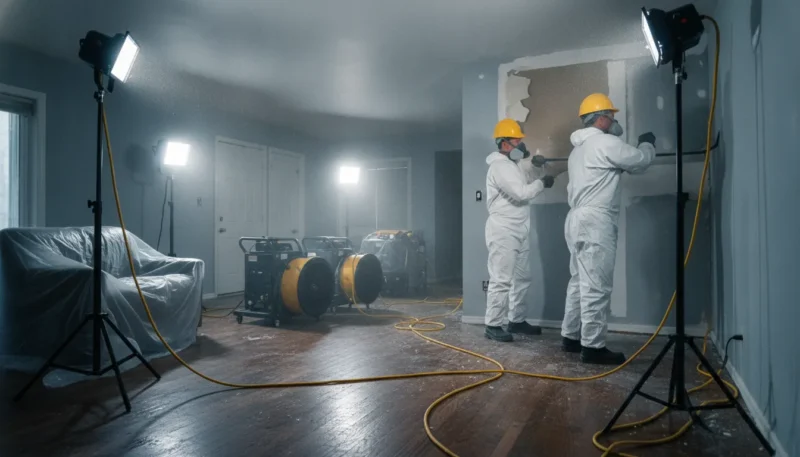
A full-service team can assess the damage, contain active threats, remove affected materials. Dry and clean the structure, and guide the next restoration steps without making you coordinate several contractors alone. This guide explains what that coverage includes, beginning with the disasters and property conditions a qualified team should be prepared to handle. For related fire, smoke, and commercial recovery information, see Fire, Smoke, and Commercial Damage Restoration in Bakersfield.
What Full-Service Disaster Restoration Covers in Bakersfield
When a property suffers major damage, the visible problem is often only the beginning. Standing water can move into flooring, walls, and insulation. Fire can leave behind smoke residue and persistent odors. Sewage and other biological hazards can create health and sanitation concerns. Full-service restoration brings these related needs under one coordinated plan instead of leaving a homeowner to find a different contractor for every problem.
For local homeowners and businesses, disaster restoration services in Bakersfield and Kern County can cover the property from the first emergency response through cleanup, drying, repairs, and reconstruction. The exact work depends on the source and extent of damage, but the main service areas commonly include the following.
Water removal and structural drying
Water damage restoration starts with removing standing water and locating moisture that may not be visible. Technicians can extract water, inspect affected materials, and use professional drying equipment to reduce moisture in floors, walls, and other structural areas. This matters because a damp building can develop additional damage if materials are left wet. Learn more about water damage restoration services and the decisions that help protect a Bakersfield property after a leak, flood, or plumbing failure.
Fire and smoke cleanup
Fire restoration addresses more than burned materials. Smoke and soot can settle across rooms that were not directly touched by flames, while odor can remain in furnishings and porous surfaces. Cleanup may include removing damaged contents, cleaning salvageable materials, addressing smoke residue, and preparing the property for repairs. Water used to extinguish a fire can also create a separate drying and moisture-control problem, so fire and water work often need to be evaluated together.
Mold removal and moisture control
Mold remediation focuses on containing affected areas, removing contaminated materials when necessary, cleaning appropriate surfaces, and correcting the moisture source. Professional restoration services commonly combine water removal, structural drying, and mold remediation as part of returning a property to a safer condition. The goal is not simply to wipe away what is visible. It is to address the conditions that allowed mold to develop and prevent the problem from spreading.
Sewage and biohazard cleanup
Sewage backups, trauma scenes, animal waste, and other biological hazards require specialized cleanup and careful handling. These materials may contain pathogens, so trained technicians use appropriate containment, protective equipment, disinfection, and disposal procedures. The Centers for Disease Control and Prevention advises using rubber boots, rubber gloves, and goggles when sewage is involved. A restoration team can also help determine which materials must be removed rather than cleaned.
These services are available for both residential and commercial property damage. Whether the affected space is a family home, rental property, office, retail location, or warehouse. A full-service team can assess the complete loss, prioritize safety, and coordinate the next steps with less disruption.
Water, Fire, Mold, and Sewage: How They Interact After a Major Disaster
A major property disaster rarely creates only one problem. A burst pipe can soak drywall, flooring, insulation, and contents. Fire suppression water can spread through rooms that the flames never reached. If contaminated water enters the structure, ordinary cleanup becomes a biohazard concern. Each condition can accelerate the next, which is why fast, coordinated action matters.
Water damage creates the conditions mold needs
Standing water and trapped moisture raise humidity inside walls, cabinets, ceilings, and flooring. Mold can begin growing within 24 to 48 hours when wet materials are not dried properly. The visible spot may be small, while hidden growth continues behind drywall or beneath flooring. Professional water removal and structural drying help identify affected materials, extract moisture, and reduce the chance that a manageable loss becomes a larger remediation project. For guidance on this part of recovery, see our mold remediation in Bakersfield guide.
Sewage changes the safety risk
Sewage, also called black water, may contain harmful microorganisms and other contaminants. It should not be treated like a clean-water spill, and porous materials exposed to it may require specialized removal rather than simple drying. The CDC advises wearing rubber boots, rubber gloves, and goggles when sewage is involved. Keep children and pets away from the affected area, avoid tracking contamination into clean rooms, and do not begin demolition without understanding the hazards.
Fire, soot, and suppression water compound damage
After a fire, water used during suppression can leave building materials wet while soot and smoke residue settle across surfaces. Moisture can drive residue deeper into porous materials, while soot can corrode metal and damage finishes if it remains in place. Drying, debris removal, and smoke cleaning must be planned together. A property may look stable after the flames are out but still face structural, moisture, odor, and indoor-air concerns.
People with asthma, COPD, or compromised immune systems should avoid staying in a moldy home or participating in cleanup, according to the CDC. Anyone handling mold should use at least an N95 respirator, non-latex gloves, and goggles with complete eye protection. A 45-minute response helps limit the time water, soot, and contamination can spread, reducing secondary damage before it becomes harder and more expensive to address.
Why a Single Restoration Vendor Is Better Than Coordinating Multiple Contractors
After a major loss, the property may need water removal, structural drying, mold remediation, smoke cleanup, and repairs. Hiring separate companies for each service can leave you managing a complicated schedule while trying to protect your home or business. A full-service restoration vendor brings those needs into one coordinated plan, which reduces handoffs and keeps the recovery moving.
| Aspect | Single Full-Service Vendor | Multiple Separate Contractors |
|---|---|---|
| Scope and coordination | One team can manage water removal, structural drying, mold remediation, and restoration within a systematic end-to-end process. See our commercial disaster restoration services. | You must find, schedule, and coordinate separate providers, then make sure each trade has the information needed from the previous step. |
| Accountability | There is one primary point of contact for the mitigation plan, documentation, updates, and next steps. | Responsibility can become unclear when a delay, missed detail, or disputed repair falls between companies. |
| Response time | A coordinated team can assess the damage and begin the appropriate work without waiting for several independent schedules to align. | Each contractor may have a different availability, extending the time before the property is fully stabilized. |
| Insurance claim handling | A restoration professional may work directly with your insurance company, so you do not have to manage every claim-related exchange yourself. This does not guarantee a particular payout or coverage decision. | You may need to explain the same loss repeatedly and collect estimates, records, and updates from several providers. |
| Cost and time predictability | A unified scope and documentation trail makes it easier to understand what happens next and identify changes as the project develops. | Separate estimates, overlapping visits, and schedule gaps can make the total timeline and cost harder to track. |
One vendor does not mean every project is identical or that every repair can be completed by the same crew. It means the work is organized around one recovery plan. That matters when hidden moisture, smoke residue, or secondary mold risk affects later repairs. Professional restoration services commonly combine certified water removal, structural drying, mold remediation, and related restorative work, while a systematic process helps move the property from assessment through completion. The result is less administrative burden for you and a clearer path back to a safe, usable space.
How the 911 Restoration Disaster Response Process Works
When a disaster affects your Bakersfield home or business, the first priority is to stop the damage from spreading. 911 Restoration of Bakersfield provides 24/7 emergency response and backs that urgency with a 45-minute response guarantee. One call connects you with an IICRC-certified, bilingual team that can coordinate mitigation, cleanup, repairs, and reconstruction instead of leaving you to manage several contractors alone.
- Call for immediate help. Contact the team as soon as it is safe to do so. A fast response can protect more of the structure and belongings from secondary damage. The restoration industry commonly emphasizes round-the-clock emergency availability because conditions can worsen quickly after water, fire, or sewage damage. The 911 Restoration team can communicate in English or Spanish and help you understand the next step while dispatching help.
- Receive an on-site assessment. Technicians inspect the affected areas, identify visible and hidden damage, and determine immediate safety concerns. This assessment creates a practical plan for the property rather than relying on guesswork. The goal is to document what happened, protect unaffected areas, and prioritize work that prevents additional loss.
- Remove water and stabilize the property. If water is present, the team extracts standing water and begins mitigation. Professional restoration commonly includes water removal and structural drying, which helps return a property to a safe condition. Furniture and other heavy or bulky objects are moved with teams of at least two people, following CDC safety guidance (CDC disaster cleanup safety guidance). This protects both workers and your belongings while making damaged surfaces accessible.
- Dry, clean, and address mold or sewage hazards. Air movement, dehumidification, and moisture checks help dry structural materials thoroughly. Mold and sewage require additional precautions and specialized handling, not casual household cleanup. The CDC recommends rubber boots, rubber gloves, and goggles when sewage is involved. For mold cleanup, recommended protection includes at least an N95 respirator, non-latex gloves, and complete eye protection (CDC mold cleanup guidance). The team contains affected areas and removes contaminated materials when necessary to protect indoor conditions.
- Repair and reconstruct what was damaged. Once mitigation is complete, the project moves from making the property safe to making it whole again. Repairs may include replacing damaged drywall, flooring, cabinetry, or other building components. Reconstruction is coordinated with the original scope so the finished work addresses the cause and the resulting damage, supporting a true Fresh Start.
- Document the project and help with insurance communication. Photos, moisture findings, service records, and repair details give you a clearer record for your claim. Restoration professionals often work directly with insurance companies to streamline the cleanup and claims process, but coverage decisions remain with your insurer. For fire, smoke, and commercial losses, the team can also connect this work with Fire, Smoke, and Commercial Damage Restoration in Bakersfield.
This systematic approach keeps urgent mitigation connected to the final repair, while clear communication helps you make informed decisions throughout recovery.
How to Choose the Right Disaster Restoration Services in Bakersfield
How do you choose a reliable disaster restoration company in Bakersfield when water, smoke, mold, sewage, or another hazard has damaged your property? Start with a practical checklist. The right provider should combine qualified technicians, rapid response, local knowledge, clear communication, safe work practices, and a complete plan from emergency mitigation through repairs.
Confirm certification, local experience, and availability
Ask whether the company follows recognized restoration standards and has IICRC-certified professionals. Certification is a useful signal that the team understands water removal, structural drying, and mold remediation rather than simply removing visible debris. Professional restoration services commonly include these specialized steps to help return a damaged property to a safe condition.
Next, verify that the company regularly works in Bakersfield and throughout Kern County. Local experience helps the team understand area properties, common construction concerns, and the logistics of reaching homes and businesses quickly. A disaster does not follow business hours, so look for genuine 24/7 emergency response. Fast action matters because delays can allow moisture to spread, encourage mold growth, and increase damage to building materials. Restoration providers commonly emphasize round-the-clock availability as part of emergency service.
Look for communication and safety, not just promises
Ask whether the company can communicate in both English and Spanish if that matters to your household, tenants, or employees. Clear explanations are especially important when several decisions must be made quickly. You should also receive a straightforward description of what happens next, including assessment, water or debris removal, drying, cleaning, repairs, and final restoration.
Safety should be visible in the company’s process. For mold cleanup, the CDC recommends at least a NIOSH-approved N95 respirator, non-latex gloves, and goggles that provide complete eye protection. Sewage work calls for rubber boots, rubber gloves, and goggles. Review CDC mold cleanup guidance and CDC disaster safety guidance. A professional team should also use appropriate protective equipment, control contaminated areas, and avoid exposing occupants to unnecessary hazards.
Choose a company that manages the whole recovery
Finally, ask who will coordinate insurance documentation and whether the company can handle the full project instead of leaving you to manage separate contractors. A restoration provider may work directly with your insurance company to help streamline the claim and cleanup process. But coverage depends on your policy and the cause of loss. The strongest choice gives you one accountable point of contact, explains each stage, documents the work, and stays involved from the first emergency call through reconstruction.
When you need help evaluating your options, contact emergency restoration services in Bakersfield and ask about response time, certification, bilingual support, safety procedures, and the complete recovery plan.
Frequently Asked Questions
What services are included in disaster restoration in Bakersfield?
Full-service restoration can address water removal, structural drying, fire and smoke cleanup, mold remediation, sewage-related damage, and biohazard cleanup. The scope may cover both residential and commercial properties, from initial mitigation through repairs and reconstruction.
Can I do water restoration myself?
You can handle minor surface cleanup, but concealed moisture can lead to mold growth, damaged materials, or structural problems. A professional assessment helps identify moisture behind walls and under flooring, determine what can be dried or must be removed, and document the work for your claim. Avoid entering sewage-contaminated areas without proper protective equipment. The CDC recommends rubber boots, rubber gloves, and goggles when sewage is involved (CDC disaster safety guidance).
Why is fast response time critical after property damage?
Water and contaminants can continue spreading after the original event, increasing damage and complicating cleanup. Prompt inspection allows a restoration team to begin mitigation, secure affected areas, and identify hazards before they cause additional problems. Emergency restoration providers commonly offer 24/7 response, and 911 Restoration of Bakersfield provides a 45-minute response guarantee.
Does insurance cover disaster restoration services in Bakersfield?
Coverage depends on the cause of loss, your policy language, exclusions, deductibles, and the circumstances of the incident. Do not assume a claim will be paid in full. Contact your insurer promptly, preserve photos and receipts, and ask the restoration company to help document the damage and coordinate claim information.
Ready to Start Your Recovery?
When water, fire, mold, sewage, or biohazard damage disrupts your property, a coordinated response can help you move from mitigation toward a Fresh Start. Call 911 Restoration of Bakersfield at 661-220-7584, or contact us to request a free consultation for disaster restoration services in Bakersfield and Kern County.
