

Black Mold in Bakersfield Homes: Health Risks & Removal
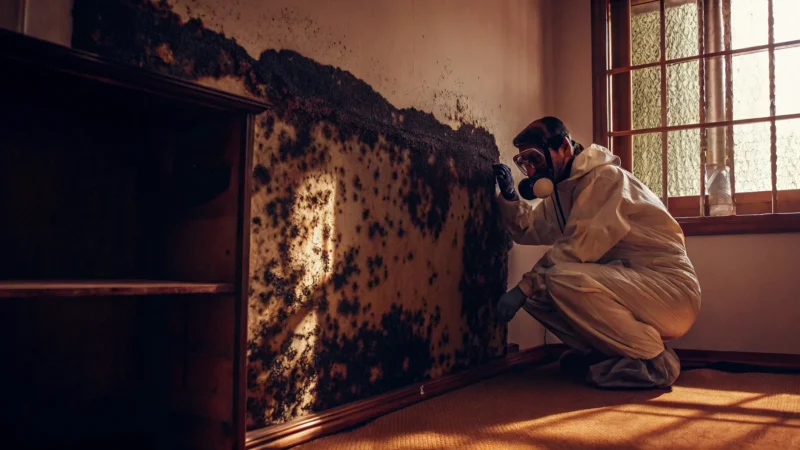
Not all mold is created equal. While most household mold is a nuisance, one type raises a red flag the moment you see it. Stachybotrys chartarum — better known as black mold — is the species that homeowners in Kern County fear most, and for good reason. It thrives in damp, neglected corners of Bakersfield homes and produces mycotoxins linked to serious respiratory issues. If you suspect you have black mold growing in your property, understanding what you are dealing with is the first step toward getting rid of it safely.
If you spot black mold in your Bakersfield home, call 911 Restoration of Bakersfield at (661) 220-7584 for a free visual inspection. Our IICRC-certified technicians arrive within 45 minutes to assess the situation and contain the spread.
This article is part of our comprehensive Mold Remediation Bakersfield: Definitive Guide series. Here, we focus specifically on black mold — how to identify it, the health risks it poses to your family, and the professional removal process that keeps your home safe.
Is That Black Mold? How to Identify Stachybotrys in Your Home
Identifying black mold is not always as straightforward as its name suggests. Many common molds appear dark in color, and not every black-looking spot on your wall is the toxic variety. Knowing what to look for helps you decide how urgently to act.
Stachybotrys chartarum has a distinct appearance: it typically looks slimy and wet, with a dark greenish-black color. Unlike the fuzzy, gray patches of common mildew, black mold tends to have a shiny, almost tar-like texture when it is actively growing. As it dries out, it can become powdery and easier to mistake for ordinary dirt or soot.
Where Black Mold Grows in Bakersfield Homes
Black mold needs persistent moisture to survive. In Bakersfield homes, the most common hiding spots include:
- Behind drywall that has been wet from a plumbing leak or roof leak
- Under bathroom and kitchen sinks with slow, undetected drips
- In crawl spaces with poor ventilation and high humidity
- Around windows where condensation collects during Kern County’s cooler months
- In basements or low-lying areas prone to groundwater intrusion
- Behind appliances like dishwashers, refrigerators, and washing machines
The Smell Test
Black mold has a signature musty, earthy odor that is hard to miss. If a room in your home smells damp and dirty even after cleaning, mold may be growing inside a wall or under the flooring. This odor is often the first clue that you have a hidden problem long before visible growth appears.
If you see dark, slimy patches on a surface that has been wet, or you smell a persistent musty odor you cannot locate, call a professional for a mold inspection in Bakersfield. Visual identification is not always reliable — testing confirms whether the mold is toxic Stachybotrys or a less harmful variety.
Health Risks of Black Mold Exposure for Kern County Families
The reason black mold generates so much concern comes down to what it produces: mycotoxins. These are toxic chemical compounds released by the mold into the air. When you breathe them in over time, they can trigger a range of health effects.
According to the Centers for Disease Control and Prevention, mold exposure can cause nasal stuffiness, throat irritation, coughing, wheezing, and eye irritation. For people with asthma, mold can trigger more severe attacks. Black mold specifically has been linked to more intense reactions, particularly in vulnerable populations.
Who Is Most at Risk
- Infants and young children: Their developing respiratory systems are more sensitive to airborne toxins.
- Elderly family members: Age-related immune changes make seniors more susceptible.
- People with asthma or allergies: Mold spores act as potent triggers for asthma attacks and allergic reactions.
- Individuals with compromised immune systems: Those undergoing chemotherapy, living with autoimmune conditions, or on immunosuppressant medications face higher risks.
- Pets: Dogs, cats, and birds can also suffer respiratory distress from mold exposure.
Symptoms to Watch For
If you or your family members experience any of these symptoms that improve when you leave the home, black mold could be the cause:
- Chronic coughing or sneezing with no apparent trigger
- Persistent sinus congestion or runny nose
- Red, itchy, or watery eyes
- Headaches that appear at home and fade when you leave
- Fatigue or difficulty concentrating
- Skin rashes that come and go
- Worsening asthma symptoms
If these symptoms sound familiar and you have noticed damp areas or water damage in your home, do not wait for the problem to get worse. Call (661) 220-7584 to speak with a Bakersfield mold removal specialist who can evaluate your home.
Why Black Mold Grows in Bakersfield Homes After Water Damage
Bakersfield’s climate creates perfect conditions for black mold growth. The Central Valley experiences hot, dry summers and cooler, wetter winters. When winter storms bring rain through Kern County, homes that have sustained any water damage become prime breeding grounds for mold. But the real danger is the summer: homeowners run their AC units constantly, and condensation from those systems creates hidden moisture inside walls and ductwork.
The 48-hour rule: Mold can begin colonizing a wet surface within 24 to 48 hours of water exposure. This is why rapid water extraction and drying after any flood, leak, or pipe burst is so critical. Every hour of delay gives mold a foothold.
Common water damage scenarios that lead to black mold in Bakersfield:
- Burst pipes during winter freeze-thaw cycles
- Roof leaks from seasonal rainstorms
- Sewage backups that introduce contaminated water into living spaces
- Slab leaks that go undetected for weeks under flooring
- AC condensation overflow during Bakersfield’s scorching summers
- Appliance failures from water heaters, washing machines, and dishwashers
If your property has experienced any of these issues and the area was not dried thoroughly within 48 hours, there is a strong chance mold is already growing. That musty smell you notice is the evidence. For more details on the connection between water damage and fungal growth, read our guide on water damage mold repair: a step-by-step guide.
Black Mold Removal Process: What IICRC-Certified Professionals Do
Removing black mold is not a simple cleaning job. The Institute of Inspection, Cleaning and Restoration Certification (IICRC) establishes the industry standard for mold remediation, and our team follows these protocols to the letter. Here is what the professional black mold removal process looks like for a Bakersfield home.
Step 1: Containment
Before any removal begins, the affected area is sealed off with heavy-duty plastic sheeting and negative air pressure is established. This prevents mold spores from traveling to clean parts of your home during the removal process. Think of it as a quarantine zone for the contamination.
Step 2: Air Filtration
HEPA (High-Efficiency Particulate Air) filtration units run continuously during remediation. These machines capture airborne spores that become dislodged during the work, keeping the air in your home as clean as possible throughout the process.
Step 3: Material Removal
Porous materials that harbor black mold cannot be fully cleaned. Drywall, insulation, carpet, padding, and ceiling tiles that are contaminated must be carefully removed, bagged, and disposed of according to EPA guidelines for mold waste.
Step 4: Cleaning and Disinfection
Non-porous and semi-porous surfaces like wood framing, concrete, and metal are scrubbed with EPA-approved antimicrobial solutions. Every surface in the containment zone is cleaned until it passes a visual inspection.
Step 5: Drying and Monitoring
Once the contaminated materials are gone and surfaces are cleaned, industrial-grade dehumidifiers and air movers dry the space completely. Moisture readings are taken daily to confirm the area reaches and stays below the threshold where mold can regrow.
Step 6: Clearance Testing
A final inspection confirms that the visible mold is gone and airborne spore levels are within normal range. Many insurance companies require this documentation before approving the claim.
At 911 Restoration of Bakersfield, we handle the entire process from emergency water extraction through full remediation. Learn more about our mold removal services in Bakersfield.
Can You Remove Black Mold Yourself? The Risk of DIY Attempts
It is tempting to grab a bottle of bleach and scrub away black mold spots yourself. Homeowners across Kern County try this every year, and most of them make the problem worse. Here is why DIY black mold removal is a bad idea.
Bleach Does Not Kill Black Mold on Porous Surfaces
Bleach is a water-based solution. When you apply it to drywall or wood, the water soaks into the porous surface while the bleach sits on top. This means the mold roots that penetrate deep into the material survive, and they grow back within weeks — often worse than before.
Disturbing Mold Releases More Spores
When you scrub or spray mold without proper containment, you disturb the colony. This releases thousands of microscopic spores into the air. Without negative air pressure and HEPA filtration, those spores settle throughout your home, contaminating furniture, carpets, ductwork, and clothing. Your one-room mold problem suddenly becomes a whole-house contamination.
You Cannot See the Full Extent
Black mold growing on the surface of your wall often indicates a much larger colony behind the drywall, inside the wall cavity. Without professional moisture meters and borescopes, you will miss the hidden growth. That invisible mold continues releasing mycotoxins into your air even after the surface appears clean.
Health Risks During DIY Removal
Without proper personal protective equipment (PPE) including an N-95 or P-100 respirator, goggles, gloves, and full-body coveralls, you are exposing yourself to concentrated levels of mycotoxins during the removal process. Many people who attempt DIY mold removal end up with more severe symptoms than they had before starting.
If your mold problem covers more than 10 square feet — roughly the size of a standard sheet of printer paper — professional remediation is required by industry standards. Call (661) 220-7584 for a free estimate from our certified team.
Frequently Asked Questions About Black Mold in Bakersfield
How much does it cost to get black mold removed?
The cost varies based on the extent of contamination and the size of the affected area. In Bakersfield, professional black mold remediation typically ranges from $500 to $6,000 depending on severity. Many homeowners insurance policies cover mold remediation when it results from a covered water damage event. Contact 911 Restoration of Bakersfield for a free estimate specific to your situation.
Can black mold be fully removed?
Yes, but only through professional remediation that addresses both the visible growth and the moisture source. Simply cleaning the surface will not permanently remove black mold. The moisture problem that caused it must be corrected, and all contaminated materials must be properly removed and disposed of by IICRC-certified professionals.
Is it safe to stay in a house with black mold?
It depends on the extent of contamination and your health status. Small, isolated areas of black mold may not require evacuation during professional remediation. However, large infestations or mold affecting HVAC systems often require temporary relocation, especially for families with young children, elderly members, or individuals with respiratory conditions. Your remediation specialist will advise you based on your specific situation.
Does homeowners insurance cover black mold removal in Bakersfield?
Many California homeowners insurance policies cover mold remediation when it is caused by a covered peril such as a burst pipe, appliance leak, or storm damage. Coverage limits vary, and some policies exclude mold damage resulting from long-term neglect or flooding. Our team helps you navigate the insurance claims process and provides all documentation needed for your claim. Contact us to learn more about insurance claims for water and mold damage.
How long does professional black mold removal take?
Most residential black mold remediation projects in Bakersfield take between 3 and 7 days. The timeline depends on the size of the affected area, the extent of contamination, and the drying time required. Your project manager provides a timeline estimate after the initial inspection.
Take Action Against Black Mold in Your Bakersfield Home
Black mold is not something to ignore or handle with household cleaners. The health risks are real, and the problem only gets worse with time. If you see signs of black mold, smell a musty odor, or have recently experienced water damage in your home, do not wait for the situation to escalate.
911 Restoration of Bakersfield provides 24/7 emergency response with IICRC-certified technicians who understand the unique challenges of Kern County homes. Our bilingual team arrives within 45 minutes to assess your situation, contain the contamination, and begin the professional removal process. We also handle direct insurance billing so you can focus on your family’s safety.
Call us today at (661) 220-7584 for a free visual inspection. Hablamos espanol.
